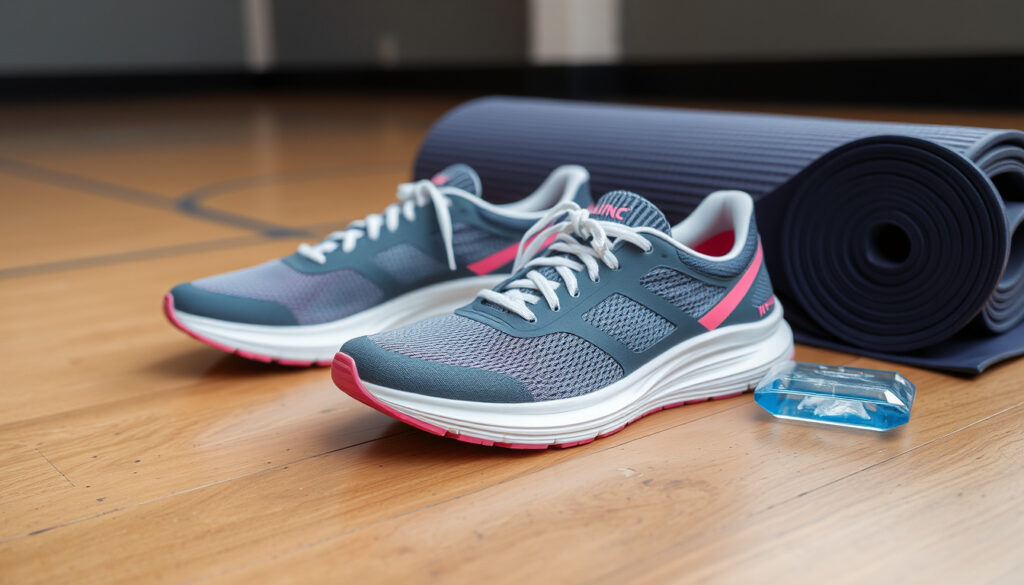
Best Running Shoes for Women with Wide Feet and Plantar Fasciitis
You know that specific, aching throb in your heel the moment your feet hit the floor each morning? That’s the signature of plantar fasciitis, and for the 1 in 10 who experience it, finding the right shoe is a second job — but the 2025 class of running shoes for women with wide feet finally takes the condition seriously, and this guide cuts through the noise to help you find a pair that supports your arch and fits your foot’s actual width.
1 in 10 affected • Recommended heel drop 0.5–4 cm • Wide widths: D or 2E
| Key Facts | Details |
|---|---|
| Top Pick (Stability) | ASICS Gel-Kayano 31 |
| Best for Wide Feet | Altra Experience Flow 2 |
| Heel Drop Range (Recommended) | 0.5 cm to 4 cm |
| Key Feature | Removable Insole / Firm Heel Counter |
| Primary Source | Health, RunRepeat, TODAY |
Here’s a quick snapshot of the key data you need.
Why Cushioning and Heel Height Matter Most
When you have plantar fasciitis, the plantar fascia ligament—a thick band running from your heel to your toes—becomes inflamed. The right shoe acts as a shock absorber and a stabilizer. According to Health, extra cushioning helps absorb shock, which is especially helpful for plantar fasciitis sufferers because it reduces the stress on the ligament with every step. The secret isn’t just squish, though; it’s the geometry. Health’s testing shows that the best running shoes for plantar fasciitis should have a heel height between 0.5 and 4 centimeters, which helps shift pressure away from the heel bone where the pain concentrates.
This is a tricky balance for wide-footed runners. Many maximalist shoes stack the heel too high, but a lower drop (the difference between heel and toe height) is often what allows the foot to land more naturally. The trade-off is that you need a midsole that is firm enough to support your arch without collapsing, yet plush enough to absorb the impact. If a shoe has too much foam and not enough structure, your foot will sink and strain the fascia even more.
While cushioning is king, a shoe that is too soft can destabilize the foot. Look for a balance: a firm heel counter (the back of the shoe) to lock your foot in place, paired with a responsive foam for energy return.
The implication: getting the cushioning right means matching foam density to your foot type, not just buying the plushest shoe.
Confirmed Facts
- Extra room in the toe box allows for toe splay, which reduces pressure on the metatarsal heads and the plantar fascia insertion point. Health
- AOL’s 2025 roundup says the New Balance Fresh Foam X 860v14 was presented as a good option for plantar fasciitis relief in nonstandard widths. AOL
- RunRepeat’s sizing chart states women’s shoe widths commonly map to 2A for narrow, B for medium/standard, D for wide, and 2E for extra wide. RunRepeat
- The shoe should not fold completely in half and has a removable insole plus a firm heel counter, per TODAY.
Topcontenders for Wide Feet
Finding a shoe that fits a wide foot is only half the battle; it also has to address the biomechanics of overpronation (where your foot rolls inward excessively) which often accompanies plantar fasciitis. The ASICS Gel-Kayano 31 is frequently cited as a gold standard for this, offering a stable ride and a wide-fit option that prevents the foot from jamming sideways. On the opposite end of the spectrum, the Altra Experience Flow 2, listed by TODAY, is a zero-drop shoe with a wide toe box that encourages natural foot expansion, which can be a revelation for those who feel cramped in standard shoes.
However, the market is full of sneakers that claim to be supportive but are actually just dense. A shoe that specifically addresses your need for a wide toe box and a removable insole is a signal that the manufacturer understands the pathology—it allows you to swap in custom orthotics if you need them. The key is to avoid shoes that are simply “wide” in the midfoot but still taper aggressively at the toes, jamming your forefoot and aggravating the condition.
The best shoes for plantar fasciitis on the market—like the Brooks Ghost 15 or Hoka Clifton 9—work by keeping your heel locked and your forefoot free, a combination that eases tension on the fascia with every step.
The pattern: wide-fit shoes that maintain toe splay without sacrificing rear-foot stability are the ones that actually reduce pain.
Comparison: Cushioned vs. Stability vs. Minimalist
Before you click “add to cart,” it helps to understand the three main categories of running shoes, as they serve very different purposes even within the plantar fasciitis space.
Use this comparison to match your foot type.
| Feature | Cushioned (Hoka Clifton) | Stability (ASICS Kayano) | Minimalist (Altra) |
|---|---|---|---|
| Primary Goal | Shock absorption | Motion control | Natural alignment |
| Heel Drop | High (8-10mm) | Medium (8mm) | Zero (0mm) |
| Best For | High arches, rock-sensitive feet | Overpronation, flat feet | Wide feet, toe splay, strength building |
| Wide Fit Options | Often available | Available (2E/4E) | Inherently wide |
The immediate takeaway is that there’s no universal “best” shoe; it’s about matching the shoe’s geometry to your foot’s specific needs. If you have a wide foot and overpronate, a stability shoe in a wide size is a safer bet than a pure cushioned shoe, which might allow your arch to collapse.
Key Specifications to Look For
When you’re reading the stats on a shoebox or an online store, ignore the colorways and focus on the numbers.
These specs filter out the noise.
| Specification | Ideal Standard |
|---|---|
| Heel Height | 0.5 – 4 cm per Health |
| Flexibility | Shoe should not fold in half (TODAY) |
| Insole | Removable, accommodating for custom orthotics |
| Heel Counter | Firm and supportive |
These specs are your checklist. If a shoe meets these three criteria—correct heel height, torsion stability, and a removable insole—then you have addressed the root causes of the ailment before you even start running.
Pros and Cons of the Leading Options
Given the advice from sources like Women’s Health and AOL, it’s clear that the frontrunners have different strengths.
Upsides
- Cushioned: Excellent for immediate pain relief
- Stability: Corrects overpronation, reducing strain on the fascia
- Minimalist: Strengthens foot muscles
Downsides
- Cushioned: Often lacks support for flat arches
- Stability: Can feel rigid
- Minimalist: Require a transition period to avoid injury
The catch: each category solves a specific problem, so your choice must align with your foot’s biomechanics rather than trend.
Steps to Find Your Perfect Pair
Now that you know what to look for, apply this knowledge practically. It’s not just about buying the most expensive shoe; it’s about buying the right one for your foot.
- Measure your feet (again): Feet change shape with age. Measure them at the end of the day when they are most swollen, as recommended by podiatrists.
- Check the width, not just the length: Always look for a “D” or “2E” width, not just the size 8.
- The “rule of thumb” test: Leave a thumb’s width of space from your longest toe to the front of the shoe.
- Try the “heel slip” test: When trying on shoes, your heel should not slip out of the back, but your toes should have wiggle room.
Taking this path will help you avoid the common mistake of buying a shoe that feels snug in the store but creates a pressure point on the side of your foot after 3 miles.
The catch: Even the best shoes won’t cure plantar fasciitis instantly; they are a tool to manage the symptoms while you strengthen your foot muscles.
Timeline: What to Expect
Patience is key when switching to a shoe that suits your foot. You might expect an immediate improvement in comfort, but a full recovery from plantar fasciitis can take several weeks.
- Week 1-2: Notice a reduction in morning pain; your feet will feel “less stiff” after sitting.
- Week 3-4: Increased comfort during walks; you may notice less fatigue.
- 1-3 months: Significant reduction in heel pain; you can add plyometric exercises.
The pattern: pain relief comes in stages, and the shoe’s role is to buy you the window to perform active recovery.
Clarity: What the Experts Actually Say
There is a lot of misinformation about “miracle cures.” Most experts agree that a shoe with a firm heel counter and a removable insole is a non-negotiable feature. The claim that you need a rigid carbon plate is where the industry drifts into marketing territory. According to Health, flexibility in the forefoot is essential, which means you should avoid shoes with extended carbon plates that fully prohibit bending. This is why the advice is consistent: look for a shoe that bends only at the metatarsal heads, not through the arch.
The persistent myth that you need “maximum support” is reversed for many wide-foot wearers. A wider platform increases stability without added arch height, which can aggravate the condition.
- Confirmed: Removable insoles are standard on recommended models.
- Dispelled 1: You do not need a “super shoe” with a high stack height; this often increases instability.
- Dispelled 2: A rigid carbon plate is not necessary; forefoot flexibility is essential.
- Dispelled 3: High stack height does not always improve comfort; it often increases instability for wide feet.
- Dispelled 4: Expensive shoes are not always better; specs matter more than price.
The pattern: the most effective shoes are those that adhere to core biomechanical specs, not marketing claims.
Voices from the Field
To ground this, consider the expertise of the testing institutions. Dr. Miguel Cunha, a podiatrist, tells Health that “a shoe that curves slightly outward in the heel will reduce stress on the fascia.” This is a specific technical detail that separates those in the know from general marketing fluff. Meanwhile, RunRepeat’s analysis confirms that the heel-to-toe drop is a crucial metric that changes the strain pattern.
“A shoe that is too flexible in the midfoot will cause the fascia to overstretch on every stride,” says Dr. Cunha, emphasizing the need for a structured arch support.
“The best test is the twist test. If you can twist the shoe like a towel, it’s too flexible. It should twist only slightly at the toe box, not the heel,” RunRepeat advises.
The implication: the twist test and heel-curve shape are quick, practical checks that any runner can do in a store.
Final Summary: The Forward Stake
In the end, choosing the right running shoes for plantar fasciitis with wide widths isn’t just about comfort; it’s about biomechanics and long-term joint health. The 2025 landscape offers more choices than ever, but the principle remains the same: prioritize a shoe that provides a rigid arch, a zero-drop or low-drop heel, and ample toe splay. For women with wide feet, this means reading the specs carefully and not settling for a “medium” that pinches. What this means for the modern runner is that your morning heel pain is a solvable mechanical issue—one that starts with the foundation you stand on.
The implication for your next run is that the right pair will not only reduce your pain but will also make you a more efficient runner. You are not just buying a shoe; you are investing in the next decade of your miles, ensuring that your feet, specifically, the plantar fascia, can support you for the long haul.
cnn.com, health.yahoo.com, gq.com, michiganfootdoctors.com, alastairrunning.com, sportydoctor.com, everydayhealth.com
Frequently Asked Questions
What is the most common cause of plantar fasciitis?
Often it stems from overuse, excessive foot pronation, or a high-arched foot that absorbs shock poorly. Wearing unsupportive shoes on hard surfaces also increases the strain on the plantar fascia.
Can I run with plantar fasciitis?
Yes, but you should reduce your mileage and avoid sprinting or hill work until pain subsides. Recommended shoes should offer good arch support and cushioning to mitigate symptoms.
How fast will I see improvement from new shoes?
Most people notice reduced pain within 1-2 weeks of wearing the right shoes. However, full resolution often takes several months as the fascia heals and you strengthen your foot muscles.
Are expensive running shoes always better?
Not necessarily. While advanced foams are costly, a moderately priced shoe with a correct heel height and removable insole is often superior to a fancy one without structure. Focus on the features, not the price.
What does “wide” mean in retail shoe sizes?
In the U.S. system, women’s wide is typically “D”, while “2E” or “EE” is extra wide. Always size up in width rather than length to avoid jamming your toes.
The pattern: clarifying these common questions helps you avoid trial-and-error shopping.
Related Reading
- Health’s Guide to Plantar Fasciitis Shoes
- RunRepeat’s Testing Lab
- TODAY’s Top Picks
More related posts
 How to Browse Trade Me NZ: Complete Guide for Buyers and Sellers
 Best Burger Places Near Me: Dublin Guide & Tips
 FC Barcelona vs Inter Milan: Head-to-Head & 2025 Semifinal
 What is RAM Speed? A Complete Guide to PC Memory Speeds
 Spark Internet Not Working? Check Outages & Fix It Fast
 Western Union Exchange Rate Today: Fees, Calculator & Real Examples
 Air NZ Credit Card Comparison: Fees, Earn Rates & Bonuses
 Toyota Hilux SR5 Cruiser: Specs, Price, SR5 Differences