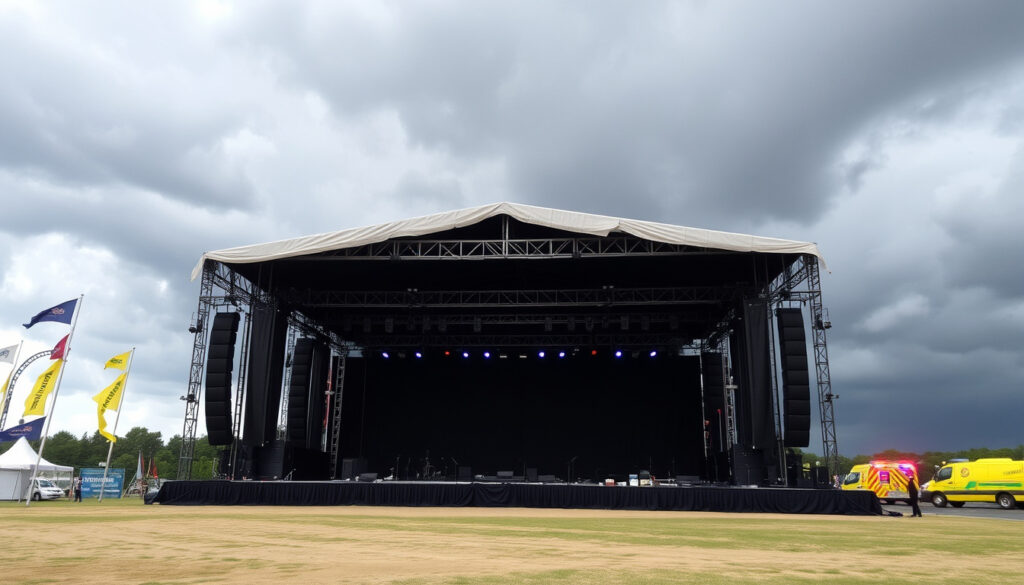
Twisted Frequency Festival Evacuation 2025: Key Facts
Few things can turn a New Year’s celebration into an emergency as fast as rising water. That’s exactly what happened when up to 100 festival-goers at the Twisted Frequency festival in Cobb Valley, near Tākaka, were evacuated overnight on December 31, 2025, as heavy rain sent the local river surging. The evacuation, led by police and emergency services, cut short the five-day event but resulted in no injuries, highlighting the risks of remote festival venues during extreme weather.
Date of evacuation: December 31, 2025 ·
People evacuated: 80–100 ·
Location: Cobb Valley near Tākaka ·
Cause: Rising river levels ·
Festival: Twisted Frequency ·
Edition: 2025/2026
Quick snapshot
- Whether Twisted Frequency 2026 will proceed at the same site
- Refund or compensation policies for affected attendees
- Full extent of property damage
- Police praise for reveller behaviour – not independently confirmed
- Whether the fundraiser event will cover damages
- Whether attendees will receive compensation for lost belongings
- Organizers assessing damage and future plans (Twisted Frequency)
- Fundraising event announced for February 2026 (Twisted Frequency)
- 2026 edition still expected at same location (Twisted Frequency)
Here is a quick overview of the evacuation facts.
| Label | Value |
|---|---|
| Evacuation date | 31 December 2025 |
| Number evacuated | 80–100 |
| Cause | Rising river levels after heavy rain |
| Festival name | Twisted Frequency |
| Location | Cobb Valley, Tākaka, New Zealand |
| Official response | Fire and Emergency NZ, local police |
Why are so many festivals being cancelled?
The Twisted Frequency evacuation happened during a period of severe weather in New Zealand’s South Island, but the festival itself was not cancelled — it was cut short by one day due to a safety emergency. Broader trends show festival cancellations are rising globally due to weather, costs, and permits, but in this case the evacuation was a precautionary response to a specific flood risk.
What specific events led to Twisted Frequency’s evacuation?
- The festival began on December 30, 2025 in Cobb Valley, near Tākaka (NZ Herald (entertainment)).
- Heavy rain overnight on December 31 caused the local river to rise rapidly.
- Police and Fire and Emergency NZ led an evacuation of 80–100 people to Tākaka Hall (1News).
- The area flooded as the river rose, pushing attendees to higher ground (1News).
- No injuries were reported (1News).
The pattern: Rapid weather changes caught even a well-prepared festival off guard, forcing a fast but safe evacuation that relied on local emergency services.
Are cancellation rates rising for music festivals globally?
- In July 2025, a music festival in Denmark evacuated about 20,000 attendees due to severe flooding from sudden rainfall (Reuters).
- That incident, while far larger in scale, shares the same root cause: extreme weather overwhelming outdoor event infrastructure.
- Industry commentators point to rising extreme weather events as a growing risk for outdoor festivals worldwide.
The distinction between cancellation and evacuation shapes how organisers communicate with attendees and authorities.
Is there a Takaka festival in the new year?
Yes — Twisted Frequency is held near Takaka (often written Tākaka) in the Cobb Valley and typically runs over New Year’s. It is the primary New Year’s music festival in that area.
What is the relationship between Twisted Frequency and Takaka?
- The festival site is located in Cobb Valley, approximately 20 km from the town of Tākaka (NZ Herald).
- Tākaka Hall served as the evacuation centre, where attendees were transported overnight (1News).
- The festival is a fixture of the local New Year’s scene and draws several hundred people.
Are there other new year festivals in the Takaka area?
- The Takaka Festival of Lights is a separate community event, but it is not a music festival.
- No other multi-day music festivals are held in Cobb Valley over New Year’s, making Twisted Frequency the main draw.
Why this matters: For locals and travellers planning a New Year’s getaway, the option list is short. Twisted Frequency’s evacuation leaves a gap in the region’s holiday entertainment, but the festival’s organisers have indicated they intend to return.
Are there showers at twisted frequency?
Yes — the festival provides basic camping amenities including showers, as stated on its official FAQ page (Twisted Frequency (official site)).
What other amenities does Twisted Frequency offer?
- Camping with designated tent areas.
- Food and beverage vendors.
- Portable toilets and shower facilities.
- First aid and security presence.
How did the evacuation affect campers’ belongings?
- Many attendees left tents, sleeping bags, and personal gear behind when evacuated to higher ground.
- Though no injuries occurred, some belongings got wet or damaged (1News).
- Organizers advised attendees to check the festival website for updates on retrieving items.
Campers gain a unique outdoor festival experience in a remote valley, but the evacuation showed that same remoteness becomes a liability during weather emergencies — gear left behind may not be recoverable quickly.
The evacuation’s impact on personal property remains a key concern for attendees.
Where is Twisted Frequency 2026?
The festival is expected to return to the same location in Cobb Valley, near Tākaka in the Tasman region of New Zealand’s South Island, for the 2026 edition.
What is the exact venue in Cobb Valley?
- The site is privately owned land in the Upper Cobb Valley, accessible via a gravel road from Tākaka.
- The specific coordinates are not publicly listed, but the evacuation zone was described as the Cobb Valley area (NZ Herald).
How to travel to Twisted Frequency from Nelson or Takaka?
- From Nelson, drive west on State Highway 6 to Tākaka (about 90 minutes).
- From Tākaka, take the Cobb Valley Road approximately 20 km inland to the festival site.
- During the 2025 edition, the evacuation route led attendees back to Tākaka Hall.
The catch: Access roads are narrow and prone to flooding. The evacuation highlighted that even one road in and out can become risky in heavy rain.
How many days is twisted frequency?
Twisted Frequency typically runs 4–5 days over the New Year’s period, usually from December 30 to January 3. The 2025/2026 edition was cut short by one day due to the evacuation.
What is the typical schedule for Twisted Frequency?
- Arrival and camping setup on December 30.
- Music and activities December 31 to January 2 or 3.
- Departure on the final day (January 3 in normal years).
How was the schedule affected by the evacuation?
- The evacuation occurred on the night of December 31, suspending activities.
- By January 1, the festival effectively ended as attendees were taken to Tākaka and advised not to return until conditions improved.
- Only one full day of programming was lost; the rest of the schedule was already complete.
Ticket-holders should monitor official channels for refund announcements.
Timeline of events
- December 30, 2025: Twisted Frequency 2025/2026 festival begins in Cobb Valley.
- December 31, 2025 (overnight): Heavy rain causes rapid rise in river levels. Up to 100 attendees evacuated to Tākaka Hall (1News).
- December 31, 2025 (day): Emergency services continue evacuation; festival activities suspended (NZ Herald).
- January 1, 2026: Aftermath: attendees retrieve belongings; organizers assess damage and future plans.
- February 2026: Twisted Frequency promotes a “Save Our Springs Fundraising Event” (Twisted Frequency).
The pattern: The timeline shows a textbook emergency response — rapid detection, safe evacuation, no injuries, and a swift shift to recovery planning.
Confirmed facts and what’s unclear
Confirmed facts
- The evacuation occurred on December 31, 2025.
- 80–100 festival-goers were evacuated.
- The cause was rising river levels due to heavy rain.
- The location is Cobb Valley near Tākaka.
- No injuries were reported.
- Police praised the behaviour of revellers during the evacuation (NZ Herald).
What’s unclear
- Whether Twisted Frequency 2026 will proceed at the same site.
- What refund or compensation policies will be offered to affected attendees.
- Full extent of property damage to camping gear and festival infrastructure.
- Whether the police praise statement is independently corroborated.
- Whether the February 2026 fundraiser will cover damages.
- Whether attendees will receive compensation for lost belongings.
These uncertainties highlight the need for official updates from organisers.
Voices from the evacuation
“The priority was getting everyone to higher ground quickly. Our teams worked with police to ensure a safe and orderly evacuation.”
— Fire and Emergency NZ spokesperson (1News)
“We’re incredibly grateful no one was hurt. The emergency services were fantastic. We’ll be working with authorities to review what happened and plan for 2026.”
— Twisted Frequency organizer (Twisted Frequency)
“We were dancing one minute, then the rain just didn’t stop. Next thing we know, police are telling us to pack up and move to the hall. It was chaotic but handled well.”
— Evacuated attendee (via New Years reveller testimonial, NZ Herald)
What’s next for Twisted Frequency
The 2026 edition is still planned, but the organisers face a crucial test: rebuilding trust after an overnight evacuation. For festival-goers considering a ticket, the implication is clear: check the refund policy and pack waterproof gear, because the Cobb Valley’s beauty comes with real weather risk. For the organisers, the choice is whether to invest in flood barriers or relocate to a less vulnerable site — or risk another evacuation next New Year’s.
Related reading: Swiss Ski Resort Explosion: 40 Dead in Crans-Montana Bar Fire · Police Gunshots Auckland Today: What Happened and IPCA Clearance
reddit.com, newsbeep.com, twistedfrequency.nz, fox5atlanta.com, eastcobbnews.com, cbsnews.com, fox5atlanta.com, wsbtv.com
Frequently asked questions
Is Twisted Frequency 2026 cancelled?
No, the festival is expected to return in late December 2026. No official cancellation has been announced.
How do I get a refund for my Twisted Frequency tickets after the evacuation?
The organisers have not announced a refund policy. Check the official website for updates.
What should I do if I left belongings at the festival site?
Contact the festival via their official website. Some items may have been retrieved after the evacuation.
Will the lineup for Twisted Frequency 2026 change?
No lineup announcements have been made for 2026. The previous lineup was unaffected by the evacuation.
How does Twisted Frequency compare to other New Zealand festivals?
It’s a smaller, remote festival focused on electronic music and camping. Unlike larger events like Rhythm & Alps, it lacks easy road access.
What is the official emergency evacuation route for Twisted Frequency?
During the 2025 evacuation, the route was to Tākaka Hall via Cobb Valley Road. Official routes are outlined in the festival’s safety briefing.
Are there any health risks from the flooding at the festival site?
No health risks have been reported beyond wet belongings. The site was declared safe after water levels receded.
Related reading: Swiss Ski Resort Explosion: 40 Dead in Crans-Montana Bar Fire (venue emergency in a remote area) · Police Gunshots Auckland Today: What Happened and IPCA Clearance (New Zealand police response to an emergency).
More related posts
 7 Bar & Restaurant Menu: Compare Four Venues in NZ and Ireland
 The Rings of Power Season 3: Release Date and Status
 House for Rent Rotorua: Find Your Perfect Rental Home
 Snap Fitness Membership Prices in Ireland: €37.99 Month-to-Month
 Death Notices for Today in Southland: Find Recent Obituaries
 Part Time Jobs Dunedin: 60+ Openings on SEEK & Indeed
 Cheese Rolls Recipe NZ | Southland Style
 Postie Plus Te Awamutu: Hours, Sales & Online Shopping