Cape Kidnappers Gannet Colony: Walk, Tours & Access Guide
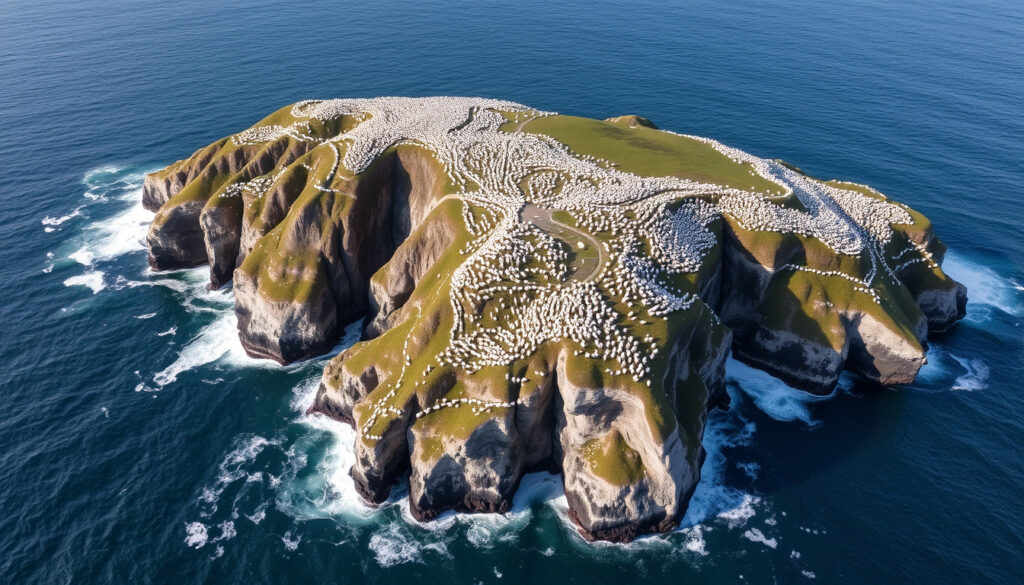
At Cape Kidnappers, thousands of gannets wheel above cliffs while the Pacific crashes below. This gannet colony is one of the few places on Earth where you can witness a mainland colony of this scale without boarding a boat.
Gannet Population: 20,000+ ·
Location: Cape Kidnappers, Hawke’s Bay, New Zealand ·
Access Type: low tide walk or tractor tour ·
Reserve Name: Cape Kidnappers/Te Kauwae-a-Māui Gannet Reserve ·
Operator Site: Department of Conservation
Quick snapshot
- 20,000 gannets nest at the Plateau colony during season (Exploration Vacation)
- Beach walk covers 19 km return from Scotmans Point at Clifton (Department of Conservation)
- Tractor tours operated by Gannet Beach Adventures since 1952 but closed in 2023 (Exploration Vacation)
- Whether foot access remains viable as vehicle bans tighten (Exploration Vacation)
- Exact gannet population counts by year (Laidback Trip)
- Current pricing and schedules for overland tour operators (Exploration Vacation)
- Gannet Beach Adventures founded in 1952, closed 2023 (Exploration Vacation)
- Gannet viewing season runs late September through end April (TripAdvisor)
- Track reopened with new signs after unspecified closure (Department of Conservation)
- Overland tours via private farm remain the primary guided option (Department of Conservation)
- Peak viewing November through February (Laidback Trip)
- Safety status at the reserve can change anytime due to rockfall risk (Department of Conservation)
Key facts about the reserve at a glance:
| Fact | Details |
|---|---|
| Gannets Count | 20,000+ |
| Access Method | Walk or tractor tour |
| Tide Requirement | Low tide only |
| Location | Hawke’s Bay, New Zealand |
| Managing Body | Department of Conservation |
How to see gannets at Cape Kidnappers?
Cape Kidnappers holds the world’s largest and most accessible mainland gannet colony, with more than 20,000 birds descending on the cliffs each breeding season (Exploration Vacation). The Department of Conservation manages the reserve and offers two distinct ways to reach the birds: a low-tide beach walk from Clifton, or an overland safari through private farmland.
Walking route details
- The beach route starts at Scotmans Point in Clifton, 21 km south of Napier and 18 km east of Hastings (Department of Conservation track guide)
- The one-way distance is 7–8.5 km; round trip covers 19 km and takes at least five hours at a steady pace (Department of Conservation reserve page)
- Elevation gain totals roughly 100 meters, concentrated on the final kilometer approaching the Plateau colony (Laidback Trip walking guide)
Tour options
- Overland safaris: Gannet Safaris and similar operators run daily tours through private farmland, avoiding the beach entirely (Department of Conservation reserve page)
- Overland tours include a 25-minute moderate uphill walk to the Plateau colony viewing area (Exploration Vacation tour guide)
- Alternative options include kayak, boat, or quad bike excursions for visitors who want different vantage points (Cape Coast Arts & Heritage Trust)
Best viewing times
- The colony is active from late September through the end of April, with peak activity between November and February (Laidback Trip guide)
- Tours suitable for all ages depart on low tide, and the beach walk requires leaving no sooner than three hours after high tide and departing the colony no later than 1.5 hours after low tide (Department of Conservation safety guidelines)
- The Plateau colony offers the best views of nesting gannets on private land, requiring a moderate 25-minute uphill walk from the beach landing point (Department of Conservation reserve page)
How to get to Cape Kidnappers gannet colony?
Getting to Cape Kidnappers requires understanding the tide, the terrain, and the current state of access routes. The Department of Conservation maintains the official reserve page with real-time safety updates, which visitors should check before planning any trip.
From Hawke’s Bay
- The access point for the beach walk is Clifton, a small settlement 21 km south of Napier and 18 km east of Hastings (Department of Conservation track page)
- Parking is available near Te Awanga, and visitors typically walk from there to the Scotmans Point entry point (Laidback Trip visitor guide)
- Check tide timetables at visitor centers in Napier or Hastings, or online through MetService’s marine tide data (MetService tide information)
Tide and safety checks
- Beach access requires low tide conditions. Leave no sooner than three hours after high tide, and depart the colony no later than 1.5 hours after low tide to avoid being caught by the rising Pacific (Department of Conservation safety guidelines)
- The tide comes in quickly along this coast, and there are no escape routes up the cliffs in most places (Exploration Vacation guide)
- The beach route passes directly under unstable cliffs with significant landslide and rockfall risk, which the Department of Conservation compares to the hazards faced in mountain climbing (Department of Conservation reserve page)
Parking near Te Awanga
- Public parking is available in the Te Awanga area, from where visitors walk to the beach access point
- The Cape Kidnappers Golf Course nearby may offer additional parking for visitors
The Department of Conservation states the rockfall and landslide risk on the beach route is comparable to mountain climbing — not a casual beach stroll, regardless of how mild the weather looks from the parking lot.
Can you walk to the gannet colony?
Yes, you can walk to the colony, but only at low tide and only if you respect the timing windows set by the Department of Conservation. The walk is not a casual shoreline stroll — it demands preparation and awareness.
Route description
- The route follows the beach from Scotmans Point at Clifton beneath cliffs that contain stratified rock beds, fault lines, fossils, and petrified wood (NewZealand.com geological feature)
- The first nesting site along the route is Black Reef, where gannets nest on sandstone rocks before moving to the main Plateau colony (NewZealand.com walking track guide)
- The final approach to the Plateau requires a moderate 25-minute uphill walk on private land (Department of Conservation reserve page)
Tide requirements
- Start the walk no sooner than three hours after high tide to ensure the beach is sufficiently exposed
- Depart the colony no later than 1.5 hours after low tide — the tide moves faster than most visitors expect
- The area is a tsunami risk zone, adding another layer of timing complexity for beach travel (TripAdvisor tour reviews)
Fitness level needed
- Moderate fitness is required for the full return walk, which takes at least five hours at a brisk pace (Department of Conservation reserve page)
- TripAdvisor reviews note the walk is suitable for most fitness levels if pace is managed, though the terrain is uneven and exposed (TripAdvisor visitor reviews)
- The final uphill climb to the Plateau colony adds challenge after the long beach section
The Hawke’s Bay Regional Council designates Cape Kidnappers as a site of international importance — one of the world’s most accessible mainland gannet colonies — but that accessibility depends entirely on whether visitors understand and respect the tide windows.
Can you drive to Cape Kidnappers gannet colony?
No direct vehicle access leads to the gannet colony itself. The beach route is closed to vehicles post-2023, and the colony sits on private land beyond the headland. Visitors have several practical alternatives.
Vehicle access limits
- Beach access by vehicle ended in 2023 when prohibitions on beach travel were enforced (Exploration Vacation tour guide)
- The road leads to the headland area where parking is available, but from there the colony is only reachable on foot or by tour
Alternatives to driving
- Overland tours via private farm provide the most practical vehicle-free option, with operators transporting visitors from designated meeting points (Department of Conservation reserve page)
- Guided kayak and boat tours offer water-based access for visitors who want to see the colony from the sea (Cape Coast Arts & Heritage Trust)
- Quad bike tours represent another option for reaching interior viewpoints
Nearby golf course
- The Cape Kidnappers Golf Course sits near the access point and offers day-use options for visitors combining golf with wildlife viewing
- The course is a significant attraction in its own right, frequently ranked among New Zealand’s premier golf destinations
Gannet Beach Adventures, which operated tractor tours since 1952 using vintage 1949 Minneapolis Moline tractors, ceased beach operations in 2023. Overland tours are now the primary guided option, and they run daily through private farmland.
The pattern: vehicle restrictions have made the beach walk the only free-access option, but that walk carries real hazards. Tour operators fill the gap for visitors who want expert guidance and reduced risk.
How many gannets are at Cape Kidnappers?
More than 20,000 gannets nest at Cape Kidnappers during the breeding season, making it the world’s largest accessible mainland gannet colony. The colony’s exact size fluctuates year to year, but visitor numbers consistently top 20,000 annually.
Current population
- The Plateau colony hosts over 20,000 gannets during the breeding season from late September to April (Laidback Trip walking guide)
- The Department of Conservation estimates annual visitor throughput at over 20,000 people accessing the colony via various means (Cape Coast Arts & Heritage Trust)
- These tours represent one of New Zealand’s longest-running eco-tourism businesses, according to the Cape Coast Arts & Heritage Trust (Cape Coast Arts & Heritage Trust)
Seasonal changes
- Gannets arrive in late September, with nesting activity building through October and peaking November through February (Laidback Trip guide)
- By the end of April, most gannets have departed for their winter feeding grounds
- Visitor experience varies by season: early season offers nesting display behaviors, while late season shows fledged chicks
Comparison notes
- Cape Kidnappers is designated by the Hawke’s Bay Regional Council as a site of international importance for its gannet population (Cape Coast Arts & Heritage Trust)
- No other mainland colony in New Zealand matches this scale of accessible nesting activity
Steps: Planning your Cape Kidnappers visit
- Check the reserve status: Visit the Department of Conservation reserve page for current safety notices, closure updates, and trail conditions before planning your trip (DOC official reserve page)
- Consult the tide timetable: Access tide data through MetService or at visitor centers in Napier or Hastings. You need to start no sooner than three hours after high tide and depart the colony no later than 1.5 hours after low tide (MetService tide information)
- Choose your access method: Decide between the 19 km beach walk (free, requires fitness and tide timing) or an overland tour (paid, guided, lower risk). Overland tours operate daily through private farmland and include transport and commentary (Department of Conservation access guide)
- Book your tour if applicable: Overland operators like Gannet Safaris run daily departures during gannet season (late September through April). Confirm current pricing and availability directly with operators.
- Prepare your gear: Walking visitors need sturdy footwear, sun protection, adequate water, and weather-appropriate clothing. The terrain is uneven, exposed, and has limited shade.
- Arrive early at the access point: For beach walks, arrive at the Clifton access point with buffer time before your target departure window. Parking near Te Awanga fills quickly during peak season.
- Respect the timing: The tide moves fast here. Once you commit to the beach walk, leaving late is not an option. If you’re unsure about conditions, turn back or reschedule your visit.
What visitors and officials say
This has been equated with the risk level people undertaking mountain climbing face.
— Department of Conservation (Government reserve safety guidance)
Cape Kidnappers is considered by the Hawke’s Bay Regional Council a site of international importance… one of the world’s most accessible mainland gannet colonies.
— Cape Coast Arts & Heritage Trust (Regional trust visitor article)
The tide comes up FAST here and there’s no way to scramble up the cliffs in most places. For more information on visiting this area, check out this awesome guide to the Cape Kidnappers Gannet Colony Saalfelden Steinernes Meer Urlaub Tipps.
— Exploration Vacation Guide (Travel writer safety note)
What the pattern tells us: the officials who manage the reserve and the locals who have watched the colony for decades are consistent in their warnings. This is not a beach to take lightly, but for those who prepare properly, it remains one of the world’s most remarkable wildlife encounters on a mainland shore.
For visitors planning a Hawke’s Bay trip, Cape Kidnappers represents either a satisfying self-navigation challenge or a compelling reason to book a guided tour. The beach walk rewards those with proper preparation and respect for the tide, while overland tours offer a safer, narrated experience at a modest additional cost. What hasn’t changed is the spectacle itself: more than 20,000 gannets wheeling above cliffs that have hosted their kind for generations. Whether you trek the sand or ride through farmland to reach them, the colony delivers on its reputation as one of Earth’s most accessible mainland wildlife spectacles.
Frequently asked questions
What is the best time to visit Cape Kidnappers gannet colony?
The colony is most active between November and February, when nesting and chick-rearing are in full swing. Late September through April covers the full breeding season, but early and late season visits offer different experiences: arrival displays in September and October, fledged chicks in March and April.
How long is the walk to the gannet colony?
The beach walk from Scotmans Point at Clifton covers 7–8.5 km one way, with a 19 km round trip taking at least five hours at a steady pace. The final approach to the Plateau colony requires an additional moderate 25-minute uphill walk on private land.
Are tractor tours available year-round?
Gannet Beach Adventures, the former tractor tour operator, ceased beach operations in 2023. Overland tours via private farm still operate daily during the gannet viewing season (late September through April). Contact current operators directly for schedules and availability.
What should I bring to Cape Kidnappers gannet colony?
Essential items include sturdy footwear, sun protection, ample water, snacks, and weather-appropriate layers. The terrain is uneven and exposed, with limited shade along the beach. Walking poles are helpful for the uneven sections and final uphill climb.
Is Cape Kidnappers gannet colony free to visit?
The beach walk is free, though visitors must manage their own timing and safety. Overland tours are paid experiences. The reserve itself has no entry fee, but parking near Te Awanga may have standard regional parking charges.
What is the address for Cape Kidnappers gannet colony?
The reserve is accessed via Clifton Road in Clifton, Hawke’s Bay. The nearest town is Te Awanga, approximately 21 km south of Napier and 18 km east of Hastings. The DOC reserve page provides detailed driving directions and access coordinates.
Can kids visit Cape Kidnappers gannet colony?
Children can visit via overland tours, which are rated suitable for all ages. The beach walk is more challenging and requires the fitness and maturity to handle five-plus hours of uneven terrain and potential exposure to sun and wind. Parents should assess their child’s fitness and temperament before choosing the walking route.
Related reading: Glass Bottom Boat Whitianga Tours
New Zealand’s seabird hotspots extend beyond gannets, with the Oamaru blue penguin colony drawing crowds for evening penguin parades just a few hours south.
More related posts
 In-N-Out Auckland Pop-Up: Menu, Facts & NZ Fast Food Scene
 Spider Solitaire 2 Suits: Rules, Tips & Free Online Play
 Global Work and Travel: Is It Legit? Scams & Top Countries
 Work to Residence Visa NZ: Salary, Cost, and Requirements
 Pacers vs Cleveland Cavaliers: Score, Ejection & Fines
 Puppies for Sale Christchurch: Buying Guide & Breeder Tips
 Ducted Air Con Installation Guide: Costs, Risks & Tips
 World Map with Names: Projections, Accuracy, and Facts