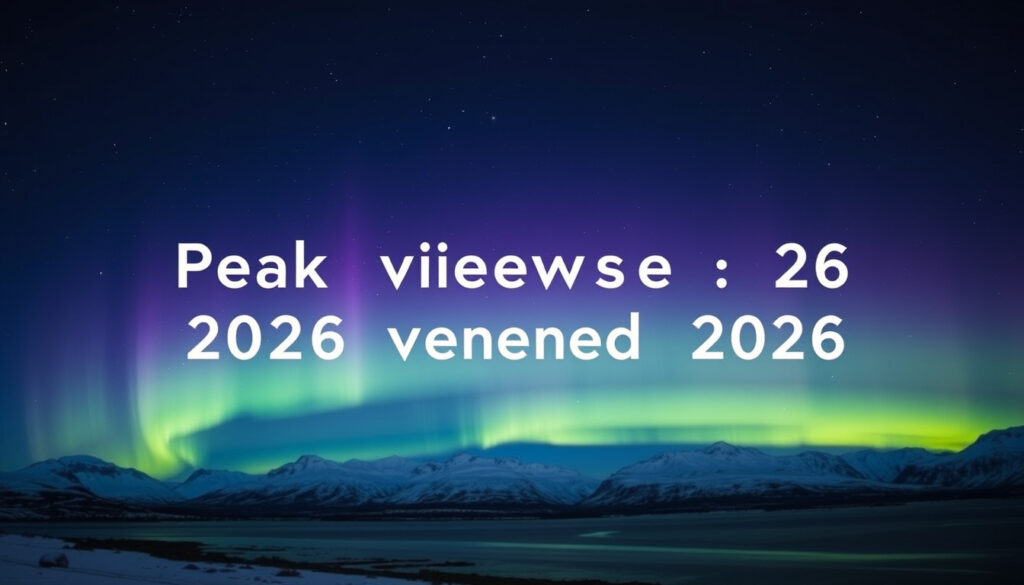
Southern Lights New Zealand 2026: Aurora Australis Viewing Guide
You’ve probably heard about the Northern Lights, but did you know New Zealand offers a front-row seat to their southern sibling, the Aurora Australis? The Southern Lights dance across the skies from March to September, with some of the world’s darkest viewing spots tucked away on the South Island, and this guide walks you through the best locations, timing, and forecast tools to help you finally check “see the Southern Lights” off your list — with a special focus on the promising 2026 solar cycle peak.
Best viewing season: March to September ·
Prime viewing hours: 10 PM to 2 AM ·
Optimal solar cycle year: 2026 ·
Top dark sky reserve: Aoraki Mackenzie (Lake Tekapo) ·
Aurora alert service: AuroraAlert (University of Otago)
Quick snapshot
- March to September (autumn/winter) Aurora Tracker
- Longer nights provide more viewing time Aurora Tracker
- Lower light pollution in winter Vacation Queenstown
- 10 PM to 2 AM local time Vacation Queenstown
- New moon nights are ideal Aurora Tracker
- Check aurora forecast (Kp-index) Aurora Forecast Me
- Lake Tekapo / Aoraki Mackenzie Dark Sky Reserve Vacation Queenstown
- Queenstown / Lake Wakatipu Vacation Queenstown
- Stewart Island / The Catlins Aurora Forecast Me
- Dunedin / Otago Peninsula University of Otago
- Solar cycle 25 peaks in 2025-2026 NOAA Space Weather Prediction Center
- Expected increased aurora frequency and intensity NOAA Space Weather Prediction Center
- Plan trips around new moon periods Aurora Tracker
Six facts, one pattern: every key variable for catching the Aurora Australis comes with a threshold you can check before driving out into the cold.
| Fact | Value |
|---|---|
| What drives the aurora | Solar wind particles interacting with Earth’s magnetosphere NOAA Space Weather Prediction Center |
| Primary viewing season | March to September Vacation Queenstown |
| Peak daily timeframe | 10 PM – 2 AM Aurora Tracker |
| Optimal solar cycle year | 2026 (near cycle maximum) NOAA Space Weather Prediction Center |
| Official alert service | AuroraAlert (University of Otago) University of Otago |
| Key Kp-index for NZ | Kp 5 or higher usually needed Aurora Forecast Me |
For the traveler planning a trip around the 2026 solar cycle peak, the difference between a blank sky and a green arc is knowing your Kp threshold — and picking the right spot south of the 45th parallel.
When can I see the Southern Lights in New Zealand?
Best months for viewing
- The core viewing season runs from March to September Aurora Tracker, when New Zealand’s autumn and winter deliver the longest, darkest nights.
- March and September — the equinox months — are widely reported as sweet spots for auroral activity Vacation Queenstown.
- Winter months (June-August) combine early sunsets with lower light pollution from reduced tourist traffic.
Best time of night
- The prime viewing window falls between 10 PM and 2 AM local time Aurora Tracker.
- Be ready roughly an hour after sunset Vacation Queenstown, but the deepest darkness — at least 90 minutes past sunset — is the real target.
- New moon nights are ideal Aurora Tracker; even a half moon can wash out faint auroral arcs.
Solar cycle influence on visibility
- Solar cycle 25 is predicted to peak around 2025-2026 NOAA Space Weather Prediction Center, meaning more frequent and intense geomagnetic storms.
- At the cycle’s maximum, the chance of a Kp 7+ storm — capable of lighting up skies across most of the South Island Aurora Forecast Me — rises significantly.
The implication: knowing the season, time, and solar cycle can stack the odds in your favor.
Where can you see the Aurora Australis in New Zealand?
Aoraki Mackenzie Dark Sky Reserve (Lake Tekapo)
- Aoraki Mackenzie is the largest dark sky reserve in the Southern Hemisphere, offering world-class light control Vacation Queenstown.
- Lake Tekapo’s shores — especially those facing south — provide unobstructed horizons for aurora viewing.
- Mt John Observatory is located at the summit, but night access is restricted unless you’re on a tour Vacation Queenstown.
The Catlins and Stewart Island
- Stewart Island, New Zealand’s southernmost inhabited island, can show aurora at a lower Kp-index of 4 to 5 thanks to its latitude Aurora Forecast Me.
- The Catlins region offers remote coastal viewpoints with negligible light pollution.
Queenstown and surrounding lakes
- Queenstown provides convenient accommodation and tour options, but its town lights mean you’ll want to head to the lake shores facing south and away from the CBD glow Vacation Queenstown.
- Winter months (June-August) in Queenstown deliver the best conditions, with early darkness and frequent clear spells.
Dunedin and the Otago Peninsula
- Dunedin is home to the AuroraAlert project at the University of Otago University of Otago, giving local viewers hyper-local forecast data.
- The Otago Peninsula’s exposed southern coastline reduces light interference.
The implication: your Kp threshold changes with latitude. Stewart Island will flicker at Kp 4 while Queenstown’s horizon stays blank. Choose your location based on how low you want that threshold.
Is 2026 a good year to see the Aurora Australis?
Understanding the 11-year solar cycle
- The Sun follows an approximately 11-year cycle of magnetic activity. Solar cycle 25 began in December 2019 and is expected to reach its maximum between 2025 and 2026 NOAA Space Weather Prediction Center.
- At solar maximum, the number of sunspots — and the frequency of coronal mass ejections that drive auroral displays — peaks dramatically.
Forecast for 2025-2027 auroral activity
- Current NOAA projections place the peak of cycle 25 in the 2025-2026 window NOAA Space Weather Prediction Center.
- For New Zealand viewers, this means a higher probability of Kp 7+ geomagnetic storms that can make the Aurora Australis visible across the entire South Island and even the southern North Island Aurora Forecast Me.
- The equinox periods around March and September 2026 may produce enhanced auroral activity due to the Russell-McPherron effect, aligning the solar magnetic field with Earth’s magnetosphere.
What this means: 2026 isn’t just another year — it’s the statistical sweet spot of a decade-long window. If you’ve been waiting for a sign to book that South Island trip, the solar cycle is giving you one.
What time is best to see the Aurora Australis?
Optimal hours (10 PM – 2 AM)
- The sweet spot for aurora viewing in New Zealand consistently falls between 10 PM and 2 AM Vacation Queenstown.
- Be ready from about an hour after sunset Vacation Queenstown, as displays can start anytime once the sky is truly dark.
Moon phase impact
- New moon nights provide the darkest skies and dramatically improve your chances of seeing faint auroral arcs Aurora Tracker.
- A full moon can reduce contrast to near-zero for the human eye, though a strong storm at Kp 7+ may still punch through.
Local weather conditions
- Clear skies are non-negotiable. Cloud cover is the single biggest killer of aurora plans, even when the Kp-index is high.
- Check MetService forecasts MetService (New Zealand’s official weather service) for regional cloud cover before heading out.
You can have a perfect Kp forecast and still see nothing if a front rolls in. For the Auckland-based aurora chaser, the drive south is useless without a clear-sky window. Prioritise cloud-free nights over Kp numbers.
The pattern: timing is useless without clear skies, so always check the weather first.
Where is the best place to see the Aurora Australis in NZ?
Comparing top locations
- Lake Tekapo: The largest dark sky reserve in the Southern Hemisphere. Excellent darkness, but Mt John summit is off-limits at night without a tour. Popular, meaning more car headlights if you camp near the lakefront.
- Queenstown: Convenient and well-serviced, but requires you to drive 10-15 minutes away from town lights. Good for casual viewers who want aurora as part of a broader winter trip.
- Stewart Island: Remote, low light pollution, and the lowest Kp threshold (Kp 4-5) for any inhabited NZ location. The trade-off: limited accommodation and a ferry or flight from Invercargill.
- Dunedin: Close to the University of Otago’s AuroraAlert service University of Otago. Good for science-minded viewers who want real-time data alongside their view.
The pattern: accessibility scales inversely with aurora quality. Queenstown wins on logistics, Stewart Island wins on darkness. For most travelers, Lake Tekapo offers the best balance of both.
What time is the aurora visible tonight in New Zealand?
Reading an aurora forecast (Kp-index)
- The Kp-index measures geomagnetic activity on a scale of 0 to 9. For New Zealand, a Kp of 5 or higher is typically required for naked-eye visibility at mid-latitude locations like Queenstown Aurora Forecast Me.
- At Kp 4-5, southern locations like Stewart Island may see activity Aurora Forecast Me. At Kp 7+, the show can stretch across most of the South Island.
Using the AuroraAlert service
- AuroraAlert, run by the University of Otago, provides real-time aurora probability and alerts via email or SMS University of Otago.
- The service interprets live magnetometer data and issues notifications when conditions are favorable for your chosen location.
Checking local weather and cloud cover
- MetService MetService (New Zealand’s official weather service) offers hourly cloud-cover forecasts. Cross-reference these with your aurora alert.
- Mobile apps like Ventusky or Windy provide detailed satellite-based cloud maps updated every 15 minutes.
For the dedicated viewer, the nightly routine is: check auroraalert.otago.ac.nz for Kp status, look at MetService for cloud cover, then decide whether to drive. That three-step check eliminates the guesswork.
The catch: even the best forecast can’t guarantee a clear sky, so be ready to pivot.
- Check the Kp-index forecast on AuroraAlert or NOAA’s website.
- Verify cloud cover using MetService or a satellite weather app.
- Drive to your chosen dark-sky location and allow 20 minutes for your eyes to adapt.
Southern Lights Forecast, Tracker, and Alerts: How to Plan Your Viewing
Using the AuroraAlert website
- AuroraAlert.otago.ac.nz University of Otago is a free, research-backed real-time alert service. It uses local magnetometer data — not just satellite forecasts — to gauge conditions.
- The site provides a simple traffic-light system: green (low), yellow (moderate), red (active). Sign up for automated email or SMS alerts.
Joining the Aurora Australis NZ community group
- The Facebook group “Aurora Australis (NZ)” Facebook (Aurora Australia NZ community) offers crowd-sourced real-time sightings and local tips for specific locations.
- Members post when aurora is visible at Lake Tekapo, Queenstown, or Stewart Island — often before official alerts fire.
Mobile apps for forecast and tracking
- Apps like “My Aurora Forecast & Alerts” App Store (My Aurora Forecast) and “Aurora” provide push notifications based on your GPS location and Kp thresholds.
- The Aurora Go app offers location-specific probability, cloud cover, and light pollution overlays for Lake Tekapo Aurora Go.
The implication: combining multiple tools gives you the best chance of catching a display.
Confirmed facts and what remains uncertain
Confirmed facts
- Solar cycle 25 is ongoing and expected to peak around 2025-2026 NOAA Space Weather Prediction Center
- Best viewing months in NZ are March to September Vacation Queenstown
- AuroraAlert at auroraalert.otago.ac.nz is a free, real-time alert service University of Otago
- Lake Tekapo is part of the Aoraki Mackenzie Dark Sky Reserve Vacation Queenstown
What’s unclear
- Exact month of solar maximum is not precisely predictable in advance
- Local weather and cloud cover introduce significant unpredictability
- Kp-index thresholds for naked-eye visibility can vary by observer location
- Specific aurora timing (within a night) remains hard to forecast beyond a 30-minute window
- Cameras often detect aurora before the human eye Vacation Queenstown
- A Kp of 5 or higher is typically needed for mid-latitude NZ locations Aurora Forecast Me
The pattern: the more you rely on real-time data, the less uncertainty you face.
Expert perspectives on the Aurora Australis
“AuroraAlert provides a free service that interprets live magnetometer data from New Zealand, giving users a real-time indication of auroral activity and the likelihood of visible displays.”
University of Otago (AuroraAlert project lead)
“New Zealand’s autumn and winter months offer the best window for aurora viewing, with March and September being particularly favorable due to enhanced geomagnetic activity around the equinoxes.”
Vacation Queenstown (tourism guide)
“Solar cycle 25 is showing stronger activity than initially forecast, and we expect the solar maximum to occur in 2025-2026, which will bring increased opportunities for auroral displays even at mid-latitudes.”
NOAA Space Weather Prediction Center (solar cycle forecast)
The community consensus from these sources — academic, tourism, and forecasting — is consistent: 2026 is the year to prioritize a New Zealand aurora trip. But all three also warn that local weather is the wild card no forecast can eliminate.
Summary: The 2026 opportunity for New Zealand travelers
The Aurora Australis is not a tourist attraction with scheduled showtimes — it’s a collision between solar wind and magnetic field, visible only when darkness, clear skies, and solar activity align. The 2026 solar cycle maximum tilts the odds in your favor, but you still have to be in the right place at the right time. For the traveler weighing a New Zealand winter trip, the choice is clear: book around a new moon between March and September, keep AuroraAlert open on your phone, and be ready to drive south at 10 PM. Or wait another 11 years for the next peak.
aurorahunt.app, photoweather.app, facebook.com, hk.trip.com, weatherwatch.co.nz, photoweather.app, accuweather.com
For the most up-to-date predictions, check the Aurora Australis forecast for 2025–2026, which covers the same solar cycle peak that makes 2026 an exceptional year for viewing.
Frequently asked questions
What causes the Southern Lights (Aurora Australis)?
Solar wind particles from the Sun interact with Earth’s magnetosphere, creating charged particles that collide with atmospheric gases and produce light displays. The process is identical to the Northern Lights, except it occurs in the southern hemisphere NOAA Space Weather Prediction Center.
Do I need special equipment to see the aurora in New Zealand?
No — the aurora is visible to the naked eye during strong displays. However, a camera with manual settings (ISO 1600-3200, 10-30 second exposure) will capture detail that eyes miss, especially in faint displays Vacation Queenstown.
Can you see the Southern Lights from a city like Christchurch?
Light pollution in Christchurch makes it difficult. You’d need to drive at least 30 minutes to the Banks Peninsula, Akaroa, or toward the Canterbury Plains for a dark enough sky.
How accurate are aurora forecasts for New Zealand?
Short-term forecasts (1-3 hours ahead) are reasonably accurate when based on live magnetometer data from AuroraAlert University of Otago. Long-term forecasts beyond 48 hours are unreliable due to the unpredictable nature of solar flares.
Is it better to see the aurora during a full moon or new moon?
New moon nights are dramatically better. The extra light from a full moon can wash out faint auroral arcs, though a strong storm at Kp 7+ may still be visible Aurora Tracker.
How long does a typical aurora display last?
Displays can last from 10 minutes to several hours. Active periods often come in 30-minute pulses followed by quieter intervals. Some nights feature multiple cycles throughout the 10 PM to 2 AM window.
Are there guided tours for viewing the Southern Lights in NZ?
Yes. Several operators in Queenstown, Lake Tekapo, and Dunedin offer aurora-specific night tours. These often include transport to dark locations, camera setup guidance, and real-time forecast monitoring.
What is the difference between the Aurora Australis and Aurora Borealis?
They are the same phenomenon — solar activity interacting with Earth’s magnetic field — occurring at opposite poles. The Southern Lights (Aurora Australis) circle the Antarctic region, while the Northern Lights (Aurora Borealis) circle the Arctic. New Zealand’s southern latitude offers some of the best accessible land-based viewing for the Australis NOAA Space Weather Prediction Center.
More related posts
 Book a Bach Taupo: Holiday Homes & Rentals Guide 2025
 Cast of The Hunting Party TV Series: Main and Guest Stars
 Portuguese Tutor Near Me: Costs, Timelines & How to Choose
 Moving House and Broadband: How to Transfer Your Internet
 Mike and Claire Sardina: True Story of Lightning and Thunder
 New Plymouth Vet Group: Services, Prices, and Independent Care
 Best Broadband Provider NZ: Compare 2025 Plans & Deals
 Stu Wilson Cause of Death: All Blacks Legend Dies at 70