Mitre 10 Smoke Alarms: Buy, Best Types & Fix Beeping
If you’ve ever been jolted awake by a smoke alarm chirping at 3am, you know the frustration of a battery that should’ve been replaced months ago. New Zealand homeowners are increasingly turning to sealed 10-year battery smoke alarms to sidestep that midnight surprise entirely. This guide walks through what’s actually available at Mitre 10, which brands meet New Zealand standards, and exactly what to do when your alarm won’t stop beeping.
Battery Life Options: 10-year sealed lithium · Warning Tone: 85dB · Key Types Available: Photoelectric, Wireless Interlink · Test Method: Press test button for beeps · Interconnect Option: Wireless and hardwired
Quick snapshot
- Photoelectric alarms are the only type still sold in NZ (Consumer.org.nz buying guide)
- Watchman 10-year alarm certified to AS3786:2014 standard (Placemakers product listing)
- All alarms must be replaced within 10 years (Consumer.org.nz buying guide)
- Specific Mitre 10 AU vs NZ product pricing not publicly listed
- Independent lab sensitivity comparisons unavailable
- Exact manufacture dates for verifying 10-year replacement timing
- Ionisation alarms removed from NZ sale around 2020 (Consumer.org.nz buying guide)
- AS3786:2014 standard introduced in 2014 (Placemakers product listing)
- Two-pack interconnected systems available through Mitre 10 group retailers
- Placemakers (Mitre 10 group) expanding wireless interlink range
Key facts about smoke alarm options available at New Zealand retailers help homeowners narrow their purchasing decisions.
| Label | Value |
|---|---|
| Retailer Sites | mitre10.co.nz and mitre10.com.au |
| Common Battery | 10-year lithium sealed |
| Test Frequency | Monthly with test button |
| Popular Model | Orca Photoelectric 2 Pack |
| NZ Standard Certification | AS3786:2014 or EN14604:2005 |
| Replacement Interval | 10 years maximum |
Does Mitre 10 Sell Smoke Alarms?
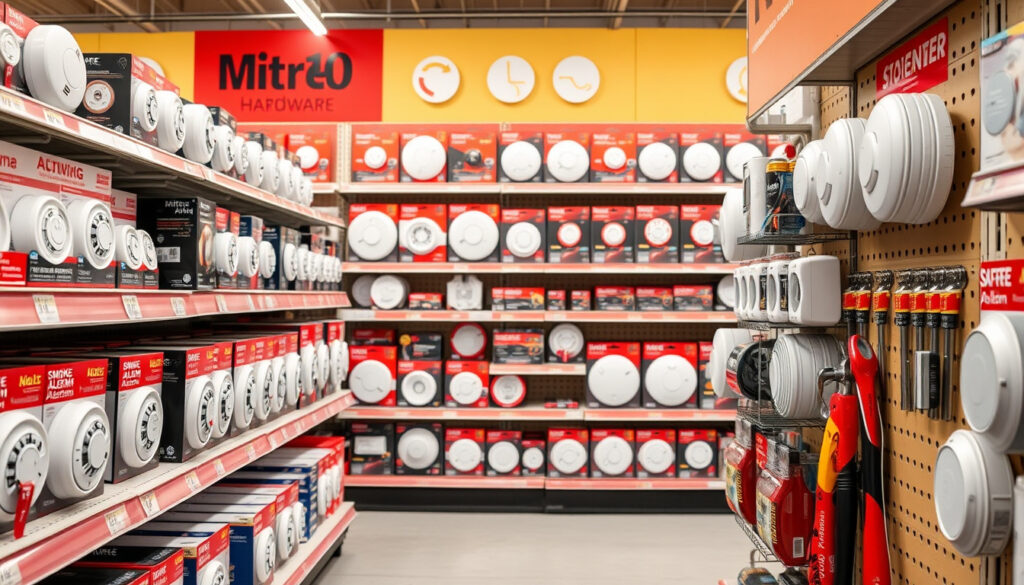
Mitre 10 operates across New Zealand and Australia with both online and physical store locations. The retailer stocks photoelectric smoke alarms suitable for New Zealand homes, including models from brands like Watchman and Orca that carry the required certifications.
Available Online and In-Store
Placemakers, which is part of the Mitre 10 group, lists the Watchman 10-year photoelectric smoke alarm in twin packs. The Orca 10 Year Smoke Alarm is also available through Mitre 10 channels in single and twin pack configurations. Both retailers offer online ordering with delivery or click-and-collect options.
Types Offered
The types available through Mitre 10 include photoelectric models with sealed 10-year lithium batteries, wireless interlink alarms that trigger simultaneously when one detects smoke, and compact designs like the Flamefighter Mini that suit bedrooms and hallways. Hard-wired options with backup batteries are also available for homeowners doing renovations or new builds.
Which Brand of Smoke Alarm is the Best?
No single brand dominates across all criteria, but several options stand out for different homeowner priorities. The best choice depends on whether you prioritise certifications, price, sensitivity, or smart features like wireless interconnection.
Top Brands at Mitre 10
The Watchman 10-year photoelectric smoke alarm from Placemakers carries AS3786:2014 certification (the current NZ standard) and includes a built-in 3V 10-year lithium battery with a 2-year warranty. The Orca 10 Year Smoke Alarm is certified to EN14604:2005 and features MCU processing to reduce nuisance alarms from dust or cooking. Users on Geekzone forums also recommend the Cavius 10 Year Battery Operated Photoelectric Smoke Alarm, though this is more commonly found through specialist distributors.
Photoelectric vs Ionization
Ionisation smoke alarms have been removed from sale in New Zealand entirely because they respond more slowly to smouldering fires. Photoelectric alarms are recommended by Fire and Emergency New Zealand and detected as superior for both flaming and smouldering fire detection. This means any alarm you buy at Mitre 10 today will be photoelectric.
For NZ homeowners, the Watchman and Orca both meet the required standards. Choosing between them comes down to warranty preferences (Watchman’s 2-year) versus anti-nuisance technology (Orca’s MCU processing).
What Kind of Smoke Detector is Best?
Photoelectric technology is the clear winner for residential settings in New Zealand. Consumer.org.nz recommends that any battery-powered alarm should have a built-in 10-year lithium-ion battery to avoid the hassle of annual replacements.
Photoelectric for Homes
Photoelectric smoke alarms use a light sensor to detect smoke particles. They respond faster to smouldering fires, which produce dense, visible smoke before flaring into open flames. Watchman alarms are specifically designed for bedrooms, living areas, and hallways, with large test and hush buttons that meet accessibility standards. The Flamefighter Mini offers more compact sizing while maintaining high sensitivity to slow smouldering fires.
10-Year Sealed Battery Models
Sealed 10-year lithium-ion batteries cost roughly $20 or more per unit but eliminate the need for annual battery swaps. When the battery eventually dies, you replace the entire alarm rather than just the battery. Consumer.org.nz notes that this approach is simpler and avoids the 3am chirps that occur when a 9V battery runs low. Consumer testing shows that 9V batteries typically last about one year before needing replacement.
The NZ Building Code requires working smoke alarms in residential properties. Homeowners who choose sealed 10-year models reduce compliance maintenance to simply testing monthly and replacing the entire unit after a decade.
How Do I Stop My 10 Year Smoke Alarm from Beeping?
A beeping 10-year sealed battery alarm usually indicates one of three things: the alarm has reached the end of its 10-year lifespan, the test function is being triggered accidentally, or dust has accumulated in the smoke chamber. Here’s how to diagnose and resolve each scenario.
Check Battery Status
With sealed battery models, you cannot replace the battery. Consumer.org.nz recommends pressing the test button to check if the alarm produces a loud 85dB beep. If there’s no sound or a weak sound, the sealed battery has likely expired and the entire unit needs replacement. Many users mistake this chirping for a low battery, but sealed units either work or they don’t.
Test and Clean Steps
If the alarm chirps intermittently, try using the hush button. Watchman alarms include a 9-minute hush function that silences nuisance alarms caused by steam, cooking, or dust. Consumer.org.nz recommends vacuuming around the alarm monthly to prevent dust from triggering false alerts. The compact smoke chamber technology in newer models like Watchman and Orca is designed specifically to reduce sensitivity to dust and insects.
If your sealed battery alarm is chirping and is less than 10 years old, it may still be under warranty. Check the manufacturer’s warranty period before buying a replacement. Watchman alarms include a 2-year warranty through Placemakers.
Can I Replace a Hardwired Smoke Alarm Myself?
Replacing a hardwired smoke alarm is manageable for confident DIYers, but safety precautions are essential. Hard-wired photoelectric smoke alarms with rechargeable 10-year backup batteries represent the best choice according to Consumer.org.nz, though battery-powered models work well for homes without existing hard-wired infrastructure.
Tools Needed
You’ll need a voltage tester to confirm power is off, a screwdriver, and wire connectors. The Watchman AJ-763 model is a standalone 10-year battery photoelectric alarm powered by DC3V, but hard-wired versions use the existing electrical connection plus a battery backup. Ensure any replacement alarm carries AS3786:2014 or equivalent certification for NZ compliance.
Safety Steps
Turn off the power at the circuit breaker before starting. Remove the existing alarm by twisting it counterclockwise to release it from the mounting bracket. Disconnect the wiring harness and connect the new alarm according to the manufacturer’s instructions. Restore power and test by pressing the test button. Consumer.org.nz advises setting annual reminders to test all alarms monthly and to replace any alarm that fails testing immediately.
Hard-wired alarms cost more upfront and may require an electrician if you’re not comfortable working with household wiring. However, they provide reliable power during outages when fires are statistically more likely due to candle use and heating equipment.
Smoke Alarm Comparison
Three smoke alarm types serve different homeowner needs across price, maintenance, and installation complexity.
This comparison helps homeowners select the right model based on their budget, installation situation, and maintenance preferences.
| Feature | Sealed 10-Year Battery | Hard-Wired with Backup | Wireless Interlink |
|---|---|---|---|
| Typical Cost | $20-$50 per unit | $60-$150 per unit | $80-$200 per unit |
| Maintenance | Monthly test, replace at 10 years | Monthly test, backup battery every 10 years | Monthly test, replace at 10 years |
| Installation | Surface mount, no wiring | Requires electrical wiring | Surface mount, wireless pairing |
| NZ Standard | AS3786:2014 | AS3786:2014 | AS3786:2014 |
| Best For | Rentals, existing homes | New builds, renovations | Multi-story homes, large properties |
The implication: most NZ homeowners will find sealed 10-year battery models provide the best balance of cost, compliance, and convenience for standard residential installations.
Smoke Alarm Specifications
Three popular models available through Mitre 10 group retailers offer different feature combinations for NZ homeowners.
These specifications allow homeowners to match alarm features to their specific installation requirements and environmental conditions.
| Specification | Watchman 10-Year | Orca 10-Year | Flamefighter Mini |
|---|---|---|---|
| Certification | AS3786:2014 | EN14604:2005 | EN 14604:2005 / A |
| Battery | 3V 10-year lithium (sealed) | 10-year lithium (sealed) | 3V lithium (sealed) |
| Battery Life | 10 years | 10 years | 10 years |
| Warranty | 2 years | Not specified | Not specified |
| Hush Feature | 9-minute hush | MCU anti-nuisance | Standard hush |
| NZ Building Code | Compliant | Compliant | Compliant |
| Ideal Locations | Bedrooms, living areas, hallways | General residential | Compact spaces, bedrooms |
The Orca alarm uses MCU processing to actively reduce nuisance alarms from dust or insects, making it suitable for kitchens and dusty environments where standard photoelectric alarms might false trigger.
Upsides and Downsides
Upsides
- Photoelectric technology meets NZ standards and detects smouldering fires faster
- Sealed 10-year batteries eliminate annual replacement hassle
- Multiple certification options (AS3786:2014, EN14604:2005) ensure compliance
- Large test buttons improve accessibility for elderly homeowners
- Twin packs available for cost-effective multi-alarm purchases
Downsides
- Sealed batteries cannot be replaced—entire unit must be replaced at 10 years
- Hard-wired models require professional installation if existing wiring is absent
- Prices vary significantly between retailers without clear price competition signals
- Specific Mitre 10 AU vs NZ product availability not publicly documented
- Independent sensitivity testing data unavailable for consumer comparison
How to Install and Maintain Your Smoke Alarm
Installing smoke alarms correctly maximises their effectiveness. Consumer.org.nz recommends specific placement and testing practices for New Zealand homes.
Installation Steps
- Choose locations: Install in every bedroom, outside each sleeping area, and on each level of the home. Watchman alarms are ideal for bedrooms, living areas, and hallways.
- Mount on ceilings or high on walls: Smoke rises, so ceiling mounting typically provides the earliest detection. Maintain at least 300mm from walls and corners.
- For battery models: Twist or screw the mounting bracket to the ceiling or wall, then attach the alarm body.
- For hard-wired models: Turn off power, connect wiring harness, attach mounting bracket, then restore power.
- Connect interlink models: Follow manufacturer pairing instructions to link wireless alarms together.
- Test immediately: Press the test button and verify the loud 85dB alarm sounds.
Monthly Maintenance
- Press the test button to verify the alarm sounds
- Vacuum around the alarm to remove dust from the smoke chamber
- Check that visual indicators are functioning (most models have a blinking light)
- Ensure the alarm is firmly attached and has not become loose
Consumer.org.nz recommends setting annual reminders for maintenance. Most alarm failures occur because homeowners forget to test monthly or miss the 10-year replacement window entirely.
What We Know and What’s Uncertain
The facts about Mitre 10 smoke alarms are clear: photoelectric technology dominates, 10-year sealed batteries are the standard recommendation, and AS3786:2014 certification ensures compliance with New Zealand building requirements.
Confirmed
- Mitre 10 sells photoelectric and interlink alarms
- Photoelectric alarms are recommended by Fire and Emergency New Zealand
- Watchman and Orca models carry required NZ certifications
- Sealed 10-year lithium batteries are the preferred option
- Ionisation alarms are banned from NZ sale
Unclear
- Specific pricing across Mitre 10 AU and NZ stores
- Free smoke alarm program availability in New Zealand
- Independent lab sensitivity rankings between brands
- Exact manufacture dates for 10-year replacement tracking
Photoelectric smoke alarms are good at detecting both flaming and smouldering fires. They’re the type recommended by Fire and Emergency New Zealand.
— Consumer.org.nz (Consumer Advocate)
This state-of-the art Smoke Alarm features the latest photoelectric sensor technology with MCU processing which helps eliminate nuisance alarms.
— Orca Safety (Manufacturer)
We recommend any battery powered smoke alarms have a built-in 10-year lithium-ion battery. For New Zealand homeowners, this means buying once and forgetting maintenance until the decade is up. The trade-off is clear: spend more upfront on sealed models, or spend less initially but deal with annual 9V replacements and the risk of a chirping alarm at midnight.
Related reading: Mitre 10 Bar Stools
geekzone.co.nz, orcasafety.co.nz, onpointdistribution.co.nz, sparkyshop.co.nz
To ensure your new Mitre 10 smoke alarm performs reliably, follow this step-by-step testing guide alongside monthly checks and battery replacements.
Frequently Asked Questions
How often should I test my smoke alarm?
Consumer.org.nz recommends testing smoke alarms monthly by pressing the test button. You should hear a loud beep confirming the alarm and battery are working. Additionally, vacuum around the alarm to remove dust that could cause false triggers or reduce sensitivity.
What does a chirping smoke alarm mean?
A chirping or beeping smoke alarm typically indicates either a low battery (on replaceable battery models) or that the sealed battery has reached the end of its 10-year lifespan (on sealed models). For sealed 10-year alarms, the entire unit must be replaced when it chirps and fails the test button check.
Are smoke alarms required in NZ homes?
Yes. New Zealand building code requires working smoke alarms in all residential properties. The alarms must be photoelectric, meet AS3786:2014 or equivalent certification, and be installed in specific locations including bedrooms and escape routes. All smoke alarms should be replaced within 10 years due to risk of malfunction from dust, insects, or corrosion.
Can smoke alarms be interconnected?
Yes. Interconnected smoke alarms trigger all units simultaneously when one detects smoke. Wireless interlink models are available through Mitre 10 and Placemakers, allowing homeowners to link multiple alarms without running wires between them.
How to clean a smoke alarm?
Use a vacuum cleaner with a soft brush attachment to gently vacuum around the smoke alarm’s vents and openings. Do not open the alarm or spray cleaning products inside. Regular monthly vacuuming prevents dust accumulation that can cause false alarms or reduce sensitivity. Consumer.org.nz specifically recommends this maintenance step.
What is the difference between smoke and heat alarms?
Smoke alarms detect smoke particles using photoelectric or ionisation sensors. Heat alarms detect rapid temperature increases and are typically used in kitchens or garages where cooking smoke or dust might trigger false alarms. Photoelectric smoke alarms are preferred for living areas and bedrooms.
Do Mitre 10 smoke alarms meet NZ standards?
Yes. The Watchman smoke alarm at Placemakers (Mitre 10 group) carries AS3786:2014 certification and is NZ Building Code and RTA compliant. Orca alarms are certified to EN14604:2005, which is also acceptable under New Zealand regulations. Both photoelectric models are suitable for NZ residential installation.
More related posts
 How to Win Friends and Influence People: Summary & Guide
 South New Brighton School: Uniform, Decile, Term Dates & Fees
 Alex Warren ‘Carry You Home’: Story, Meaning & Hypermobility
 Pakistan vs Sri Lanka T20 World Cup 2026: Is Pakistan Out
 dalla maverick v laker match player tat
 Nobody Wants This Season 2: Release Date, Cast, Early Buzz
 New Zealand vs India Cricket Match Scorecard – T20 Final
 Renters Contents Insurance NZ: Costs, Coverage & Guide