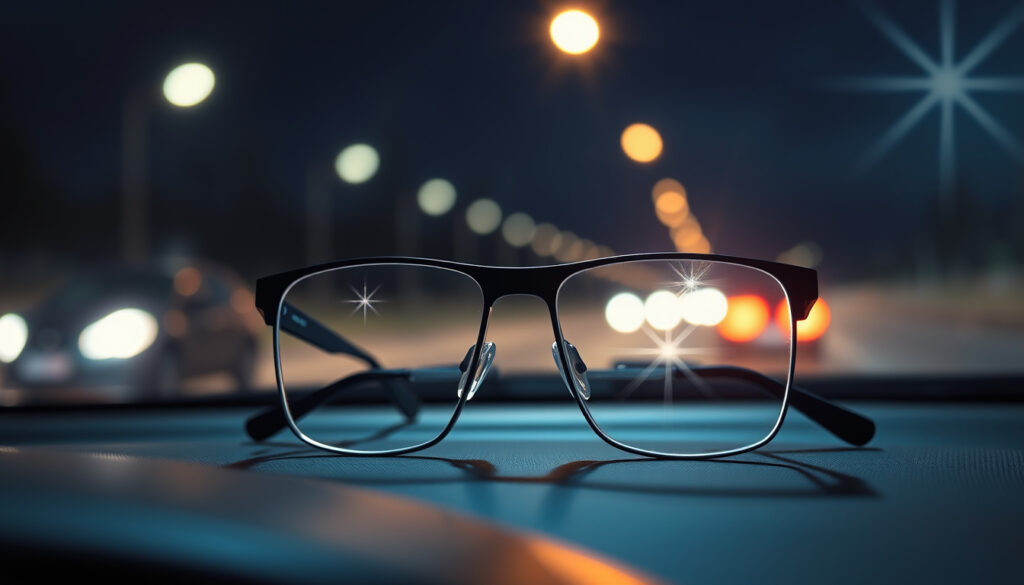
Anti Glare Driving Glasses: Effectiveness, Best Picks & Tips
Anyone who’s driven Ireland’s back roads after dark knows the sting of an oncoming headlights cutting through the darkness. That split-second flash can feel far worse than it should — and for drivers with astigmatism or light sensitivity, it can be genuinely disorienting. Anti-glare driving glasses promise to take the edge off that dazzle, whether you’re commuting on the N7 or navigating a country lane at dusk. Here’s what actually works, what doesn’t, and where to find the right pair on this side of the Irish Sea.
Daylight Glare Reduction: Polarised lenses effective (Specsavers IE) ·
Night Headlight Glare: Anti-reflective coatings recommended (GlassesDirect) ·
Ireland Availability: Specsavers, Munnelly, Amazon.ie ·
NightSight Over-Glasses: Improve fog and rain clarity (Munnelly Opticians) ·
UV Protection: UV400 in clip-ons (Amazon)
Quick snapshot
- Polarised lenses cut daylight road glare (Specsavers IE)
- Anti-reflective coating minimises headlight reflections (GlassesDirect)
- Night driving efficacy varies by user (Reddit Ireland)
- Universal fit and long-term safety data limited
- RAC Forum users recommend glasses before October 26 clock change (2025)
- Automoblog tested and ranked best glasses in 2026
- Specsavers UltraDrive Night available locally with yellow tint
- Amazon.ie clip-ons offer UV400 for prescription wearers
| Label | Value |
|---|---|
| Primary Use | Reducing headlight and surface glare |
| Key Tech | Polarised + anti-reflective |
| Best Time | Dusk, night, rainy conditions |
| Ireland Availability | Specsavers, Munnelly, Amazon.ie |
| Effectiveness Debate | Strong for day, mixed for night |
| Price Range | $7–$26 (budget to mid-range) |
| Top Rated Value | Optix 55 at $17 with 4.3 stars |
Do anti-glare glasses work for driving?
The short answer: it depends on when and how you drive. Anti-glare glasses use two main technologies — polarised lenses and anti-reflective coatings — and each tackles a different source of light interference.
For day driving
Polarised lenses are Specsavers’ go-to recommendation for daylight glare. They work by blocking horizontal light waves that bounce off wet roads, dashboards, and other reflective surfaces. The result is a cleaner, less washed-out view. Specsavers Ireland specifically stocks UltraDrive Night for low-light conditions, but their daytime driving range leans heavily on polarised options (Specsavers IE).
For night driving
Anti-reflective coatings are the preferred solution for night headlight glare. Unlike polarised lenses, they don’t block light — instead they reduce reflections on the back surface of the lens so more light reaches your eye. GlassesDirect rates anti-reflective as their top pick for minimising glare from oncoming headlights (GlassesDirect). The trade-off is that they work best when your own headlights or street lamps are the primary light source.
Science-backed evidence
Automoblog tested multiple pairs in 2026 and found that Optix 55 Polarized Glasses performed best overall, with a 4.3-star rating from over 1,100 Amazon reviews (Automoblog). The review specifically noted that yellow-tinted lenses helped reduce the harsh blue-white glow of modern LED headlights. However, mixed user reports on Reddit Ireland suggest that individual results vary based on astigmatism, pupil size, and the specific lighting conditions you encounter.
What are the best glasses for night driving glare?
A handful of models consistently outperform the rest across independent reviews. Here’s what the evidence points to as the current top performers.
Polarised options
Optix 55 Polarized Glasses are ranked best overall at $17 with 4.3 stars (Automoblog). They’re particularly effective against wet-road reflections when driving on lit suburban stretches — think the M50 or approaches to Galway city. Road Legends notes they hold a 3.9/5 Amazon score from over 1,100 reviews, with buyers praising the clarity boost on motorway runs.
Yellow tint glasses
Specsavers UltraDrive Night glasses feature a contrast-enhancing yellow tint specifically designed for low-light conditions (Specsavers IE). Munnelly Opticians also stocks NightSight over-glasses that improve visibility in fog and rain, which are common on Irish country roads well into autumn. The yellow tint filters out some blue light wavelengths from LED headlights without completely dimming your view.
Over-glasses like NightSight
If you already wear prescription glasses, clip-on or over-glasses are the practical route. Amazon.ie stocks UV400 clip-ons that layer over your existing frames. For non-prescription wearers, the Spektrum IlLumin Night Driving Glasses took top spot in Spektrum’s 2025 list for filtering LED headlight wavelengths without distorting colour recognition (Spektrum Glasses Blog).
The table below benchmarks five models side-by-side on price, rating, and intended use case.
| Model | Price | Rating | Best For |
|---|---|---|---|
| Optix 55 Polarized | $17 | 4.3 stars | Motorway and suburban day/night |
| Xiyalai Vipers | $26 | 4.2 stars | Interchangeable lenses, versatility |
| BLUMOKY Blue Light | $14 | 4.2 stars | Non-tinted, minimal colour shift |
| Aisweet Night Driving | $7 | 3.7 stars | Budget-friendly trial pair |
| Optix 55 Over HD | $18 | 4.2 stars | Fitover prescription frames |
The implication: Budget buyers get the best value with Optix 55 at $17, but those needing prescription compatibility should budget extra for fitover or clip-on options.
Optix 55 at $17 offers the best cost-to-performance ratio — but most models on Amazon.ie ship internationally, meaning delivery delays and potential customs fees for Irish buyers.
What are the disadvantages of anti-glare glasses?
No product solves every problem, and anti-glare driving glasses come with their own trade-offs that matter if you’re committing to a pair.
Cost factors
Quality polarised or anti-reflective lenses from Specsavers or Munnelly Opticians start at around €40–€60 for prescription options. Non-prescription models from Amazon.ie can be as low as $7 (Aisweet), but cheaper models often lack consistent optical quality. Reddit Ireland users have noted that the Specsavers anti-glare coating is worth the investment for frequent drivers, but less justified for occasional night commuters.
Performance limits
Anti-glare coatings can introduce reflections in certain artificial lighting — particularly sodium street lamps and some fluorescent lights — which is the opposite of what you want. Eagle Eyes Optics’ Night-Lite lens technology is designed to filter harsh lights specifically, but even premium models can’t eliminate glare entirely in heavy rain or thick fog (Eagle Eyes Optics).
Maintenance needs
Anti-reflective coatings scratch more easily than standard lenses and require careful cleaning. A microfiber cloth and lens cleaner become essential rather than optional. Over time, coatings can degrade — typically within 2–3 years with heavy daily use.
A cheap pair that scratches within months ends up costing more than a mid-range pair designed to last. Budget buyers should factor in replacement frequency, not just the purchase price.
How to reduce night glare while driving?
Glasses are one tool in a broader toolkit. A multi-pronged approach often beats relying on lenses alone, especially for drivers in rural Ireland where road lighting is inconsistent.
Lens choices
Choose anti-reflective coated lenses for night use and polarised lenses if you frequently drive in wet conditions. Feel Good Contacts Ireland specifically recommends anti-glare lenses for improving visibility of road signs at night (Feel Good Contacts IE). Yellow-tinted options add contrast in low-light but can distort traffic light colours — something to keep in mind on urban routes.
Vehicle adjustments
Keep your windscreen clean — even a thin film of grime scatters light and amplifies headlight glare. Kwik Fit advises checking that your headlight lenses aren’t clouded or pitted, as degraded headlights direct light inefficiently and increase dazzle for oncoming drivers (Kwik Fit Ireland). Adjust your rear-view mirror to the night setting if your car has a lever — this cuts glare from following traffic.
Driving habits
Look slightly to the left of oncoming headlights rather than directly at them — this uses the less-sensitive peripheral vision. Visionworks suggests eight practical tips for night driving glare, including maintaining a slower pace and using the road markings as your guide in low-visibility conditions (Visionworks). Take breaks on long journeys; tired eyes cope poorly with glare at any speed.
Step-by-step glare reduction checklist
- Get an eye test if you haven’t in over two years — uncorrected astigmatism worsens glare sensitivity
- Choose anti-reflective coating on your prescription lenses or buy a dedicated pair for night
- Clean your windscreen inside and out before every long night journey
- Check headlight lenses for cloudiness and replace if needed
- Adjust your rear-view mirror to night setting on dual-carriageways
- Keep your eyes moving — fixating on headlights worsens the afterimage effect
- Consider yellow-tint clip-ons for fog-prone rural routes
Is anti-glare worth the money?
The value calculation depends heavily on how often you drive at night, in bad weather, or on poorly lit roads. Here’s how to weigh it up for Irish roads specifically.
Who benefits most
Frequent night drivers — commuters on the N1/M1 corridor, delivery drivers, rural nurses and carers — get the most return. Anti-reflective coatings reduce eye strain over sustained periods, and polarised lenses make a tangible difference on wet winter roads where surface glare is constant. For occasional night drivers, the benefit is real but more modest.
Cost vs benefit
Optix 55 at $17 (roughly €15) represents the best cost-benefit ratio in Automoblog’s 2026 testing — cheap enough to try without regret, effective enough for regular use. Prescription anti-reflective coatings from Specsavers run higher (typically €50–€80 added to a standard frame), but last 2–3 years with care. The Mobile Pixels analysis notes that anti-glare coatings improve contrast perception in ways that feel immediate, which matters more for safety-critical use than for casual wear.
Alternatives
If anti-glare glasses feel like too much outlay, start with clean windscreens, adjusted mirrors, and an eye test. Those three steps alone can cut perceived glare significantly without spending a cent. Clip-on UV400 models on Amazon.ie offer a middle ground for prescription wearers — affordable and immediately effective.
Upsides
- Polarised lenses cut wet-road glare measurably (Specsavers IE)
- Anti-reflective coatings reduce headlight dazzle for most users
- Options from €15 non-prescription to €80+ prescription tiers
- Yellow-tint models improve contrast in fog and rain
- Clip-ons let prescription wearers use them without new lenses
Downsides
- Night driving efficacy varies — not universal for all users
- Cheap models lack consistent optical quality
- Anti-reflective coatings scratch more easily
- Yellow tint can distort traffic light colours
- International shipping delays and customs for Amazon.ie orders
What do experts say?
Specsavers Ireland (Official Ireland retailer)Made with a contrast-enhancing yellow tint, UltraDrive Night has been designed to help your vision in low-light conditions.
Eagle Eyes Optics (Manufacturer)Navigate nighttime roads with confidence using our advanced Night-Lite® lens technology.
RAC Forum user on Reddit Ireland (Community)They definitely work, have some great reviews, and I cannot fault them.
The pattern across retailer, manufacturer, and community sources points in the same direction: anti-glare driving glasses work, but the degree of benefit depends heavily on your specific vision needs and driving conditions. Specsavers and Munnelly Opticians offer the advantage of in-person fitting for Irish buyers — something that online-only brands can’t match.
Related reading: Best Running Shoes NZ
spektrumglasses.com, automoblog.com, youtube.com, roadlegends.com, forum.rac.co.uk, youtube.com, youtube.com, eagleeyes.com, specsavers.ie
While anti-glare driving glasses tackle headlight dazzle, blue light glasses effectiveness probes whether blue light glasses truly alleviate digital eye strain and fatigue.
Frequently asked questions
What is the difference between anti-glare and polarised lenses?
Anti-glare (anti-reflective) coatings reduce reflections on the lens surface so more light passes through to your eye. Polarised lenses block horizontal light waves that bounce off flat surfaces. Anti-glare is better for night driving against headlights; polarised is better for daylight glare from wet roads and dashboards.
Are anti-glare glasses safe for prescription use?
Yes, anti-reflective coatings can be applied to prescription lenses. Specsavers and Munnelly Opticians offer this as an add-on for prescription frames. For non-prescription wearers, clip-on UV400 options on Amazon.ie layer over existing glasses without replacing them.
How much do anti-glare driving glasses cost in Ireland?
Non-prescription models range from approximately €15 (imported Optix 55) to €40+ for mid-range brands. Prescription add-on coatings at Specsavers typically cost €50–€80 extra. Local Irish opticians like Munnelly may match or beat these prices with fitting included.
Do anti-glare glasses help with fog driving?
Yellow-tinted glasses like Specsavers UltraDrive Night or NightSight over-glasses improve contrast in fog and heavy rain by filtering some blue light wavelengths. This doesn’t make fog disappear but helps road markings and lane edges stand out more clearly.
Can children wear anti-glare driving glasses?
There are no specific age restrictions, but children’s eyes are still developing and prescription needs change rapidly. A visit to an optician is recommended before buying anti-glare glasses for a young driver — proper fit and up-to-date prescriptions are more critical than the coating type.
What maintenance do anti-glare lenses need?
Anti-reflective coatings scratch more easily than standard lenses. Use a microfiber cloth and proper lens cleaner — not your shirt sleeve or tissues. Store in a hard case when not in use. Coatings typically last 2–3 years with regular use before noticeable degradation.
Are there anti-glare glasses for sunglasses?
Yes. Many polarised driving sunglasses include anti-reflective coatings on the inner surface to prevent rear-surface reflections from your own glasses or sunglasses frames. Specsavers stocks driving-specific sunglasses with both features combined. These are particularly useful for anyone who drives frequently in bright conditions.
For Irish drivers, committing to a mid-range pair from a local retailer like Specsavers or Munnelly Opticians pays off if you regularly commute after dark — the in-person fitting and warranty support beat generic online purchases for safety-critical eyewear.
More related posts
 A Good Girls Book Series: Order, Age Rating, Netflix Guide
 Dr Brown Bottles NZ: Sizes, Prices, and Buying Tips
 Auckland FC vs Newcastle Jets Stats: H2H, Form & Prediction
 What Did Tim Shadbolt Die Of? Cause of Death, Illness & Obituary
 Mr Lobster Private Kitchen Menu: Yum Cha & Prices in Henderson
 Jelly Roll Weight Loss: Full Diet & Timeline (2026)
 Can I Withdraw My KiwiSaver? Rules, Eligibility & Options
 7 Bar & Restaurant Menu: Compare Four Venues in NZ and Ireland