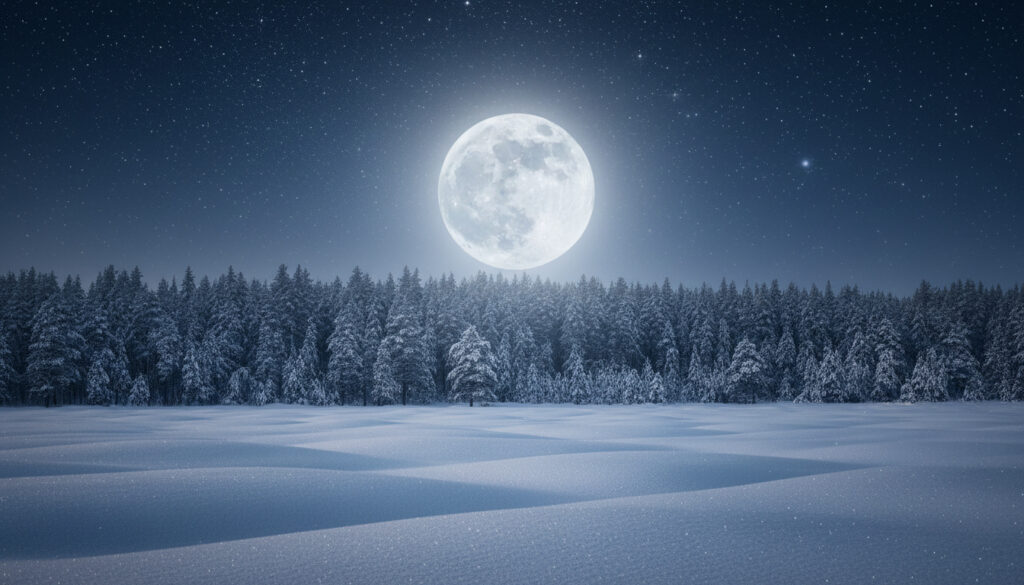
Full Moon February 2026 – Snow Moon Date Time Viewing Guide
The first full moon of 2026 arrives on February 1, reaching peak illumination at 5:09 PM Eastern Standard Time. Known as the Snow Moon, this astronomical event marks a traditional winter milestone recognized across North American indigenous cultures and modern astronomical calendars alike.
Observers can watch the moonrise in the eastern sky near sunset, where atmospheric conditions will initially tint the lunar surface yellow-orange before shifting to silvery white as it climbs higher. Unlike some lunar events, February 2026 brings no accompanying eclipse or supermoon status, offering instead a standard full phase visible worldwide weather permitting.
When Is the Full Moon in February 2026?
Astronomical data confirms the full moon peaks on February 1, 2026, at 5:09 PM EST (22:09 UTC). This timing places the event early in the month, with the moon rising over the eastern horizon as the sun sets in the west.
|
Date
February 1, 2026
|
Peak Time
5:09 PM EST
10:09 PM UTC |
Traditional Name
Snow Moon
|
Visibility
Eastern horizon
at sunset |
- Peak illumination occurs on February 1 at 5:09 PM Eastern Standard Time, corresponding to 10:09 PM UTC.
- Primary name derives from heavy snowfall typical of February across North America.
- No supermoon occurs; the moon remains at standard distance without unusual size enhancement.
- Eclipse absence means no lunar or solar eclipse accompanies this full phase.
- Rising timing synchronizes with sunset, creating optimal viewing conditions in the eastern sky.
- Color transition from yellow-orange to silver occurs due to Rayleigh scattering as the moon ascends.
- Global visibility extends worldwide, though local moonrise times vary by specific coordinates.
| Attribute | Detail |
|---|---|
| Peak Date | February 1, 2026 |
| Eastern Time | 5:09 PM EST |
| UTC | 22:09 |
| Alternative Names | Hunger Moon, Bear Moon |
| Constellation | Cancer |
| Eclipse Status | None |
| Supermoon Status | Not applicable |
| Atmospheric Effect | Rayleigh scattering (color shift) |
What Is the February 2026 Full Moon Called?
Indigenous North American tribes historically designated February’s full moon as the Snow Moon, reflecting the heavy snowfall that characterizes this month across the continent. Alternative names include the Hunger Moon, referencing the difficulty of winter hunting, and the Bear Moon, acknowledging the season when bear cubs are born.
Origins of the Snow Moon
The primary designation connects to observable weather patterns. February historically brings the heaviest snow accumulation in many North American regions, making the moon’s bright illumination particularly notable against white landscapes. The Old Farmer’s Almanac and various indigenous calendars preserve this nomenclature, which has entered common astronomical usage.
Distinguishing the Wolf Moon
January’s full moon carries the Wolf Moon designation, not February’s. Some confusion arises from the proximity of winter months, but sources consistently separate these traditions. The Wolf Moon references January’s harsh conditions and wolf activity, while February’s Snow Moon specifically addresses precipitation patterns.
The Wolf Moon belongs exclusively to January. February’s full moon is definitively termed the Snow Moon, Hunger Moon, or Bear Moon across historical and astronomical sources. No credible sources link the Wolf Moon designation to February 2026.
Lunar Phases and Viewing Guide for February 2026
February 2026 features one complete lunar cycle, beginning with a waxing gibbous phase transitioning to full illumination on the first day, progressing through waning stages, and concluding with the new moon around February 16-17.
Monthly Phase Progression
Lunar phase calendars indicate specific transitions throughout the month. February 1 marks the full moon peak, with the phase continuing into February 2. The moon then enters waning gibbous from February 3-8, last quarter on February 9-10, and waning crescent through February 15. The new moon occurs February 16-17, followed by waxing crescent until February 23, first quarter February 24-25, and waxing gibbous through month’s end. Detailed phase data from the Catalina Sky Survey provides precise astronomical timestamps.
Optimal Viewing Conditions
The Snow Moon rises in the eastern sky near sunset on February 1, positioned within the Cancer constellation. Jupiter appears to the upper right, while Gemini’s Castor and Pollux shine to the left, and Orion with Sirius appear to the southeast. Viewing guides recommend facing east at sunset to catch the moon illusion, which makes the lunar disk appear larger near the horizon.
Rayleigh scattering filters blue light as the moon rises, allowing red wavelengths to pass through and creating the initial yellow-orange color. The moon transitions to silvery white as it ascends higher and passes through less atmospheric interference.
Photographic Considerations
Photographers should position themselves to capture the moon near the horizon for maximum size illusion and color variation. Tripods stabilize low-light exposures. Wide-angle compositions can include Jupiter, the Gemini twins, Orion, and Sirius as contextual celestial markers. During full illumination, ejecta rays from asteroid craters become visible on the lunar surface, though crater shadows appear sharpest near the terminator line during surrounding weeks.
Cultural and Astrological Significance of the February Full Moon
Spiritual and Astrological Interpretations
Astrological traditions associate the February full moon with emotional healing and personal renewal. Occurring at winter’s peak, the Snow Moon allegedly offers particular strength for individuals with weak Moon placements in their horoscopes. Astrological reports emphasize powerful lunar energies during this period, though specific Western astrological transits remain unspecified beyond general Cancer constellation influences.
Eclipse and Supermoon Clarifications
February 2026 brings no special distance variations. The moon neither approaches perigee (supermoon) nor apogee (micromoon), maintaining standard apparent size. Additionally, no lunar or solar eclipse coincides with this full moon phase. Spaceweather tracking confirms standard illumination without eclipse events.
Full moon illumination may wash out faint auroras. Observers seeking northern lights should monitor space weather conditions but note that bright lunar light reduces visibility of subtle atmospheric phenomena.
February 2026 Lunar Event Timeline
- : Waxing Gibbous transitions to Full Moon peak at 5:09 PM EST (22:09 UTC)
- : Full Moon phase continues
- : Waning Gibbous period
- : Last Quarter phase
- : Waning Crescent
- : New Moon (no illumination)
- : Waxing Crescent begins
- : First Quarter
- : Waxing Gibbous approaches next full phase
Established Facts and Remaining Uncertainties
| Confirmed Information | Variable or Uncertain Factors |
|---|---|
| Peak illumination: February 1, 2026, 5:09 PM EST (22:09 UTC) | Local moonrise times depend on specific geographic coordinates |
| Traditional names: Snow Moon, Hunger Moon, Bear Moon | Viewing quality depends on local weather and atmospheric conditions |
| No supermoon or micromoon status for February 2026 | Exact lunar distance measurements not specified in available sources |
| No lunar or solar eclipse accompanies this event | Astrological effects vary by individual interpretation and practice |
| Position: Near Cancer constellation with Jupiter and Gemini visible nearby | Aurora visibility depends on solar activity unrelated to lunar phases |
The Snow Moon in Historical Context
The Snow Moon designation reflects practical observations by indigenous North American communities who tracked seasonal changes through lunar cycles. February’s heavy snowfall historically complicated hunting and travel, creating the alternative Hunger Moon designation that acknowledged food scarcity during deep winter. European settlers adopted and merged these traditions with existing almanac practices, preserving the winter moon nomenclature in modern astronomical references.
The Bear Moon variation specifically references biological cycles, as February marks the birthing season for bear cubs in many northern regions. This name connects lunar observation to wildlife behavior, demonstrating the integrated ecological knowledge embedded in traditional calendar systems. Contemporary Snow Moon guides continue to reference these historical associations while providing modern astronomical data.
Sources and Documentation
The February 2026 full moon represents winter’s peak, offering emotional healing and strength for those with weak Moon placements in their horoscope. Named for heavy snowfall in North America, it is also called the Hunger Moon or Bear Moon.
Times of India Astrology and Transit Report
Full phase highlights ejecta rays from asteroid craters, illuminated by sunlight; craters best near the terminator (day-night line) in surrounding weeks. The moon rises near Cancer, with Jupiter to the upper right and Gemini’s Castor and Pollux to the left.
Space.com Stargazing Guide
Summary
The February 2026 full moon occurs on February 1 at 5:09 PM EST, bearing the traditional Snow Moon designation without supermoon or eclipse phenomena. Observers should watch the eastern horizon at sunset for optimal viewing of the rising moon, which will display initial yellow-orange coloring before shifting to silver. Those planning future observations can consult the complete 2026 full moon calendar for upcoming lunar events.
Frequently Asked Questions
Is the February 2026 full moon visible worldwide?
Yes, the full moon is visible globally weather permitting, though exact moonrise times vary by location. Calculators like TimeandDate provide precise local rise and set times based on specific coordinates.
What causes the full moon phases?
Full moons occur when the Earth positions itself between the sun and moon, allowing the lunar surface to reflect maximum sunlight. This opposition creates 100% illumination of the visible face.
Why does the moon appear larger near the horizon?
The “Moon illusion” creates apparent size differences based on perceptual comparisons with terrestrial objects like trees or buildings. The moon remains the same angular size; proximity to ground features tricks the brain into perceiving enlargement.
Is February 2026 suitable for aurora viewing?
Full moon brightness may wash out faint auroras. Dark sky locations away from lunar light offer better northern lights visibility, though solar activity rather than lunar phase determines aurora occurrence.
Why is February’s full moon not called the Wolf Moon?
The Wolf Moon specifically designates January’s full moon, referencing historical wolf activity during that month. February’s moon is definitively termed the Snow Moon, Hunger Moon, or Bear Moon across indigenous and astronomical traditions.
What equipment is needed to photograph the Snow Moon?
A tripod stabilizes low-light shots. Standard cameras or smartphones capture the moonrise near the horizon effectively. For detailed lunar surface features, telephoto lenses or telescopes help, though ejecta rays are visible during full illumination with standard equipment.
What causes the yellow-orange color at moonrise?
Rayleigh scattering filters shorter blue wavelengths through Earth’s atmosphere, allowing longer red and yellow wavelengths to pass through. This effect diminishes as the moon ascends higher, shifting color to silvery white.
More related posts
 Tongariro National Park Wildfire 2025: Updates, Cause, and Impact
 Second Hand Relocatable Homes NZ: Complete Buyer’s Guide
 Urgent Care Near Me: Ireland’s Clinics Compared
 Ford Everest NZ Price 2026: Active $68,990, Platinum $93k
 Anti Glare Driving Glasses: Effectiveness, Best Picks & Tips
 Twisted Frequency Festival Evacuation 2025: Key Facts
 144 USD to NZD: Live Conversion and Exchange Rate Analysis
 NZD to BRL: New Zealand dollar to Brazilian real rate today