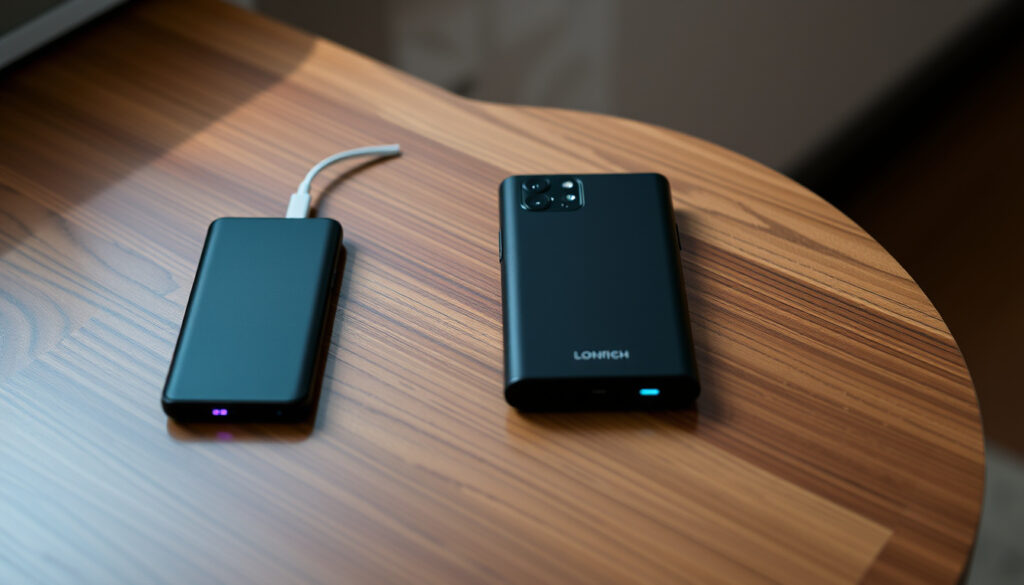
Noel Leeming Power Banks: 10,000 vs 20,000 mAh Guide
You’ve just grabbed a coffee at the airport and realised your phone is at 15%. A power bank from Noel Leeming could save that trip — but this guide breaks down the options, the rules, and the real-world trade-offs between 10,000 mAh and 20,000 mAh models.
Average smartphone battery capacity: 3,000–4,000 mAh ·
Extra charges from a 20,000 mAh bank: 5–6 full smartphone charges ·
Typical weight of a 20,000 mAh power bank: 350–450 g ·
Price range at Noel Leeming: $25–$100 NZD ·
Airlines’ carry-on limit for power banks: 100 Wh (≈27,000 mAh)
Quick snapshot
- 20,000 mAh power banks are allowed in carry-on under 100 Wh (Civil Aviation Authority of New Zealand)
- Noel Leeming stocks Belkin and Laser power banks (Noel Leeming)
- 10,000 mAh is the most popular daily capacity (Anker blog on travel rules)
- Exact model availability at individual Noel Leeming stores may vary
- Long-term capacity retention for cheaper power banks is not consistently documented
- No major regulatory changes for power banks in NZ expected in 2025 (Civil Aviation Authority of New Zealand)
- Check Noel Leeming’s online stock before travelling – delivery options available
Here are the key figures at a glance for Noel Leeming power bank shoppers.
| Key fact | Value |
|---|---|
| Aviation limit for power banks (NZ) | 100 Wh (~27,000 mAh) |
| Average phone battery | 3,000–4,000 mAh |
| Noel Leeming power bank brands | Belkin, Laser, and others |
| Warranty on Laser power banks | 2 years |
| Price range at Noel Leeming | $25–$100 NZD |
10000mAh vs 20000mAh Power Bank: Which One Is Right for You?
Capacity comparison table
Two capacities, one pattern: the larger bank gives you more power, but you carry more weight. Here’s how they stack up at Noel Leeming.
| Spec | 10,000 mAh | 20,000 mAh |
|---|---|---|
| Smartphone charges (typical 3,500 mAh phone) | 2–3 full charges | 5–6 full charges |
| Tablet charges (iPad mini ~5,000 mAh) | 1–1.5 charges | 3–4 charges |
| Weight | ~200 g | ~350–450 g |
| Size | Pocket-friendly | Larger, may need bag |
| Price at Noel Leeming | $25–$50 NZD | $40–$80 NZD |
| Flight allowance (without approval) | Yes | Yes (≈74 Wh) |
When to choose 10,000 mAh
- Daily commuter: tops up a phone once or twice without adding bulk.
- Light packer: fits in a small bag or even a jacket pocket.
- Price-conscious: entry-level models from Laser start around $25 at Noel Leeming.
When to choose 20,000 mAh
- Heavy user: streams video, uses GPS, or hot-spots throughout the day.
- Multi-day trips without reliable wall sockets.
- Group device charging: can share between two phones and a tablet.
Typical device charges
A 20,000 mAh power bank, assuming 85% real-world efficiency, delivers about 17,000 mAh usable. That translates to roughly 5 full charges for a 3,500 mAh phone or 1–2 charges for a modern tablet (Anker blog on travel rules).
The trade-off: More mAh means more weight. If you’re only topping up a phone daily, the 10,000 mAh saves you 150–250 g in your bag. For long-haul travellers, the extra grammes are worth the peace of mind.
Which brand of power bank is the best?
Belkin – known reliability and USB-C PD
Belkin power banks at Noel Leeming are priced between $60 and $100 NZD. They typically include USB-C Power Delivery (PD) for fast charging of recent iPhones, Samsung Galaxys, and USB-C laptops. Belkin’s warranty spans 2 years or more (Noel Leeming). The build quality is consistently high, making them a safe pick for travellers who don’t want surprises.
Laser – value range from Noel Leeming
Laser is Noel Leeming’s own value brand. Prices run $25–$50 NZD, and all models come with a 2-year warranty. Many Laser power banks include an LED battery display – a handy feature for checking remaining charge at a glance. While they lack the fast-charging specs of higher-priced rivals, they offer solid performance for the price (Noel Leeming).
Other brands at Noel Leeming
Occasionally, Noel Leeming stocks small runs from other brands like Anker or Xiaomi, but Belkin and Laser are the consistent mainstays.
Brand comparison table
Two brands, one question: do you pay more for performance or pay less for practicality? Here’s how they compare.
| Feature | Belkin | Laser |
|---|---|---|
| Price (Noel Leeming) | $60–$100 NZD | $25–$50 NZD |
| USB-C Power Delivery | Yes (most models) | Rarely |
| Battery display | Some models | Most models |
| Warranty | 2+ years | 2 years |
| Weight (20,000 mAh) | ~380 g | ~400 g |
| Best for | Fast charging, laptop users | Budget-conscious, casual users |
The pattern: Belkin justifies its premium with USB-C PD and faster charging. Laser offers unbeatable value and a battery display that many travellers appreciate. If you need to top up a laptop on the go, spend the extra on Belkin. If a phone charge is all you need, Laser saves you real money.
For a Noel Leeming shopper, the brand choice is essentially “Belkin for speed, Laser for savings.” Neither is a bad buy – the decision hinges on whether you need Power Delivery or can live with standard USB.
Is a 20000mAh power bank allowed in a flight?
Airline carry-on rules (100 Wh limit)
Yes, a 20,000 mAh power bank is allowed in carry-on luggage on most airlines, including all NZ carriers. The key threshold is 100 watt-hours (Wh). A 20,000 mAh bank at typical 3.7 V equals roughly 74 Wh, well under the limit (Civil Aviation Authority of New Zealand).
Lithium-ion battery restrictions
- Must be in carry-on – never in checked baggage.
- Terminals must be protected (tape or separate plastic bag) (Air New Zealand).
- Max 2 power banks between 100–160 Wh with airline approval; over 160 Wh is prohibited.
How to calculate watt-hours
Multiply mAh by voltage (usually 3.7 V) and divide by 1,000: (mAh × V) / 1000 = Wh. For 20,000 mAh: (20,000 × 3.7) / 1000 = 74 Wh. Always under 100 Wh.
Tips for flying with a power bank from NZ
- Keep the bank in your personal item, not overhead bin (if possible).
- Carry the original packaging or specification sheet to show Wh rating if asked.
- Charge the bank before departure – airlines may ask you to demonstrate it powers a device.
Why this matters: A 20,000 mAh bank is the sweet spot for travel – it gives you 5–6 phone charges yet fits easily within NZ Civil Aviation rules. Anything larger (27,000 mAh or more) risks hitting the 100 Wh ceiling and may require airline approval.
If you buy a power bank labelled in mAh only, check the voltage. Some high-capacity models use 3.85 V cells, which push a 27,000 mAh bank to ~104 Wh – just over the limit. When in doubt, buy from Noel Leeming where specs are clearly stated.
How big a powerbank do I need for 4 days?
Estimating your daily device usage
Assume your smartphone needs 1.5 full charges per day if you use it for navigation, photos, and messaging. A tablet adds another 1.5 charges. Over 4 days, that’s 6 phone charges and 6 tablet charges on a heavy-use trip.
Multi-day trip capacity calculation
- Light user (phone only, top-up once per day): 4 × 1 = 4 charges → 14,000 mAh minimum → 10,000 mAh may suffice with careful use.
- Moderate user (phone + occasional tablet): 4 × 2 = 8 charges → 28,000 mAh → two 20,000 mAh banks or one 20,000 mAh plus wall charging.
- Heavy user (phone + tablet + camera): 4 × 3 = 12 charges → 42,000 mAh – not realistic in one unit; bring a 20,000 mAh bank and plan to recharge it at accommodation.
Recommended capacities for 4-day travel
A single 20,000 mAh power bank is the most practical choice for a 4-day trip if you can access a wall plug at least once. For absolute off-grid needs, two 20,000 mAh banks (74 Wh each) are flight-legal and give you 10–12 phone charges combined.
Backup vs. primary power
Consider using the power bank as a backup and relying on a fast wall charger for primary charging at the hotel. This way, a 10,000 mAh bank can easily cover a full day out and recharge overnight.
The implication: For most 4-day trips, a 20,000 mAh bank hits the sweet spot. It gives you enough juice to stay connected without breaking airline rules. Heavy users should carry a second bank or a small solar charger.
What size powerbank is best?
Capacity tiers (5,000 / 10,000 / 20,000 / 27,000 mAh)
The trade-off between weight and power defines each tier — here is how they break down for real-world use.
| Size | Weight | Phone charges | Best use |
|---|---|---|---|
| 5,000 mAh | ~120 g | 1–1.5 | Emergency top-off, small bag |
| 10,000 mAh | ~200 g | 2–3 | Daily carry, short trips |
| 20,000 mAh | ~350–450 g | 5–6 | Travel, group charging |
| 27,000 mAh | ~500 g | 7–8 | Extended off-grid (near flight limit) |
Portability vs. power trade-off
Every 100 g of weight adds about 2,500–3,000 mAh of capacity. A 10,000 mAh bank is pocketable; a 20,000 mAh bank needs a bag. If you commute by bus in Auckland, the 10,000 mAh wins. If you’re flying to Queenstown for a hiking trip, the 20,000 mAh is worth the bulge.
Best size for everyday carry
10,000 mAh – it’s the Goldilocks choice: light enough to forget in your bag, powerful enough to rescue a dead phone after a night out.
Best size for international travel
20,000 mAh – it clears the 100 Wh hurdle comfortably and can power a phone and tablet through a long-haul flight. Avoid going over 27,000 mAh unless you have explicit airline approval.
The pattern: Most travellers overestimate how much power they need. Unless you’re camping without power for days, 10,000–20,000 mAh will serve you well. The extra size of 27,000 mAh rarely pays off.
How to know a good power bank?
Key specs: capacity, output ports, charging speed
- Look for at least one USB-C port supporting Power Delivery (PD) for fast smartphone/tablet charging.
- Output: 18 W or higher for quick top-ups.
- Input: USB-C with PD also means faster recharging of the bank itself (3–4 hours instead of 8–10).
Safety certifications (CE, FCC, UL)
Power banks sold at Noel Leeming (Belkin, Laser) carry the required certifications for NZ. Avoid unbranded models from online marketplaces – they may lack overcharge and temperature protection (Anker blog on travel rules).
Build quality and brand reputation
Belkin and Laser both offer 2-year warranties. Laser’s LED display is a practical touch. Belkin’s USB-C PD support is a step up in charging speed. Check customer reviews on the Noel Leeming website for real-world feedback on longevity.
Reading customer reviews on Noel Leeming site
Look for reviews that mention: charging speed, heat during use, and whether the rated capacity matches real-world usage. Many users report that cheaper models deliver only 60–70% of the advertised mAh in practice.
The trade-off: A good power bank is one that delivers its stated capacity safely. For Noel Leeming shoppers, the choice between Belkin and Laser is mainly about charging speed – both are reliable. Spend the money on USB-C PD if you want future-proofing; save it if you just need emergency power.
Noel Leeming’s range covers the reliable spectrum: Laser for budget, Belkin for speed. The real enemy is unbranded junk that fails within months – stick with the house brands and you’ll be fine.
The implication: Shoppers who choose Belkin or Laser avoid the reliability pitfalls common with no-name brands sold online.
Steps to choose the right power bank at Noel Leeming
- Decide your primary use (daily carry vs. travel vs. off-grid).
- Pick capacity: 10,000 mAh for daily, 20,000 mAh for travel.
- Choose brand: Belkin for fast charging, Laser for value.
- Check warranty (2 years standard).
- Verify airline compliance (for travel: keep under 27,000 mAh).
- Purchase online for home delivery (Noel Leeming offers nationwide delivery).
The implication: Following these six steps ensures you walk out of Noel Leeming with a power bank matched to your actual needs, not the shelf display.
Upsides & Downsides of Noel Leeming power banks
Upsides
- Reliable brands (Belkin, Laser) with 2-year warranty
- Prices competitive with online retailers ($25–$100 NZD)
- In-store staff can help match capacity to your device
- Nationwide delivery and click-and-collect options
Downsides
- Limited range beyond Belkin and Laser – no premium brands like Anker
- Some Laser models lack USB-C Power Delivery
- Stock varies by store – check online before visiting
The pattern: Noel Leeming’s range suits most Kiwi travellers, but power users who want premium brands may need to look elsewhere.
Confirmed facts vs what’s unclear
Confirmed facts
- 20,000 mAh power banks are allowed in carry-on under 100 Wh (Civil Aviation Authority of New Zealand)
- Noel Leeming carries Belkin and Laser power banks (Noel Leeming)
- 10,000 mAh is the most popular daily capacity (Anker blog on travel rules)
What’s unclear
- Exact availability of specific models at individual Noel Leeming stores may vary.
- Long-term capacity retention for cheaper power banks is not consistently documented.
The implication: Shoppers should check online stock before visiting and treat long-term capacity claims for budget models with caution.
Quotes from the industry
“Power banks must be carried in carry‑on luggage and are prohibited in checked‑in baggage under any circumstances.”
Civil Aviation Authority of New Zealand (national regulator)
“A 20,000 mAh power bank typically corresponds to about 74 Wh, which is under the 100 Wh threshold and therefore generally allowed on flights.”
“Spare batteries and power banks must be protected from short‑circuiting by packing each in its own plastic bag or by taping terminals.”
“Noel Leeming offers power banks from Belkin and Laser with 2‑year warranty – a solid choice for Kiwi travellers.”
Choosing a power bank at Noel Leeming comes down to one question: how much power do you really need on the go? For daily commuters, a 10,000 mAh Laser at $25 is a steal. For the travelling Kiwi, a 20,000 mAh Belkin with USB-C PD is the smartest investment – it stays under 100 Wh, charges your phone five times over, and keeps working trip after trip. The alternative is buying a smaller bank and finding yourself hunting for a wall socket halfway through a weekend away. For the Noel Leeming shopper, the answer is clear: pick the size that matches your trip, trust the house brands, and always keep it in your carry-on.
Frequently asked questions
Can I charge a laptop with a power bank from Noel Leeming?
Only if the power bank supports USB-C Power Delivery with at least 45 W output. Belkin’s higher-end models may handle it; Laser models generally do not. Check the product specs on Noel Leeming’s website before buying.
How long does it take to charge a 20,000 mAh power bank?
With a standard 5 W (5V/1A) charger, it can take 10–12 hours. With a USB-C PD 18 W charger, it drops to 3–4 hours. Noel Leeming sells fast wall chargers that pair well with Belkin power banks.
Does Noel Leeming accept returns on power banks?
Yes, power banks are covered by Noel Leeming’s standard returns policy (usually 30 days for change of mind, longer for defective items). Check their returns page for details.
What is the best power bank for camping at Noel Leeming?
A 20,000 mAh Laser with battery display is a good budget option. For longer trips, consider two 20,000 mAh banks or one 20,000 mAh Belkin with fast recharging – but remember that even the largest power bank won’t run a TV or heating device.
Are power banks cheaper at Noel Leeming or online?
Noel Leeming’s prices are competitive with major NZ online retailers like Mighty Ape or PB Tech for the same brands. Importing from overseas may save you money but risks longer shipping and possible customs delays.
Do power banks lose capacity over time?
Yes, lithium-ion cells degrade. After 300–500 full charge cycles, a power bank may deliver only 70–80% of its original capacity (Anker blog on travel rules). This is normal and why the 2-year warranty matters.
How to dispose of an old power bank in NZ?
Do not throw it in household rubbish. Power banks contain lithium batteries and must be recycled. Noel Leeming accepts old electronics for recycling at their stores or you can drop them at a local council e‑waste facility.
More related posts
 Urgent Care Near Me: Ireland’s Clinics Compared
 Too Late by Colleen Hoover: Plot, Warnings, Review
 Best Power Deals NZ 2026: Compare & Save on Electricity
 Bed Bath and Beyond Upper Hutt: Store Location, Hours & Sale
 What is RAM Speed? A Complete Guide to PC Memory Speeds
 Does Green Tea Have Caffeine? Facts, Comparisons & Effects
 Waiotapu Thermal Wonderland Walk Time & Ticket Guide
 New Zealand Passport Application: Costs, Documents & How to Apply