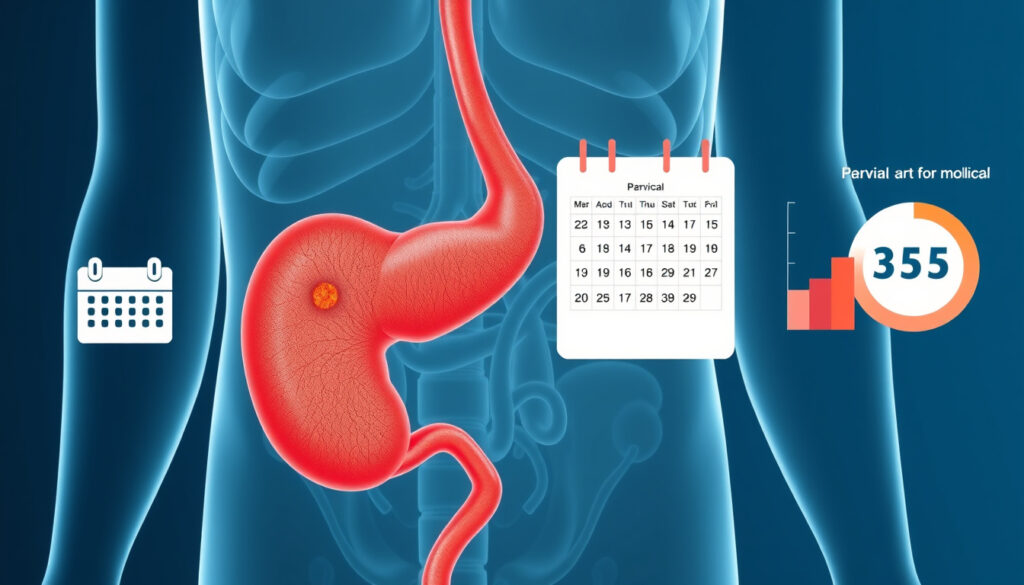
Pancreatic Cancer Symptoms: Early Signs & Survival
Something as ordinary as a persistent ache in the upper belly or a subtle change in how your skin looks can be the first clue that the pancreas is in trouble. For most people with pancreatic cancer, the disease doesn’t send clear signals until it has already advanced.
Estimated new cases annually (US): 64,050 (2024, American Cancer Society) · Overall 5-year survival rate: 12% (SEER, 2015–2021) · Percentage diagnosed at localized stage: 10% (ACS) · Median survival for advanced stage: 6–12 months (PanCAN)
Quick snapshot
- Jaundice is the most common symptom at diagnosis, affecting roughly 50% of patients (American Cancer Society)
- Unexplained weight loss and fatigue are frequently reported alongside abdominal pain (Mayo Clinic)
- Early symptoms are often vague and can mimic gallstones or viral hepatitis, delaying recognition (Columbia Cancer Center)
- Whether pancreatic cancer symptoms present differently in women vs. men remains understudied (Healthgrades)
- Women may notice bloating, loss of appetite, nausea, and back pain as early clues (Medical News Today)
- Incidence of pancreatic cancer is rising in women ages 35–54, outpacing the rate in men of the same age (Cedars-Sinai)
- Once the cancer spreads, symptoms escalate to ascites, bowel obstruction, severe back pain, and worsening jaundice (NHS)
- Survival drops sharply with metastasis — the 5-year rate for distant-stage disease falls to 3% (American Cancer Society)
Eight key statistics, one pattern: pancreatic cancer is most treatable when caught early, but most patients are diagnosed after the disease has spread.
| Category | Value | Source |
|---|---|---|
| Estimated new cases (US, 2024) | 64,050 | American Cancer Society |
| Overall 5-year survival | 12% | SEER (2015–2021) |
| Localized stage 5-year survival | 44% | American Cancer Society |
| Percentage diagnosed early | 10% | American Cancer Society |
| Most common symptom at diagnosis | Jaundice (~50% of patients) | American Cancer Society |
| Lifetime risk (women) | 1 in 60 | American Cancer Society |
| Lifetime risk (men) | 1 in 56 | American Cancer Society |
| Median survival, advanced stage | 6–12 months | PanCAN |
What are the symptoms of pancreatic cancer?
What are the most common symptoms?
- Jaundice — yellowing of the skin and eyes, dark urine, pale or greasy stools, and itching — affects roughly half of patients at diagnosis (American Cancer Society)
- Abdominal pain that radiates to the back is a recurring complaint, often described as a dull ache in the upper belly (NHS)
- Unexplained weight loss and fatigue are so common that they appear in virtually every clinical symptom list (Cleveland Clinic)
- New-onset diabetes or a sudden difficulty controlling existing diabetes can be an early marker, especially in people over 50 (Mayo Clinic)
A patient with new-onset diabetes over age 50 who also loses weight unexpectedly has a roughly 1% chance of harboring pancreatic cancer within the next three years — low enough to be overlooked, high enough to warrant imaging.
What are the early warning signs?
- Loss of appetite or feeling full quickly after starting a meal is listed as an early warning sign by multiple cancer centers (Columbia Cancer Center)
- Changes in bowel habits — including diarrhea, constipation, or pale floating stools — can appear months before diagnosis (NHS)
- Blood clots (deep vein thrombosis) or leg swelling and pain can be an early clue, as pancreatic cancer increases clotting risk (Mayo Clinic)
The pattern: these early signs are non-specific enough that most patients and some doctors initially attribute them to stress, anemia, or gallstones — a delay that can cost months.
What are the first symptoms of pancreatic cancer?
What symptom typically appears first?
- Jaundice is often the first noticeable symptom when the tumor is in the head of the pancreas, blocking the bile duct. The American Cancer Society notes that most people with pancreatic cancer have jaundice as one of their first symptoms (American Cancer Society)
- For tumors in the body or tail of the pancreas, jaundice may appear much later. In those cases, abdominal pain or unexplained weight loss often come first (Mayo Clinic)
Is back pain a first symptom?
- Upper abdominal pain that radiates to the back is a classic pattern, but it’s rarely the very first symptom. When back pain does appear early, it tends to be a dull ache that worsens after eating or lying down (NHS)
- Back pain becomes more common as the tumor grows and presses on surrounding nerves, which is why it’s often a sign of more advanced disease (PanCAN)
The implication: a patient who reports mid-back pain without jaundice or weight loss is unlikely to have pancreatic cancer, but if the pain is paired with new-onset diabetes or unexplained weight loss, the risk profile changes.
Primary care physicians see dozens of patients with back pain each week. The subset that also has unexplained weight loss, jaundice, or new diabetes — even one of these — deserves pancreatic imaging, because the window for early-stage diagnosis is narrow.
The takeaway: back pain alone is rarely pancreatic cancer, but when combined with weight loss or jaundice, the need for imaging becomes urgent.
What are the early signs of pancreatic cancer in women?
Are the symptoms different in women?
- Women experience the same core symptoms as men — jaundice, abdominal pain, weight loss, fatigue — but the presentation may be underrecognized because some symptoms overlap with hormonal changes or stress (Healthgrades)
- Women may report bloating, nausea, and loss of appetite earlier than men, which can be dismissed as irritable bowel syndrome or gallbladder issues (Medical News Today)
What are the early signs of pancreatic cancer in females?
- Jaundice — yellowing of the skin or eyes, dark urine, pale or greasy stools, and itching — is the same hallmark sign in women as in men (Healthgrades)
- Fatigue and weakness are repeatedly listed as early symptoms in women, but these are often normalized as stress or anemia (Cleveland Clinic)
- A sudden onset of diabetes after age 50, especially with weight loss and no family history of diabetes, may be an early sign of pancreatic cancer (PanCAN)
The trade-off: women ages 35–54 now show a higher average annual increase in pancreatic cancer incidence than men in the same age group, according to a recent Cedars-Sinai analysis (Cedars-Sinai). This means younger women should not assume they are too young for pancreatic cancer.
What are the signs that pancreatic cancer has spread?
What are the symptoms of metastatic pancreatic cancer?
- Jaundice worsens as the tumor obstructs the bile duct more completely (American Cancer Society)
- Ascites — fluid buildup in the abdomen causing swelling — indicates peritoneal spread (NHS)
- Severe back pain that is constant and unrelated to movement signals nerve involvement (Mayo Clinic)
- Bowel obstruction can occur when the tumor compresses the duodenum (PanCAN)
How does pancreatic cancer spread to the liver?
- The liver is the most common site of distant metastasis. When the cancer spreads there, patients may develop worsening jaundice, abdominal swelling, and blood clots (Mayo Clinic)
- Leg swelling or pain from a deep vein thrombosis can be an additional warning sign of advanced disease (American Cancer Society)
The pattern: once the cancer spreads beyond the pancreas, symptom burden increases rapidly, and treatment shifts from curative intent to palliative management. The survival rate for distant-stage disease is 3% at five years (American Cancer Society).
What is the pancreatic cancer survival rate?
What is the 5-year survival rate for pancreatic cancer?
- The overall 5-year survival rate for pancreatic cancer is 12%, based on SEER data from 2015–2021 (SEER)
- This figure has improved modestly from 6% in the early 2000s, largely due to better chemotherapy regimens and surgical techniques (American Cancer Society)
How does stage affect survival?
- Localized stage (confined to the pancreas): 5-year survival is 44%, but only 10% of patients are diagnosed at this stage (American Cancer Society)
- Regional stage (spread to nearby lymph nodes): 5-year survival drops to 14% (SEER)
- Distant stage (metastasized to organs like the liver): 5-year survival is 3% (American Cancer Society)
The implication: the difference between a 44% and a 3% survival rate is early detection. That gap is the single most compelling reason to take vague symptoms — jaundice, new diabetes, unexplained weight loss — seriously.
Confirmed facts vs. what remains unclear
Confirmed facts
- Jaundice is a common symptom of pancreatic cancer, present in about half of patients at diagnosis (American Cancer Society)
- Unexplained weight loss and fatigue are frequently reported alongside abdominal pain (Mayo Clinic)
- New-onset diabetes after age 50 with weight loss can be an early marker (PanCAN)
What’s unclear
- The exact cause of pancreatic cancer is not fully understood — risk factors are known, but causation is not (American Cancer Society)
- Early symptoms are often vague and can be mistaken for gallstones, hepatitis, or stress, which delays diagnosis (Columbia Cancer Center)
- Whether women’s symptoms differ fundamentally from men’s or are simply underrecognized remains an open question (Medical News Today)
- Reported symptoms like metallic taste in the mouth are not yet validated as reliable early indicators in large clinical studies (PanCAN)
The evidence: known risk factors are clear, but the exact biological triggers are still being studied.
Expert perspectives
Pancreatic cancer often does not cause symptoms until the disease is advanced.
Jaundice is one of the first signs of pancreatic cancer in many patients.
Pancreatic cancer symptoms can resemble gallstones or viral hepatitis, which can delay recognition.
For anyone paying attention to their body, the decision point is clear: if you notice jaundice, unexplained weight loss, new-onset diabetes after 50, or persistent upper abdominal pain that travels to your back, request a pancreatic imaging study — a CT or MRI — even if your doctor initially suspects something less serious. The difference between a 44% and a 3% survival rate depends on catching it before it spreads.
resources.healthgrades.com, nhs.uk, womenshealthmag.com, medicalnewstoday.com, craftbodyscan.com, hiims.in, my.clevelandclinic.org, webmd.com
Recognizing the early signs of pancreatic cancer can significantly improve outcomes, as symptoms often appear only in advanced stages.
Frequently asked questions
What causes pancreatic cancer?
The exact cause is not fully understood, but risk factors include smoking, obesity, chronic pancreatitis, family history, and older age. The American Cancer Society notes that most cases occur in people with no known genetic predisposition (American Cancer Society).
Is a metallic taste in the mouth a symptom of pancreatic cancer?
Some patients report a metallic or bitter taste, but it is not a validated early indicator in large clinical studies. It may be related to bile duct obstruction or liver dysfunction, but it’s not specific enough to rely on as a screening symptom (PanCAN).
Can pancreatic cancer cause diabetes?
Yes. New-onset diabetes, especially in people over 50 who also experience unexplained weight loss and have no family history of diabetes, can be an early sign of pancreatic cancer. The Mayo Clinic lists it as a recognized symptom (Mayo Clinic).
What are the risk factors for pancreatic cancer?
Smoking, obesity, chronic pancreatitis, diabetes, family history of pancreatic cancer, and certain genetic syndromes are established risk factors. The American Cancer Society also notes that the risk increases with age (American Cancer Society).
How is pancreatic cancer diagnosed?
Diagnosis typically involves imaging tests such as CT, MRI, or endoscopic ultrasound, followed by a biopsy to confirm the presence of cancer cells. Blood tests for tumor markers like CA 19-9 can support the diagnosis but are not definitive (NHS).
Is pancreatic cancer hereditary?
About 10% of pancreatic cancers have a familial component. People with a first-degree relative who had pancreatic cancer are at higher risk. Genetic counseling and screening may be recommended for high-risk families (PanCAN).
What are the treatment options for pancreatic cancer?
Treatment depends on the stage. Surgical resection (Whipple procedure) is the only potentially curative option, but only 15–20% of patients are eligible at diagnosis. Chemotherapy, radiation, and targeted therapy are used for advanced or inoperable disease (Mayo Clinic).
Related reading: Michelle Trachtenberg Cause of Death: Diabetes Complications · How Did Bob Marley Die? The Real Cause at 36
More related posts
 Middlemore Hospital $40 Dentist: Emergency Care Guide
 DOC campground vs holiday park: cost, facilities, and pros & cons
 Movie Theater Showtimes in Hamilton, New Zealand – Top Cinemas & Deals
 Iron Lung (Film) – Plot, Cast, Ending Explained
 Titirangi Houses for Sale (2025): Listings, Prices & Buyer Guide
 Air NZ 787-9 Seat Map: Economy, Business & Premium Economy
 Trade Me Cars NZ: How to Find Used Cars for Sale in New Zealand
 Best Stocks to Buy Now: Top 10 Picks and Expert Recommendations