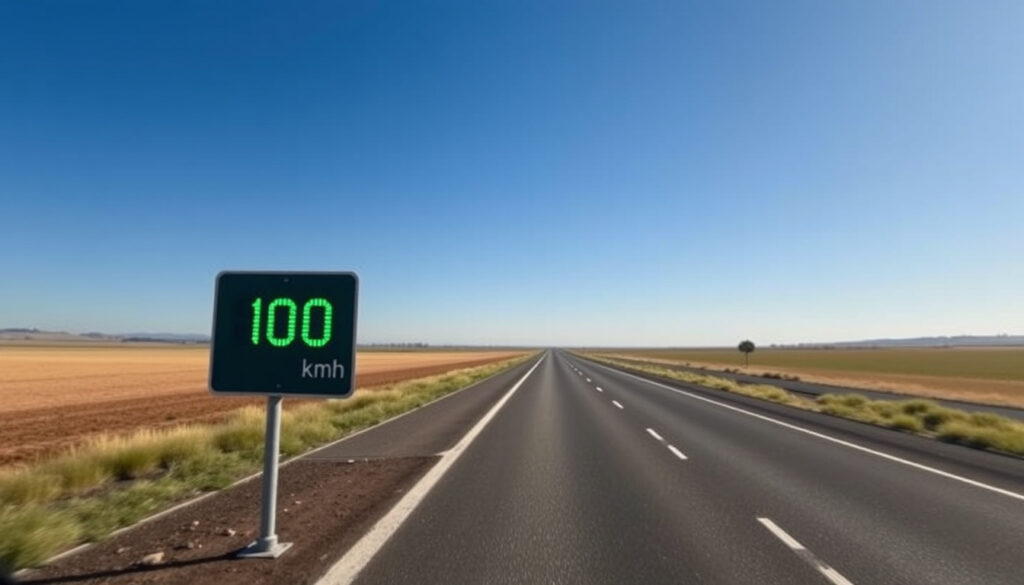
Canterbury Highway Speed Limit Increase: 100 km/h Returns
Few driving debates get people talking faster than speed limits, and Canterbury’s State Highway 1 has become the latest flashpoint: after a stretch near Woodend was dropped to 80 km/h, official consultation found 49% of local respondents wanted the old 100 km/h limit back — and in April 2025, the limit was set to return. But the same review process is now proposing reductions elsewhere, including sections near Rolleston, so the story is more nuanced than a simple "faster roads" headline.
Speed limit on SH1 south of Woodend: 80 km/h → 100 km/h ·
Public support for 100 km/h: 49% of respondents ·
Total affected state highway length: about 12 km ·
Proposed reduction near Rolleston: 100 km/h → 80 km/h on a 2.64 km stretch ·
Year of targeted speed limit review: 2024
Quick snapshot
- The 80 km/h limit on SH1 south of Woodend has been reversed to 100 km/h (NZ Transport Agency Waka Kotahi (Canterbury consultation info sheet)).
- NZTA has proposed targeted speed-limit changes on SH1 locations from Amberley to Temuka (NZ Transport Agency Waka Kotahi (official speed-limit review page)).
- The Woodend consultation recorded 49% support for keeping 100 km/h on the stretch (The Press, April 2025).
- The exact enforcement start date for the proposed 80 km/h limit near Rolleston.
- Whether further speed limit changes on other Canterbury highways will follow.
- Final signage details for the proposed variable 80/60 km/h zones at the Weavers Road and North Rakaia Road intersections.
- The 2024 Setting of Speed Limits Rule reset how in-progress speed-limit plans were handled (NZ Transport Agency Waka Kotahi (official speed-limit review page)).
- Limits lowered since 2020 in certain connector categories were due to reverse by 1 July 2025 (NZ Transport Agency Waka Kotahi (Canterbury consultation info sheet)).
- The Woodend return to 100 km/h was reported on 23 April 2025 (The Press).
- NZTA continues targeted reviews; proposals near Rolleston, Rakaia and Methven are still in the pipeline (NZ Transport Agency Waka Kotahi (official speed-limit review page)).
- Drivers should watch for new signage — several lower limits reversed around the 1 July 2025 deadline (NZ Transport Agency Waka Kotahi (Canterbury consultation info sheet)).
- Feedback on remaining proposals is open through NZTA’s consultation pages (NZ Transport Agency Waka Kotahi (official speed-limit review page)).
Six facts, one pattern: the same review process is restoring higher speeds in some places and lowering them in others, depending on the risk at each location (NZ Transport Agency Waka Kotahi (official speed-limit review page)).
| Fact | Value |
|---|---|
| Affected highway | State Highway 1 south of Woodend |
| New speed limit | 100 km/h (NZ Transport Agency Waka Kotahi (Canterbury consultation info sheet)) |
| Previous speed limit | 80 km/h |
| Support for 100 km/h in consultation | 49% (The Press, April 2025) |
| Total length of targeted reviews (South Island) | Approximately 12 km (NZ Transport Agency Waka Kotahi) |
| Proposed reduction near Rolleston | 100 km/h to 80 km/h on a 2.64 km stretch (Otago Daily Times, September 2026) |
What Is the Canterbury Highway Speed Limit Increase?
The short version: NZTA is making small, targeted changes across Canterbury’s state highway network. The most visible is on SH1 south of Woodend, where the posted limit returns to 100 km/h after a period at 80 km/h.
Details of the change on State Highway 1 south of Woodend
- Location: SH1 south of Woodend, in the corridor north of Christchurch.
- Change: 80 km/h → 100 km/h.
- Status: reported as confirmed on 23 April 2025 (The Press).
The reversal is not an NZTA about-face on safety. The agency’s Canterbury consultation material explains that some speed limits lowered since 2020 — on routes classed as urban connectors, rural connectors, interregional connectors and transit corridors — were required to automatically reverse to their previous higher limits by 1 July 2025 (NZ Transport Agency Waka Kotahi (Canterbury consultation info sheet)).
That rule-based reversal is why the Woodend stretch, and others in the same categories, went back up even though the original 80 km/h decision was made after community consultation.
The same agency that lowered the speed limit for safety is now required to raise it back, on a fixed date, because of a rule change — not because the road got safer.
What this means: the speed-limit story in Canterbury is not one direction of travel. It is a set of surgical adjustments, each with its own legal trigger.
Comparison with previous 80 km/h limit
- Before the lower limit: 100 km/h was the posted speed on the stretch.
- : NZTA consulted on reducing SH1 between Waikuku and Lineside Road (NZ Transport Agency Waka Kotahi (Canterbury consultation info sheet)).
- : the 80 km/h limit took effect (NZ Transport Agency Waka Kotahi (Canterbury consultation info sheet)).
The 2019 consultation found community support for the reduction. The 2025 outcome is different: 49% of respondents in the Woodend consultation wanted 100 km/h retained, according to The Press. The nuance: 49% is a strong plurality, but not a majority. The Press reported the decision after 49% support, but the legal mechanism was the rule’s automatic-reversal requirement.
The practical upshot: the road is returning to the speed it had before 2020, not to a new, higher limit.
Official announcement and timeline
- : Land Transport Rule: Setting of Speed Limits 2024 enacted (New Zealand Legislation).
- : deadline for in-progress speed-management plans to be registered and implemented under the previous framework (NZ Transport Agency Waka Kotahi (official speed-limit review page)).
- : automatic reversal deadline for qualifying lower limits (NZ Transport Agency Waka Kotahi (Canterbury consultation info sheet)).
- : The Press reports the Woodend stretch will return to 100 km/h (The Press, April 2025).
There was no single announcement day for the increase. The 2024 rule quietly changed the framework: in-progress speed-management plans that were not registered and implemented by 30 October 2024 could not proceed automatically. Then the reversal categories took over, putting the Woodend stretch back to 100 km/h by 1 July 2025.
49% support is not a mandate. A consultation question, a rule change and a date on the calendar are what moved this limit — not a groundswell of demand.
Why Was the Speed Limit Reduced in 2024?
The 2024 targeted reviews were a separate layer from the Woodend reversal. In parallel with the rule-driven push back to 100 km/h on some stretches, NZTA was proposing new reductions at high-risk locations nearby — including a 2.64 km stretch near Rolleston reported by the Otago Daily Times, and an intersection zone south of Rolleston listed by NZTA.
Safety concerns leading to the initial reduction
- : NZTA consulted on reducing SH1 between Waikuku and Lineside Road (NZ Transport Agency Waka Kotahi (Canterbury consultation info sheet)).
- The community supported the reduction at the time (NZ Transport Agency Waka Kotahi (Canterbury consultation info sheet)).
- : the limit dropped from 100 km/h to 80 km/h (NZ Transport Agency Waka Kotahi (Canterbury consultation info sheet)).
The Waikuku–Lineside Road case is a safety-driven reduction in its classic form: NZTA consulted, the community backed it, and the limit fell. The fact that the same corridor later recorded 49% support for 100 km/h does not necessarily mean the original decision was wrong — it means preferences shifted once the cost of a lower limit became part of daily life.
Role of the NZ Transport Agency
- NZTA manages speed limits on the state highway network (NZ Transport Agency Waka Kotahi (speed management)).
- The Canterbury interim speed-management consultation ran under the 2022 Setting of Speed Limits Rule (NZ Transport Agency Waka Kotahi (official speed-limit review page)).
- The 2024 Setting of Speed Limits Rule replaced that framework (NZ Transport Agency Waka Kotahi (official speed-limit review page)).
The 2024 rule changed the path for unfinished work. Any in-progress speed-management plan that was not registered and implemented by 30 October 2024 could not proceed automatically. That is why the 2022-era Canterbury proposals did not simply roll out as planned.
Public feedback and the 2024 rule change
- In the Woodend consultation, 49% of respondents wanted 100 km/h retained (The Press, April 2025).
- The 2024 rule set the 30 October 2024 bar for in-progress plans (NZ Transport Agency Waka Kotahi (official speed-limit review page)).
- Qualifying lower limits reversed automatically from 1 July 2025 (NZ Transport Agency Waka Kotahi (Canterbury consultation info sheet)).
The numbers deserve a close read. 49% is the largest single response, but it is not a majority — the remaining 51% split across the other options. The Press reported the decision after 49% support; the legal engine for the return to 100 km/h was the automatic-reversal requirement in the 2024 rule.
How Are Speed Limit Decisions Made in New Zealand?
New Zealand’s speed limit system is less chaotic than it looks from the roadside. It runs on a national rule, a single authority for state highways, and a consultation process that happens before — not after — the signs change.
The role of NZTA and local road controlling authorities
- State highways: NZTA sets and reviews speed limits (NZ Transport Agency Waka Kotahi (speed management)).
- Local roads: city and district councils run their own speed-management processes.
- Governing rule: Land Transport Rule: Setting of Speed Limits 2024 (New Zealand Legislation).
The 2024 rule is the current legal backbone. The Canterbury interim plan was originally consulted on under the 2022 rule; the 2024 rule then changed how unfinished plans were treated. That sequence — plan under one rule, finish under another — is exactly what produced the mixed outcomes Canterbury is seeing.
Public consultation process
- Consultations open before limits change, with proposals published for feedback (NZ Transport Agency Waka Kotahi (official speed-limit review page)).
- The Canterbury interim speed-management consultation ran under the 2022 rule (NZ Transport Agency Waka Kotahi (official speed-limit review page)).
- Individuals can submit feedback through NZTA’s published consultation channels (NZ Transport Agency Waka Kotahi (official speed-limit review page)).
The practical takeaway: the window for input is during consultation, not after the signs are up. If a proposed 80 km/h or variable 80/60 km/h zone near you feels wrong, the useful time to say so is while it is still a proposal.
Factors considered: safety, traffic volumes, road geometry
- Crash risk at specific locations — for example, the intersection zone south of Rolleston near Dunns Crossing and Walkers Roads, proposed to drop from 100 km/h to 60 km/h (NZ Transport Agency Waka Kotahi (official speed-limit review page)).
- Traffic volumes and how the road is used.
- Road geometry and surrounding land use.
NZTA’s own review list shows how granular this gets. A township, an intersection, a single bend — each can generate its own proposal. The total footprint of all South Island targeted reviews is small: roughly 12 km of state highway (NZ Transport Agency Waka Kotahi (official speed-limit review page)).
One rule that sits outside the consultation process: the minimum-speed obligation. Driving so slowly that you obstruct the normal flow of traffic can be an offence, even if nobody would call you a speeder. The law asks you to match the sign and the conditions, not to pick a "safe" number of your own.
The implication: the "speed limit increase" you read about is not a policy shift so much as a series of rule-driven corrections, each decided on its own merits.
What Sections of Canterbury Highways Are Affected?
The affected network is not one long corridor. It is a scatter of specific stretches, intersections and townships — about 12 km of South Island state highway in total (NZ Transport Agency Waka Kotahi (official speed-limit review page)).
SH1 south of Woodend – 100 km/h increase
- Change: 80 km/h → 100 km/h (The Press, April 2025).
- Context: the stretch from north of the Pegasus roundabout to Woodend remains at 70 km/h (NZ Transport Agency Waka Kotahi (Canterbury consultation info sheet)).
- Effect: drivers regain the open-road speed they had before 2020, but only on this section.
If you drive this route regularly, the change is real but narrow. One section returns to 100 km/h; the section next to it keeps a 70 km/h limit. The result is a road that asks you to change speed twice in the space of a few minutes.
SH1 near Rolleston – proposed 80 km/h reduction
- Reported proposal: a 2.64 km stretch of SH1 near Rolleston drops from 100 km/h to 80 km/h (Otago Daily Times, 10 September 2026).
- Separate proposal: an intersection zone south of Rolleston near Dunns Crossing and Walkers Roads changes from 100 km/h to 60 km/h (NZ Transport Agency Waka Kotahi (official speed-limit review page)).
- Status: still in the review process; enforcement dates not confirmed.
Rolleston is where the two directions of the story meet. One proposal lowers a 2.64 km stretch to 80 km/h; another cuts an intersection zone to 60 km/h. Neither is a speed-limit increase.
Other stretches in South Canterbury and West Coast
- Rakaia township: 70 km/h → 50 km/h (NZ Transport Agency Waka Kotahi (official speed-limit review page)).
- Methven township north: 100 km/h → 60 km/h (NZ Transport Agency Waka Kotahi (official speed-limit review page)).
- Weavers Road and North Rakaia Road intersections: 100 km/h → variable 80/60 km/h (NZ Transport Agency Waka Kotahi (official speed-limit review page)).
- Northern South Canterbury: proposed 70 km/h → 50 km/h (NZ Transport Agency Waka Kotahi (Canterbury consultation info sheet)).
Most of these are townships and intersections, not open highway. The pattern NZTA is applying: keep the flowing speeds where the road is safe, and tighten the numbers where driveways, side roads and local traffic create conflict.
The Rolleston proposals and the variable 80/60 zones are still in the process. The next sign to change near you may be the one that matters most — check the NZTA page before your usual drive.
What Does the Speed Limit Increase Mean for Drivers?
For regular drivers, the practical effect is less about policy and more about the daily drive. A limit that changes means a driving habit has to change with it.
How to stay compliant with the new limits
- Posted signs override the default: if the sign says 80, the limit is 80, even if the road looks identical to the 100 km/h stretch before it.
- Qualifying lower limits were due to revert by 1 July 2025 — check for new signage on stretches that had been dropped since 2020 (NZ Transport Agency Waka Kotahi (Canterbury consultation info sheet)).
- New Zealand’s road rules include a minimum-speed obligation: driving so slowly that you obstruct the normal flow of traffic can be an offence, even below the posted maximum.
The minimum-speed point surprises people. A driver doing 50 km/h on an 80 km/h section to "be safe" can be just as exposed to enforcement as a driver doing 90 — if the slow speed blocks traffic without a valid reason. The instruction is to match the sign and the conditions, not to choose your own number.
Implications for road safety and travel times
- Restoring 100 km/h on the Woodend stretch shortens travel time for commuters heading between Christchurch and North Canterbury.
- Targeted reductions — such as the proposed 100 km/h to 60 km/h intersection zone near Rolleston — trade speed for safety at known risk points (NZ Transport Agency Waka Kotahi (official speed-limit review page)).
- The net effect on journey times is small because the changed sections are short.
The travel-time math is modest: a few kilometres at the higher limit saves minutes, not hours. The safety math matters more: a 60 km/h intersection zone is designed to reduce crash severity, not to frustrate drivers in the last stretch before the motorway.
For commuters, the speed limit increase is a small win on time and a large test of attention — the roads around Rolleston and Rakaia are changing at the same time.
Upcoming changes and how to stay informed
- NZTA’s speed-limit review locations page lists proposed changes for every affected highway (NZ Transport Agency Waka Kotahi (official speed-limit review page)).
- Consultation info sheets explain the rule mechanics and the reversal categories (NZ Transport Agency Waka Kotahi (Canterbury consultation info sheet)).
- Feedback on remaining proposals is open through NZTA’s official consultation channels (NZ Transport Agency Waka Kotahi (official speed-limit review page)).
The honest answer to "what happens next" is: check the list, check the signs, and if you care about a specific stretch, make your submission while the consultation is open.
Why this matters: the road you drove last month may have a different limit tomorrow. The sign at the roadside is the only reliable contract between the law and your licence.
Timeline: How the Canterbury Speed Limit Changes Unfolded
Eight dates, one story: a safety-driven reduction, a rule change, and a quiet reversal on the same corridor (sources cited per row).
| Date | What happened |
|---|---|
| SH1 between Waikuku and Lineside Road reduced from 100 km/h to 80 km/h after 2019 consultation (NZ Transport Agency Waka Kotahi (Canterbury consultation info sheet)). | |
| Canterbury interim speed-management consultation conducted under the 2022 Setting of Speed Limits Rule (NZ Transport Agency Waka Kotahi (official speed-limit review page)). | |
| Land Transport Rule: Setting of Speed Limits 2024 enacted (New Zealand Legislation). | |
| Deadline for in-progress speed-management plans to be registered and implemented under the previous framework (NZ Transport Agency Waka Kotahi (official speed-limit review page)). | |
| NZTA undertakes targeted speed-limit reviews in Canterbury, West Coast and Southland. | |
| The Press reports SH1 south of Woodend will return to 100 km/h after 49% support in consultation (The Press, April 2025). | |
| Qualifying lower limits automatically reverse to their previous higher limits (NZ Transport Agency Waka Kotahi (Canterbury consultation info sheet)). | |
| Otago Daily Times reports SH1 near Rolleston is proposed to drop from 100 km/h to 80 km/h on a 2.64 km stretch (Otago Daily Times, September 2026). |
The pattern: each date is a switch in the same corridor — lower, then rule change, then higher, then lower again at a different nearby location.
What’s Confirmed and What’s Still Unclear
Confirmed facts
- The 80 km/h limit on SH1 south of Woodend has been reversed to 100 km/h (NZ Transport Agency Waka Kotahi (Canterbury consultation info sheet)).
- Speed limits lowered since 2020 on urban/rural connectors, interregional connectors and transit corridors were required to reverse by 1 July 2025 (NZ Transport Agency Waka Kotahi (Canterbury consultation info sheet)).
- NZTA’s targeted review list covers SH1 locations from Amberley to Temuka, including the Rolleston intersection zone, Rakaia and Methven proposals (NZ Transport Agency Waka Kotahi (official speed-limit review page)).
What’s unclear
- The exact enforcement start date for the proposed 80 km/h limit near Rolleston.
- Whether further speed limit changes on other Canterbury highways will follow.
- Final signage details for the proposed variable 80/60 km/h zones at the Weavers Road and North Rakaia Road intersections.
- How the 2024 rule’s reversal categories will apply to other pending Canterbury proposals.
This article draws on NZTA consultation material and local news reports. Several proposals are still under consultation and may change before enforcement.
The distinction matters: confirmed items are documented in official and news sources; unclear items remain open until NZTA confirms dates and final sign layouts.
What the Sources Say
Some speed limits lowered since 2020 are required to automatically reverse to their previous higher limits by 1 July 2025, under the categories set out in NZTA’s Canterbury consultation material.
NZ Transport Agency Waka Kotahi — consultation info sheet (Canterbury)
The Press reported on 23 April 2025 that the speed limit on SH1 south of Woodend would return to 100 km/h, after 49% of consultation respondents supported the higher limit.
The Press — Christchurch newspaper
The Otago Daily Times reported on 10 September 2026 that a 2.64 km stretch of SH1 near Rolleston is proposed to be lowered from 100 km/h to 80 km/h.
Otago Daily Times — New Zealand news reporting
The pattern across the sources: the official mechanism, the regional report and the local paper describe the same process from different distances — and none of them call it a blanket speed-up.
The Takeaway for Canterbury Drivers
The Canterbury highway speed limit increase is real, but it is not a loosening of the rules across the region. It is a narrow, rule-driven correction on one stretch of SH1, surrounded by proposals heading the other way. The 49% consultation result, the 2024 rule’s automatic-reversal mechanism and the 1 July 2025 deadline combined to move the Woodend limit back to 100 km/h. Meanwhile, the same review process continues to propose 60 km/h and 80 km/h limits at high-risk points near Rolleston, Rakaia and Methven. For Canterbury drivers, the decision is clear: read the signs at every stretch, or trade a few saved minutes for a fine, a crash, or both.
odt.co.nz, odt.co.nz, thepress.co.nz, nzta.govt.nz, thepress.co.nz, 1news.co.nz
Frequently asked questions
How fast can you drive on a New Zealand highway?
The default open-road limit on most New Zealand highways is 100 km/h, but posted signs override it. On SH1 south of Woodend the limit is back to 100 km/h; on the section north of the Pegasus roundabout to Woodend it remains 70 km/h (NZ Transport Agency Waka Kotahi (Canterbury consultation info sheet)). Always treat the posted sign as the legal limit.
What is the penalty for speeding in New Zealand?
Penalties scale with how far over the limit you travel; NZ Police can issue infringement fines and, for higher speeds, the matter can go to court (New Zealand Police). The practical answer is simpler: check the posted limit, because it changed recently on several Canterbury stretches.
Are there speed cameras on State Highway 1 in Canterbury?
New Zealand Police operate speed cameras across the state highway network (New Zealand Police). Rather than relying on camera locations, the reliable habit is to treat every posted limit as enforceable — especially on sections where limits have recently changed.
When will the new speed limit near Rolleston take effect?
The Otago Daily Times reported on 10 September 2026 that a 2.64 km stretch of SH1 near Rolleston is proposed to drop from 100 km/h to 80 km/h (Otago Daily Times, September 2026). The exact enforcement date is not confirmed; the proposal is still in the review process.
How can I provide feedback on proposed speed limit changes?
NZTA runs public consultation before a limit changes. The speed-limit review locations page lists the proposals, and the consultation channels accept submissions while the window is open (NZ Transport Agency Waka Kotahi (official speed-limit review page)).
Is it legal to drive under the speed limit on a highway?
Not necessarily. New Zealand’s road rules include a minimum-speed obligation: driving so slowly that you obstruct the normal flow of traffic can be an offence, even if you are below the posted maximum (New Zealand Legislation). The legal instruction is to match the sign and the conditions.
Does the speed limit increase affect all of State Highway 1?
No. The 100 km/h restoration applies to the stretch south of Woodend. Other parts of SH1 in Canterbury are proposed for reductions — including a 2.64 km stretch near Rolleston to 80 km/h and an intersection zone south of Rolleston to 60 km/h (NZ Transport Agency Waka Kotahi (official speed-limit review page)).
For drivers, the useful habit is simple: check the signs, check the NZTA page, and treat every posted limit as the law.
Sources and further reading
- NZTA Canterbury interim speed-management consultation — official speed-limit review page.
- Setting of Speed Limits Rule 2024 overview (Canterbury consultation info sheet)
- NZTA speed management — official NZ Transport Agency section.
- The Press — Christchurch newspaper.
- Otago Daily Times — New Zealand news reporting.
- New Zealand Police — driving advice
- New Zealand Legislation — official legislation website.
- New Zealand Government — official government information portal.
For current proposals and rule mechanics, the official NZTA and legislation links above are the most direct route to verified details.
More related posts
 Apple Watch Series 10 NZ: Price, Availability & Worth Buying
 Krispy Kreme Near Me: Ireland Locations, Tesco & Prices
 Pak n Save Papanui: hours, address, specials & online shopping
 What Is Half-and-Half? Definition, Substitutes, & How to Make
 Chappell Roan Good Luck, Babe!: Meaning and Identity Facts
 Stores Open Near Me: Easter Hours & Store Guide
 Manu Restaurant and Bar Reviews: Honest Verdict for Christchurch
 Choi Tae-joon – Age, Wife, Dramas, Career Facts