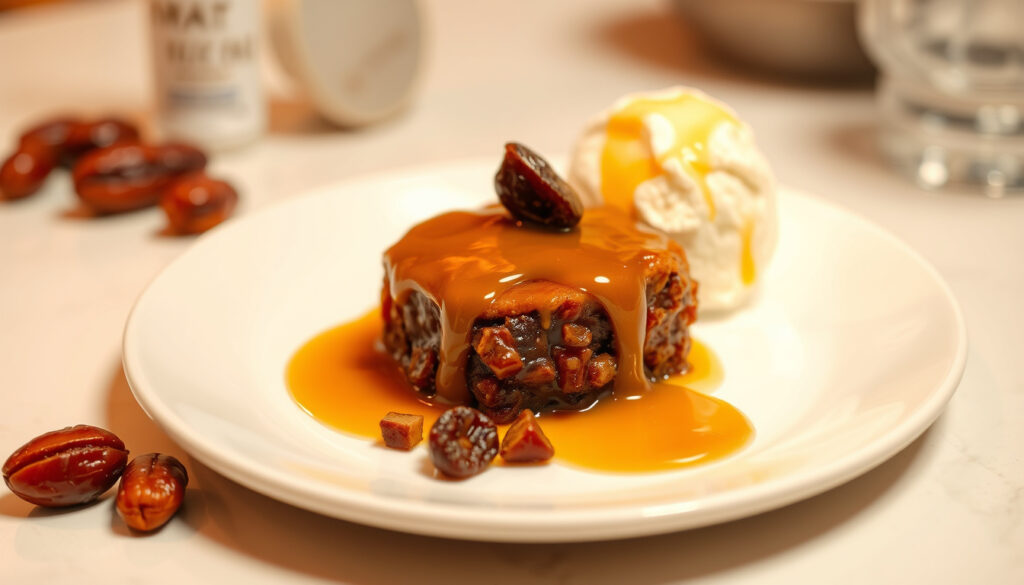
Simple Sticky Date Pudding Recipe with Butterscotch Sauce
The magic of a perfect sticky date pudding lies in how a handful of humble ingredients—dates, brown sugar, butter, and cream—transform into something far greater than the sum of their parts. This guide walks you through the essential techniques from trusted sources like RecipeTin Eats and Donna Hay, so you can skip the guesswork and bring that restaurant-quality dessert to your own kitchen.
Sticky Date Pudding at a Glance: Prep 10-15 min | Bake 35-45 min | Serves 8-10 | Core ingredients: dates, brown sugar, butter, flour, baking soda
Key Ingredients
- Medjool or regular pitted dates — the defining ingredient, RecipeTin Eats soaks them in hot water with baking soda
- Baking soda (bicarbonate of soda) — tenderizes dates and creates air pockets
- Brown sugar (light or dark) — provides caramel-like sweetness
- Unsalted butter — used in both cake and sauce
- Self-raising flour or plain flour + baking powder
- Eggs and vanilla extract
- For sauce: brown sugar, butter, heavy cream
Equipment Needed
- 8×8 inch or 9-inch square baking pan
- Large mixing bowls
- Hand mixer or stand mixer
- Saucepan for sauce
- Measuring cups and spoons
Common Variations
- Add chocolate chips or chopped walnuts for texture
- Use coconut sugar instead of brown sugar
- Gluten-free: substitute flour with almond flour or GF blend
- Vegan: use plant-based butter and flax eggs
Pro Tips
- Pouring hot water and baking soda over dates is non-negotiable — it softens them into the signature sticky texture
- Bake at 350°F (180°C) and check at 35 minutes to avoid over-baking
- Serve warm with sauce poured over; let sit 5 minutes before serving
What do you need to make sticky date pudding?
The ingredient list is short, but each component plays a specific role. Getting them right makes the difference between a good pudding and a great one.
Core ingredients for the pudding base
- Dates are the defining ingredient. RecipeTin Eats and Donna Hay both soak chopped dates in boiling water with baking soda — this tenderizes them and creates the sticky crumb.
- Brown sugar and butter form the caramel flavor base. Most recipes use light or dark brown sugar.
- Self-raising flour is standard; if using plain flour, add 1½ teaspoons of baking powder per cup.
- Baking soda reacts with the dates’ acidity to create air pockets, giving a light yet sticky texture.
Essential sauce ingredients
- Butter, brown sugar, and heavy cream form the classic butterscotch sauce.
- Donna Hay heats butter and sugar together, then gradually adds cream and boils for 6–8 minutes until slightly thickened.
- RecipeTin Eats simmers all ingredients together for 2 minutes — a faster method that still yields a glossy, clingy sauce.
“The hot water and baking soda work together to break down the dates, softening them and helping them break apart into a thick paste.” — Method described by RecipeTin Eats
The lines are often blurred, but a classic sticky date pudding gets its moisture from the date paste itself, while a “toffee” pudding might use different flavorings. Always check the base of your recipe for the fruit-to-fat ratio.
Why is sticky date pudding so good?
The sticky date pudding is more than just a dessert; it’s a study in contrasts—the dense, moist crumb of the date cake against the silky, buttery pour of the sauce. This section breaks down the key components and techniques that distinguish a good pudding from a great one.
Texture appeal: moist and sticky
- Dates melt into the batter creating a fudgy, almost toffee-like crumb.
- Chopped dates are soaked or simmered in hot liquid (water or coffee, as per RecipeTin Eats technique) to soften into a paste.
- This date paste gives the baked pudding its incredibly sticky, dense texture.
Flavor profile: caramel and date richness
- Dates provide a complex, naturally sweet flavor that deepens during baking.
- The chemical reaction between baking soda and dates creates subtle caramel notes.
- Brown sugar in both cake and sauce reinforces the toffee-like profile.
“The sauce for sticky date pudding often includes a touch of vanilla and a pinch of salt to balance the sweetness.” — Technique noted in Donna Hay‘s recipe
Cultural nostalgia and comfort food status
This dessert carries emotional weight. It appears on holiday tables, in British-style pubs across America, and on Australian café menus. The warm, sticky cake with sauce triggers the same comfort response as a childhood favorite — which explains why searches spike around UK baking seasons and holidays.
Is Sticky Toffee Pudding the same as sticky date pudding?
It’s easy to get caught up in names and regional versions. This section helps clarify the landscape of this dessert’s many forms, ensuring you know what you’re getting.
What’s in a Name?
By any other name, it’s still sweet. But the terms are sometimes used loosely.
- In the US, it is almost always called sticky toffee pudding, and it’s rarely seen on standard restaurant menus but is popular in British-style pubs.
- Australia has popularized the name “sticky date pudding,” which is often what you’ll see on café menus there.
- The UK version is traditionally a dense, moist sponge cake made with chopped dates, often served with a toffee or butterscotch sauce.
The British Classic vs. American Interpretations
- British sticky toffee pudding is a dense, moist sponge cake with chopped dates, served with sauce.
- American versions might be more cake-like, sometimes served in a pool of sauce with ice cream.
- Equivalent American desserts like “date cake” lack the sticky, sauced topping that defines the British pudding.
When you’re following a recipe or ordering at a restaurant, understanding the regional naming quirks ensures you get the exact dessert you’re craving.
Which country invented sticky date pudding?
The story of this beloved dessert is a relatively recent one, with a clear timeline despite some tall tales.
The Birth of a Classic
- Francis Coulson of the Sharrow Bay Country House in England is widely credited with inventing the modern version in the 1970s.
- Australia was an early adopter of the “sticky date pudding” name, helping to popularize it in the southern hemisphere.
- No single country is universally accepted as the creator, as similar steamed date puddings existed for centuries, but the specific recipe with its signature sauce is a modern invention.
“Francis Coulson’s genius was in the presentation and the balance of the sauce, which turned a frugal, old-fashioned dessert into a world-famous icon.” — Culinary historians on the dessert’s origin
What is the best ever recipe for Sticky Toffee Pudding?
Step-by-step instructions
- Preheat oven to 350°F (180°C). Grease an 8×8 inch or 9-inch square pan and line with baking paper.
- Place chopped pitted dates in a heatproof bowl. Pour boiling water mixed with baking soda over them. Let sit for 5–10 minutes (Donna Hay uses 5 minutes; RecipeTin Eats uses 10 minutes).
- Mash or blend the date mixture into a thick paste. Add butter, brown sugar, eggs, and vanilla, and mix until combined.
- Sift in self-raising flour (or plain flour with baking powder) and fold gently until just combined. Do not over-mix.
- Pour batter into prepared pan. Bake for 35–45 minutes, or until a skewer inserted comes out mostly clean with a few moist crumbs.
- While the cake bakes, make the sauce: combine butter, brown sugar, and cream in a saucepan. Simmer for 2 minutes (RecipeTin Eats method) or 6–8 minutes (Donna Hay method) until thickened.
- Pour warm sauce over the warm pudding. Let sit for 5 minutes before serving with cream, ice cream, or custard.
Temperature and timing tips
- Bake at 350°F (180°C). Donna Hay bakes for 55–60 minutes; A Joyful Ordinary Life bakes for 35 minutes. Check at 35 minutes.
- Pull the pudding when a skewer comes out with a few moist crumbs — over-baking dries it out.
- The sauce thickens as it cools. It should coat the back of a spoon.
Common mistake: Over-mixing the batter after adding flour develops gluten, making the crumb tough. Fold until just combined.
Upsides
- Dates provide fiber and potassium
- Make-ahead friendly — cake and sauce can be prepared a day ahead
- Freezes well for up to 3 months
Downsides
- High in sugar (approx. 30–40g per serving)
- Butter and cream add saturated fat
- Not suitable for low-carb or keto diets
Is sticky date pudding healthy?
Nutritional breakdown
- Dates are a whole food source of fiber, potassium, and antioxidants.
- A typical serving (one slice with sauce) contains 400–500 calories, 30–40g sugar, and 20–25g fat.
- Butter and cream contribute saturated fat; brown sugar adds empty calories.
Healthier swaps
- Reduce sugar by 25% — dates already provide significant sweetness.
- Substitute half the butter with unsweetened applesauce in the cake.
- Use coconut sugar or maple syrup instead of brown sugar (adjust liquid accordingly).
- Serve with Greek yogurt instead of cream for a tangy contrast with less fat.
Healthier versions change the texture and flavor. The classic version is an indulgence, and that’s fine for occasional enjoyment. Balance is the watchword.
A Bite of History: From England to the World
The story of this beloved dessert is a relatively recent one, with a clear timeline despite some tall tales. It’s a story of invention and global popularity.
The Birth of a Classic
- Francis Coulson of the Sharrow Bay Country House in England is widely credited with inventing the modern version in the 1970s.
- Australia was an early adopter of the name “sticky date pudding,” helping to popularize it in the southern hemisphere.
- No single country is universally accepted as the creator of the dessert, as similar steamed date puddings existed for centuries, but the specific recipe with its signature sauce is a modern invention.
The pattern: Coulson’s contribution was refining the technique and presentation. He turned a frugal, old-fashioned steamed pudding into a globally recognized dessert, proving that technique matters as much as ingredients.
The Cinematic Finale: Summary
You’ve now distilled the essence of the perfect sticky date pudding. From the crucial technique of blooming the dates to the fine balance of the butterscotch sauce, every step is a lesson in trust and flavor. The real takeaway is that the warm, comforting flavors you associate with a high-end restaurant are achievable at home. The next time you serve a slice warm with cream or ice cream, you’ll appreciate not just the sweet, sticky taste, but the history and technique that made it the beloved dessert it is today. RecipeTin Eats calls this a “foolproof” result — and with the right method, it truly is.
tsgcookin.com, donnahay.com.au, threefriendscook.com, eatlittlebird.com, cutsfood.com, food.com, chubbyhubby.net, justamumnz.com
Frequently Asked Questions
What is the difference between sticky date pudding and sticky toffee pudding?
In practice, there is often no difference, and the terms are used interchangeably. Traditionally, sticky toffee pudding is the British name for a dense, moist sponge. Sticky date pudding is the term popularized in Australia to highlight the use of dates as the primary ingredient for the “sticky” texture.
Can I make the pudding ahead of time?
Yes. The cake can be baked a day ahead, kept in the tin, and reheated in a low oven or microwave. The sauce can also be made ahead and gently reheated with a splash of milk or cream to restore its silky consistency.
My pudding is dry—what did I do wrong?
A dry pudding usually comes from over-baking or not having enough moisture from the dates. Ensure your oven temperature is accurate and pull the pudding out as soon as a skewer comes out mostly clean. Avoid over-mixing the batter after adding flour, as this develops gluten and toughens the crumb.
What is the best sauce to serve with sticky date pudding?
Classic butterscotch sauce (butter, brown sugar, cream) is traditional. Alternatives include custard, vanilla ice cream, lightly sweetened whipped cream, or Greek yogurt for a tangy contrast.
Why do I need to add baking soda to boiling water and pour it over the dates?
The hot water and baking soda soften the dates and help them break into a thick paste. This distributes the flavor evenly and creates a chemical reaction that helps leaven the pudding, resulting in a light, airy texture rather than a dense, heavy one.
Can I use dried dates instead of Medjool dates?
Yes, regular pitted dates work well. Medjool dates are larger and more moist, but any variety will produce a good result. Soak them slightly longer if they seem dry.
Can I freeze sticky date pudding?
Yes. The baked cake freezes well for up to 3 months. Wrap tightly in plastic wrap and foil. Thaw overnight in the refrigerator and reheat before serving. The sauce can also be frozen separately.
Detailed recipe and historical insights are drawn from research and practices shared by Donna Hay, RecipeTin Eats, and 3CatsFoodie. For more sweet inspiration, check out the Easy Sticky Date Pudding Recipe | Classic Australian Dessert and How to Make Caramel: Easy 4-Ingredient Recipe & Pro Tips.
More related posts
 Plant Protein Powder NZ: Best Options and Buying Guide
 Products Offered by Mitre 10 MEGA Papanui – 54,000+ Items
 Time in Philippines Now: Current Time, Time Zone, Weather & More
 Flights Christchurch to London – Cheapest Fares, Airlines and Booking Guide
 Woolworths Beef Mince Recall July 2025: What to Do
 Cast of The Ex-Wife: Full Cast List and Season 2 Recast
 Shin Hye-sun: Biography, Height, Relationship, and Dramas
 Bed Bath and Beyond Rotorua: Hours, Online Shopping & Sale