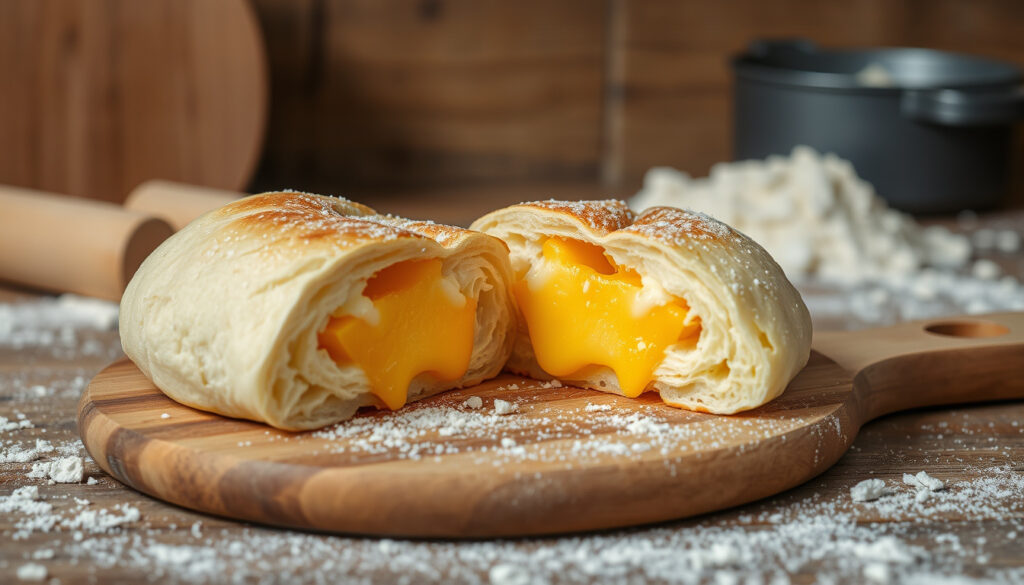
Cheese Rolls Recipe NZ | Southland Style
There’s a snack in New Zealand that divides the country — not Marmite versus Vegemite, but the cheese roll. This guide walks through the classic Southland recipe, explains why certain ingredients are non-negotiable, and shares the tips that turn a good cheese roll into a great one.
Prep time: 15 minutes ·
Cook time: 15–20 minutes ·
Main cheese type: Tasty/Sharp Cheddar ·
Key binder: Evaporated milk ·
Origin region: Southland, New Zealand ·
Typical servings: 12–16 rolls
Quick snapshot
- Cheese rolls originated in Southland, New Zealand (Mainland (New Zealand’s leading cheese brand))
- Evaporated milk is the standard liquid base (Annabel Langbein (celebrated New Zealand chef))
- Sharp cheddar (Tasty Cheddar) is the most common cheese (The World’s Easiest Recipes (popular NZ food blog))
- Onion soup mix is a frequent addition (NZ Life & Leisure (lifestyle magazine))
- Exact origin date of the cheese roll is unknown
- Who first added onion soup mix is unclear
- Whether the original recipe included butter on the bread is debated
- Whether cheese rolls first appeared in the 1920s–1930s is not confirmed
- Whether evaporated milk became standard only after the 1950s is uncertain
- Whether onion soup mix was added in the 1980s–1990s remains speculative
- Cheese rolls continue to evolve with new variations (bacon, chilli, sourdough)
- They remain a beloved Kiwi snack, especially for parties and fundraising
- Bacon or ham adds smoky saltiness (Foodlovers (NZ food blog))
- Chives or spring onions provide mild onion flavour (Tangleby (NZ homeware brand))
- Chilli flakes or cayenne add heat (The World’s Easiest Recipes (popular NZ food blog))
Six key facts about the classic Southland cheese roll, from cheese choice to freezer life, show why this recipe is so reliable.
| Fact | Detail |
|---|---|
| Cheese type used | Tasty Cheddar (Edam or Colby also common) |
| Bread type | White sliced sandwich bread |
| Liquid base | Evaporated milk (200–370ml) |
| Flavouring | Onion soup mix, mustard powder, grated onion, garlic |
| Cooking method | Bake at 180–200°C until golden (15–20 min) |
| Freezer life | Up to 3 months unbaked |
What are cheese rolls in New Zealand?
When a New Zealander says “cheese roll,” they mean a slice of white bread spread with a savoury cheese mixture, rolled up, and baked until golden. It’s not a grilled cheese sandwich or a rolled tortilla — it’s a distinct Southland-born snack that has become a national comfort food. The filling is a cooked paste of grated cheese, evaporated milk, onion soup mix, and aromatics, spread onto bread and baked until the exterior crisps and the inside turns molten.
Southland regional origins
- Cheese rolls are said to have originated in the 1920s–1930s among farming communities in Southland, New Zealand’s southernmost region (Mainland (New Zealand’s leading cheese brand)).
- Farmers used basic pantry items: bread, cheese, and milk. Evaporated milk became standard after it was widely available in the 1950s–1960s.
- Today, cheese rolls are a staple at Kiwi fundraisers, school bake sales, and family gatherings, especially in the South Island.
How cheese rolls differ from American cheese rolls or grilled cheese
- American “cheese rolls” are often cheese-stuffed bread rolls or deep-fried snacks. NZ cheese rolls are baked, not fried.
- Grilled cheese uses whole slices of cheese between bread, cooked in a pan. NZ cheese rolls use a spreadable cheese mixture, rolled, and oven-baked.
- Evaporated milk and onion soup mix are almost never found in American versions.
The cheese roll is a uniquely Kiwi creation — born from practicality, evolved with pantry staples, and now a cultural icon that inspires fierce loyalty among Southlanders. Anyone who tries to pass off a toasted sandwich as a cheese roll risks serious debate.
The implication: regional pride makes this simple snack a point of identity, not just a recipe.
How do you make a New Zealand cheese roll?
This step-by-step guide follows the classic Southland method, as published by Mainland (New Zealand’s leading cheese brand) and Annabel Langbein (celebrated New Zealand chef). The full recipe yields 12–16 rolls.
Ingredients
- 1 loaf white sliced sandwich bread (day-old works best)
- 200–370ml evaporated milk
- 2–3 cups grated Tasty Cheddar cheese (sharp cheddar)
- 1 packet onion soup mix (e.g., Edmonds or Maggi)
- 1 small onion, grated
- 1–2 cloves garlic, minced
- Butter (for brushing)
- Optional: mustard powder, Worcestershire sauce, paprika
Step-by-step cheese roll assembly
- Prepare the filling: In a saucepan over medium heat, combine the evaporated milk, grated onion, garlic, and onion soup mix. Stir until warm. Add the grated cheese and stir continuously until melted and smooth. Do not boil — the mixture should be thick and spreadable. (Mainland)
- Cool slightly: Remove from heat and let the mixture cool for 5 minutes. It will thicken further as it cools. (Annabel Langbein (celebrated New Zealand chef))
- Prepare the bread: Lay slices of bread on a clean surface. If you want easier rolling, flatten each slice lightly with a rolling pin. (The World’s Easiest Recipes (popular NZ food blog))
- Spread and roll: Spread a generous tablespoon of the cheese mixture onto each slice of bread, covering the surface. Roll up tightly, starting from the bottom edge. Place seam-side down on a baking tray.
- Butter the tops: Brush the tops of the rolls with melted butter for a golden, crispy finish. Some recipes suggest spreading butter on the bread before adding the filling. (Annabel Langbein)
- Bake: Bake at 180°C (or 200°C for a crisper result) for 15–20 minutes, until the rolls are golden brown and the filling is bubbling. Alternatively, grill (broil) for 5–10 minutes, turning as needed. (Foodlovers (NZ food blog))
- Serve: Let cool for 2–3 minutes before serving. Cheese rolls are best enjoyed warm, but they are also delicious at room temperature.
Using day-old bread makes rolling easier and the final texture crisper, but fresh bread works too if you flatten it. The key is not to oversoak the bread — spread the filling thickly but not so wet that the bread tears.
What kind of cheese is in a cheese roll?
The cheese is the heart of the roll. The traditional choice is Tasty Cheddar, a sharp, aged cheddar produced by Mainland and other local dairies. Its strong flavour holds up against the evaporated milk and onion soup mix.
Why Tasty Cheddar is preferred
- Tasty Cheddar (also called “Old Cheddar” in some regions) has a high fat content and sharpness that melts smoothly without becoming greasy.
- It provides the characteristic tangy, savoury profile that defines Southland cheese rolls.
- Colby, Edam, or a mix of mild and sharp cheddar are also used, but Tasty Cheddar is the gold standard.
Can you mix cheeses?
- Many recipes combine cream cheese for extra creaminess, or Parmesan for a sharper bite. (Tangleby (NZ homeware brand))
- A blend of 75% Tasty Cheddar and 25% cream cheese yields a silkier filling.
- Some home cooks add a handful of grated mozzarella for extra stretch.
The best cheese rolls use a single bold cheese (Tasty Cheddar) rather than a mix of mild cheeses. The sharpness is what makes the roll memorable, not the melt.
What this means: choosing a strong cheddar is the simplest way to elevate the flavour.
What can I put in a cheese roll?
The classic filling is a base of cheese, evaporated milk, and onion soup mix. But the beauty of the cheese roll is its adaptability. Here are the most common additions and variations.
Classic fillings: onion, mustard, Worcestershire sauce
- Grated onion (fresh or caramelised) adds moisture and sweetness.
- Mustard powder (or prepared mustard) gives a subtle heat that cuts through the richness.
- Worcestershire sauce adds umami depth. (NZ Life & Leisure (lifestyle magazine))
- Garlic, either fresh or powdered, is nearly universal.
Variations: bacon, chives, chilli flakes
- Cooked, crumbled bacon or ham adds a smoky, salty crunch.
- Fresh chives or spring onions provide a mild onion flavour without the moisture of grated onion.
- Chilli flakes or cayenne pepper bring heat — a popular modern twist.
- Some recipes include a dash of paprika or smoked paprika for colour and warmth.
Adding too many wet ingredients (like extra onion or Worcestershire sauce) can make the filling runny, which leads to soggy rolls. Stick to the 4:1 ratio of cheese to liquid and adjust dry seasonings first.
The implication: balance moisture and flavour — dry seasonings are safer than wet ones.
How to make a good cheese roll?
Even a simple cheese roll can go wrong: soggy bread, burnt edges, or a filling that lacks flavour. Here are the tips that separate a great cheese roll from a mediocre one.
Tips for perfect texture
- Use day-old bread — it’s drier and rolls more tightly without tearing.
- Butter the bread before spreading the cheese mixture. This creates a barrier that prevents the filling from making the bread soggy. (Annabel Langbein)
- Don’t overfill the bread. A generous tablespoon per slice is enough.
- Bake on a lined tray, not directly on the oven rack, to avoid burnt bottoms.
Avoiding sogginess
- Cook the filling until thick — it should hold its shape on a spoon. If it’s too thin, the bread will absorb the liquid.
- Let the filling cool completely before spreading. Hot filling can steam the bread.
- If using a grilling (broiling) method, watch closely and turn once to avoid one side becoming wet.
Storage and reheating
- Freeze unbaked rolls: arrange them on a tray, freeze until solid, then transfer to a zip-lock bag. They keep for up to 3 months.
- To bake from frozen, add 5–10 minutes to the baking time, or thaw in the fridge overnight first.
- Baked cheese rolls can be reheated in a 180°C oven for 5 minutes, or in an air fryer at 160°C for 3 minutes.
- Do not microwave — the bread becomes rubbery and the filling turns to paste.
Managing moisture at every stage — cooking the filling thick, letting it cool, buttering the bread, and using day-old bread — prevents sogginess and ensures a crisp, golden result.
The pattern: freezing unbaked rolls is the best plan for make-ahead convenience.
What is a 3 ingredient cheese roll recipe?
For those who want the simplest possible version, the 3-ingredient cheese roll is the answer. It omits the onion, garlic, mustard, and other aromatics, relying solely on the power of cheese, evaporated milk, and onion soup mix.
Basic 3-ingredient version: cheese, evaporated milk, onion soup mix
- Grate 2 cups of Tasty Cheddar cheese.
- Add 1 packet of onion soup mix and 200ml evaporated milk.
- Mix and heat until melted and thick. Spread on bread, roll, brush with butter, and bake as usual.
- This version is faster to prepare and still delivers the classic flavour, though it lacks the onion and garlic depth of the full recipe.
Optional fourth ingredient: butter
- Butter on the bread is still recommended for texture, even if you omit other aromatics.
- Without butter, the rolls will be less crispy and more prone to drying out.
The 3-ingredient version is a good starting point for beginners, but the full recipe with onion and garlic delivers a more complex, restaurant-quality result. The extra 5 minutes of chopping pays off in flavour.
What is confirmed and what is unclear about cheese rolls?
Confirmed facts
- Cheese rolls are a Southland specialty (Mainland (New Zealand’s leading cheese brand))
- Evaporated milk is the standard liquid (Annabel Langbein (celebrated New Zealand chef))
- Sharp cheddar is the most common cheese (The World’s Easiest Recipes (popular NZ food blog))
- Onion soup mix is a frequent addition (NZ Life & Leisure (lifestyle magazine))
What’s unclear
- Exact origin date of the cheese roll
- Who first added onion soup mix
- Whether the original recipe included butter on the bread
The pattern: the core elements are well-documented by multiple sources, but the finer details of the recipe’s evolution remain part of Kiwi kitchen lore rather than recorded history.
What the experts say
“The filling should be heated until almost boiling, then cooled because it thickens further as it cools.”
— Annabel Langbein (celebrated New Zealand chef), Southland Cheese Rolls recipe
“For a twist, you can even add a little mayonnaise or butter to the bread before spreading the cheese mixture.”
— Annabel Langbein (celebrated New Zealand chef), Southland Cheese Rolls recipe
“The hot, molten sharp cheddar with onion soup mix is a classic combination that never gets old.”
— Sandwich Tribunal (food blog) contributor
“Mainland’s Southland Cheese Rolls use 200ml evaporated milk, onion soup powder, and grated cheddar for a quick, crowd-pleasing snack.”
— Mainland (New Zealand’s leading cheese brand) recipe developer
For New Zealand home cooks, the cheese roll is more than a recipe — it’s a connection to community and tradition. The choice is clear: master the classic version, then experiment with variations, or stick to the simple 3-ingredient method. Either way, you’ll be making a snack that has been warming Southland kitchens for nearly a century.
Related reading: Mainland’s Southland Cheese Rolls Recipe · Annabel Langbein’s Southland Cheese Rolls
cammienoodle.com, cookingbites.com, oneworldwhisk.com, youtube.com, youtube.com, whitestonecheese.com
Frequently asked questions
Can I use any type of bread for cheese rolls?
White sliced sandwich bread is the traditional choice because it’s soft, easy to roll, and has a neutral flavour. Wholemeal or sourdough can be used, but they may be harder to roll and may overpower the filling. Day-old bread works best.
How long should I bake cheese rolls?
Bake at 180°C for 15–20 minutes, or at 200°C for 10–15 minutes for a crisper exterior. The rolls should be golden brown and the filling bubbling. If grilling, watch closely and turn once.
Do I need to butter the bread before spreading the cheese mixture?
Buttering the bread is optional but recommended. It creates a barrier that prevents sogginess and adds flavour and crispness. Annabel Langbein suggests spreading mayonnaise or butter on the bread before adding the filling.
Can I freeze cheese rolls?
Yes, freeze unbaked rolls for up to 3 months. Arrange them on a tray, freeze until solid, then transfer to a zip-lock bag. Bake from frozen, adding 5–10 minutes, or thaw first.
What can I substitute for evaporated milk?
Full cream milk mixed with a little cream can work, but the texture will be less rich. Some recipes use a combination of milk and cream cheese to mimic the body of evaporated milk. The original recipe’s stability comes from the evaporated milk’s higher solids content.
Are cheese rolls served hot or cold?
Cheese rolls are best served warm, straight from the oven or grill. They are also good at room temperature, making them ideal for parties and picnics. Reheat in the oven, not the microwave.
How many cheese rolls does this recipe yield?
The classic recipe with 200–370ml evaporated milk and 2–3 cups of cheese yields about 12–16 rolls, depending on how generously you spread the filling.
Related reading
- Mainland’s Southland Cheese Rolls Recipe — Official recipe from New Zealand’s leading cheese brand.
- Annabel Langbein’s Southland Cheese Rolls — Celebrated NZ chef’s version with cream and evaporated milk.
- The World’s Easiest Recipes: Southland Cheese Rolls — Simple 3-ingredient version.
- Foodlovers: Southland Cheese Rolls — Another classic recipe with grilling instructions.
More related posts
 What Time Is It in Germany? Current Time, Time Zone & DST
 Duck Island Ice Cream: Where to Buy, Flavors & More
 State of Origin 2026: Confirmed Dates, Venues and Tickets
 Snap Fitness Palmerston North: Prices, Hours & Reviews
 Ninja Woodfire Outdoor Oven Review: Is It Worth It
 Take Away Near Me: Find the Best Food Delivery Open Now
 Trade Me Cars NZ: How to Find Used Cars for Sale in New Zealand
 New World Island Bay: Hours, Owner, Online Shopping Guide