How to Remove Household Odors: 9 Proven Methods That Work
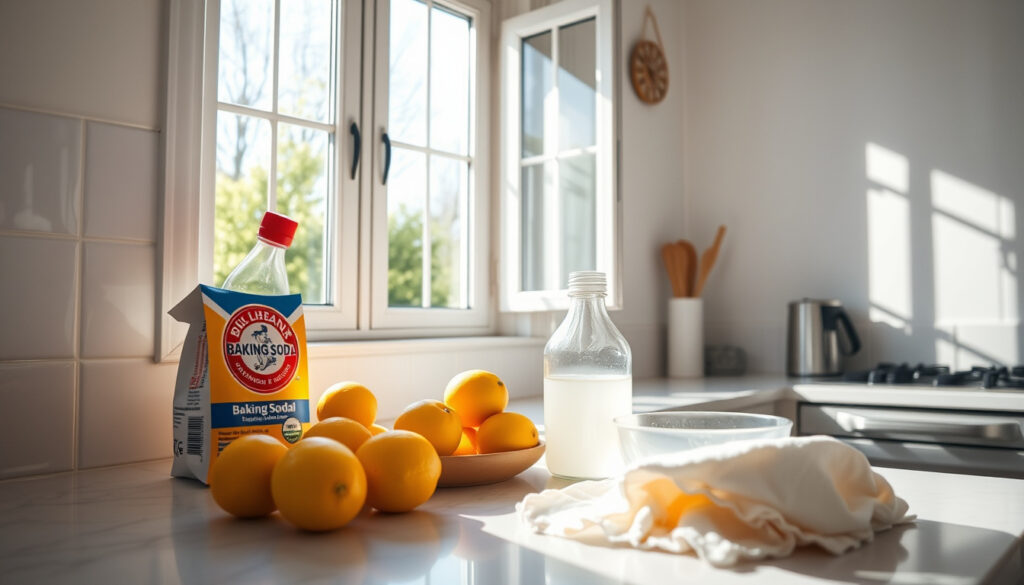
Walk into a room that smells a little off and the brain instantly turns detective — trash can, damp towel, pet bed, leftovers hiding behind the fruit bowl. The fastest fix depends on which odor you’re dealing with, because baking soda, vinegar, and charcoal each target different molecules, and This Old House recommends starting with a 50/50 water-and-vinegar mix for cleaning and open boxes of baking soda for absorbing.
U.S. households with pets (APPA 2024): 66% — a leading source of household odors ·
Activated charcoal surface area: ≈3,000 m² per gram (BET test) ·
Baking soda (sodium bicarbonate) pH: 8.3 — neutralizes acidic odor molecules ·
White vinegar acetic acid: 4–7% — enough to kill odor-causing bacteria
Quick snapshot
- Baking soda neutralizes acidic odor molecules by changing their chemical structure — it doesn’t just cover them up (The Environmental Literacy Council (science education group)).
- An open box of baking soda or a bowl of activated charcoal absorbs milder refrigerator odors (Consumer Reports (nonprofit testing group)).
- Whether a fragrance product removes an odor or just masks it depends on the formula — many commercial sprays simply add scent on top of the problem, and mixing vinegar with baking soda cancels the two instead of boosting them (Science Insights (chemistry explainer)).
- Start with a 50/50 vinegar-and-water spray, the all-purpose cleaner This Old House recommends for everyday odor zones (This Old House (home improvement guide)).
- Add activated charcoal bags in the mustiest closets — Panasonic’s indoor-air guidance names charcoal the go-to for musty closets (Panasonic (indoor air quality division)).
- Baking soda loses its edge once odor has soaked deep into carpet, upholstery, or drywall (COIT (cleaning and restoration company)).
- Prevention beats products: daily trash removal, running exhaust fans, and washing fabrics on a schedule stop odors before they start. (COIT (cleaning and restoration company))
Seven facts settle most of the arguments about natural odor removers — the chemistry, the timing, and the limits are all in one place.
| Fact | Value | Source |
|---|---|---|
| Most stubborn household odor | Pet urine — uric acid crystals can penetrate deep into porous materials | COIT (cleaning and restoration company) |
| Vinegar’s sweet spot | Alkaline odors like fish and ammonia; the smell fades as it dries | The Environmental Literacy Council |
| Baking soda contact time | Overnight (8+ hours) in an open box or bowl | Consumer Reports (nonprofit testing group) |
| All-purpose odor cleaner | 50/50 water and vinegar in a spray bottle | This Old House (home improvement guide) |
| Room-by-room picks | Baking soda on carpets, vinegar near kitchen odors, charcoal in musty closets | Panasonic (indoor air quality division) |
| Charcoal’s catch | Adsorbs airborne odors in enclosed spaces but needs replacement over time | COIT (cleaning and restoration company) |
How to quickly get rid of smells in a house?
Fast fixes are about moving air and adding absorbents. The goal is to pull the odor out of the air and off surfaces — not to bury it under a stronger scent.
How do you remove smell from a room instantly?
- Open two windows on opposite sides of the room and let the cross-draft run while you set up a bowl or box; moving air dilutes what your nose is picking up.
- Skip the scented candle for acute smells — according to Science Insights (chemistry explainer), most fragrance products mask rather than neutralize the odor (Science Insights (chemistry explainer)).
- Simmer a small pot of water with a splash of white vinegar; the gentle steam spreads vinegar’s neutralizing chemistry across the room.
How do you remove smell from the house after cooking?
- Wipe counters, the stovetop, and cabinet fronts with the 50/50 water-and-vinegar mix; grease film is where cooking odors stick.
- Run the exhaust fan while cooking and for a few minutes after, so smoke and steam take the shortest path out of the house.
- Take food scraps out with the trash the same evening — the fastest way to keep the kitchen from smelling like yesterday’s dinner.
How do you get rid of musty smell in the house fast?
- Drop activated charcoal bags into the mustiest closets — Panasonic’s indoor-air guidance names charcoal the go-to for musty closets (Panasonic (indoor air quality division)).
- Set open bowls of white vinegar around the affected room overnight; the acetic acid attacks alkaline odor molecules while the vinegar scent itself fades as it dries.
- Place an open box of baking soda inside the enclosed space as a low-maintenance backup while you track down the moisture source.
The pattern: quick fixes move air and add absorbents, but they buy time rather than close the case. The deeper job is finding what is actually producing the smell — that is the next step.
Fast fixes buy time, not forgiveness. If the source is a damp towel or a full trash can, no absorbent in the house will help until the source leaves the room.
How can I eliminate bad smells from my house?
Elimination means working backward from the smell to the source. If an odor keeps returning, something in the room is still producing it.
How do you remove bad smell from a room naturally?
- Start with the soft surfaces: curtains, bedding, rugs, and cushions hold odor molecules and release them every time the room warms up.
- Wash what can be washed, vacuum the rest, and only then set out absorbents; a clean baseline changes how long the fix lasts.
- If the smell survives a full clean, the source may have soaked deeper — professional cleaners warn that once contamination penetrates carpet, upholstery, or drywall, surface treatments stop working.
How do you remove household odors naturally?
- Match the chemistry to the odor: baking soda for acidic smells, vinegar for alkaline smells like fish and ammonia, charcoal for broad airborne chemistry.
- Use the 50/50 vinegar-water spray as the default surface cleaner in kitchens and bathrooms; it degreases and deodorizes at the same time.
- Station an open box of baking soda in the fridge and a charcoal bag in the closet so small spaces stay neutral without effort.
What causes bad smells to keep coming back?
- Recurring smells usually mean the source is still present — embedded in a cushion, a carpet pad, a drain, or a washing machine seal.
- Masking products change how the room smells for an hour; the original molecule is still there, which is why the odor returns.
- If you have been mixing vinegar and baking soda “for extra power,” the chemistry says the two cancel each other — run them as separate passes instead.
What this means: a returning smell is a signal, not a texture problem. Once you locate the reservoir, the right absorber actually finishes the job.
What absorbs odors in your house?
Three pantry staples show up in almost every serious answer: baking soda, white vinegar, and activated charcoal. They work differently, which is why the best one depends on the odor.
How does vinegar remove bad smells from a room naturally?
- Vinegar targets alkaline odor molecules — the ones behind fish and ammonia smells — and its own scent fades as it dries, which makes the effect easy to underestimate.
- Set bowls of vinegar in the affected room and leave them overnight; slow evaporation gives the acetic acid time to work on the air and nearby surfaces.
- For kitchen surfaces, the 50/50 vinegar-water wipe removes the film that cooking smells cling to.
What is the best natural odor absorber?
- The honest answer is “it depends on the chemistry.” Baking soda neutralizes acidic molecules, vinegar neutralizes alkaline ones, and charcoal adsorbs airborne organic compounds — each covers a different slice of the problem.
- For musty closets, charcoal wins. For fridge smells, baking soda is the standard. For kitchen grease, vinegar does the surface work.
Does baking soda absorb odors better than charcoal?
- Consumer Reports treats both as first-line absorbents for fridge smells, which suggests the question is less “which is better” and more “which fits this space.”
- Charcoal adsorbs a broader range of airborne chemistry, making it the better pick for musty closets and trash areas; baking soda works best where it can sit undisturbed.
- The practical difference is cost and maintenance: baking soda is a staple you already own, while charcoal bags cost more and need periodic replacement.
The trade-off: baking soda is cheaper and easier; charcoal is broader and needs replacing. Neither wins everywhere because household odors are not one molecule — which is why the comparison below separates them by job.
What is the hardest smell to get rid of in a house?
The smells that win are the ones that leave the air and move into materials. Once an odor molecule gets inside a porous surface, sprays stop mattering.
How do you get rid of musty smell in the house naturally?
- Musty is a moisture problem more than a cleaning problem, so the fix has two halves: remove the damp source and treat the air.
- Activated charcoal bags in the closet or dresser handle the airborne half — Panasonic’s indoor-air guidance recommends charcoal for musty closets (Panasonic (indoor air quality division)).
- Wash or sun-dry musty fabrics; the smell lives in the fibers, not on the surface, so laundering reaches what wiping cannot.
How do you deodorize a house with pets?
- Vacuum first — pet smells attach to carpets and upholstery, so cleaning professionals start below the surface.
- Sprinkle baking soda over the carpet, let it sit for a while, then vacuum again; it is the classic carpet refresher for everyday pet odors.
- Wash pet bedding weekly and keep a charcoal bag near food bowls or the laundry area, where odors tend to gather and linger.
How do you remove smoke smell from a house?
- Smoke leaves a sticky residue on walls, fabric, and ceilings, and that residue re-releases odor whenever the room warms up.
- Wipe hard surfaces with the vinegar-water spray and wash anything washable; then give the room time with open windows.
- Charcoal bags in the room pick up the airborne residue that surface cleaning cannot reach.
The pattern: the harder the smell, the more likely it has moved from the air into materials. Surface cleaning alone keeps losing — the fix is absorption, washing, or removing what is contaminated.
The hardest smells share one trait: they live inside porous materials. If the source sits under a carpet or behind drywall, the same odor returns until the material is cleaned or replaced — no spray fixes that.
What is the most powerful odor eliminator?
Search results love superlatives, but “most powerful” is the wrong frame. The most effective eliminator is the one matched to the molecule you are actually fighting.
What three ingredients make your house smell good?
- The dependable trio is baking soda, white vinegar, and activated charcoal — and they make the house smell good mainly by making it smell like nothing.
- Baking soda handles acidic odors, vinegar handles alkaline odors, and charcoal adsorbs airborne compounds; between them, most household chemistry is covered.
- Run them as separate passes rather than mixing them; the chemistry explainer notes that vinegar and baking soda combined cancel each other out.
What is the best odor eliminator for pet odors?
- Pet odor control starts with removal: vacuum, wash the bedding, and clean the spots where the pets actually sleep.
- Then keep an open box of baking soda in the room and a charcoal bag in the closet; both are low-cost, low-effort, and easy to place out of reach.
Is an air purifier the most powerful odor remover?
- An air purifier only removes odors if it moves air through activated carbon; a plain particle filter catches dust, not smells.
- Even a carbon filter works at room scale, so treat it as a partner to ventilation and source removal, not a whole-house miracle cure.
Why this matters: the “strongest product” question hides the real one — which odor are you fighting? Acid, alkaline, or airborne chemistry each has a different winner, and a dollar bottle of vinegar can beat a premium machine when it is matched correctly.
The most powerful odor eliminator in most homes costs under two dollars and already sits in the pantry. The trick is knowing which pantry staple matches the smell — that is the whole game.
What do maids use to make a house smell good?
Professional cleaners do not rely on candles. They rely on removal first and scent last — and the difference shows up the morning after the cleaning.
How do rich people keep their houses smelling so good?
- Usually with routine, not budget: trash out daily, sinks wiped, soft surfaces washed on a schedule, and scent added only at the end.
- An HVAC scent diffuser distributes fragrance everywhere at once — that is the “expensive house” smell, but it only works when the base is genuinely clean.
- Linen sprays and dryer sheets add a fresh-fabric note that reads as “just cleaned”; they are the finishing layer, not the clean itself.
What makes your house smell nice all the time?
- Consistency: take out the trash daily, run the exhaust fan during cooking, wash soft surfaces on a rotating schedule, and keep indoor humidity in check.
- Keep a default absorber in each zone — baking soda in the fridge, charcoal in the closet, vinegar spray in the kitchen — so small odors never become big ones.
How do I make my house smell luxurious?
- Think “clean baseline plus one scent note” instead of “stronger fragrance over a weak baseline.” The first reads as luxury; the second reads as a laundry room.
- A few drops of essential oil in mop water is a classic professional trick; it scents the room lightly as the floors dry.
What is the cheapest way to make my house smell good?
- A bottle of white vinegar and a spray bottle is the cheapest effective system on this list — it cleans surfaces and neutralizes kitchen chemistry for about a dollar.
- The second-cheapest habit is free: open the windows for a few minutes each day and let the air exchange reset the room.
The catch: professional-smelling homes are the result of subtraction, not addition. Scent is the finishing layer — the rest of the work is making sure there is nothing left to cover.
Baking soda vs. vinegar vs. charcoal: which should you use?
Four everyday options, one pattern: each wins on a different chemistry — and each has a catch worth respecting.
| Method | What it targets | Where it works | The catch |
|---|---|---|---|
| Baking soda | Acidic odor molecules — neutralizing them by changing their chemical structure (The Environmental Literacy Council) | Fridges, closets, and carpets — left in an open box or sprinkled before vacuuming | Loses its edge once odor has penetrated deep into porous materials |
| White vinegar | Alkaline odors like fish and ammonia; its smell fades as it dries | Kitchen surfaces, fridge interiors, bowls left around a room | Not a universal remover; test it on surfaces before heavy use |
| Activated charcoal | Airborne odor compounds in enclosed spaces | Musty closets, trash areas, closed cabinets | Needs replacement over time |
| Fragrance sprays | Mostly mask rather than neutralize — the odor molecule stays until the scent fades (Science Insights (chemistry explainer)) | Quick cover-ups before guests arrive | They add a new smell instead of removing the old one |
The implication: choosing the right odor remover depends on matching the chemistry of the odor rather than picking a brand.
How to deodorize a house in five steps
This is the protocol that ties everything together: find the source, then air, then absorbents, then prevention.
- Find the source. Follow the smell room by room; check trash cans, fridge drip pans, sink drains, washing machine seals, pet bedding, and any fabric that has not been washed in a while.
- Remove the source first. Take out the trash, clean the drain, launder the bedding, throw out the spoiled produce. No absorbent outperforms a removed source.
- Open the place up. Two windows on opposite sides, exhaust fans running; let the air exchange do its work while you set up the absorbents.
- Apply the right absorber for each zone. Baking soda in the fridge, vinegar spray on kitchen surfaces, charcoal bags in closets — and for a fridge that has gone sour, follow the protocol from iHerb (wellness retailer): wipe with equal parts vinegar and water, then wash with a one-to-four baking soda-water solution.
- Lock the win in. Trash out daily, fan on while cooking, soft surfaces on a rotating wash schedule, and an open box of baking soda or a charcoal pouch permanently stationed in the problem spots.
What this means: the order matters more than the product. Source removal first, absorption second, prevention third — that sequence is what stops the smell from coming back.
What’s confirmed vs. what’s still unclear
Sort the research by confidence and the picture gets much clearer: a few facts are solid, and a few popular claims should not be trusted.
Confirmed facts
- Baking soda neutralizes acidic odor molecules by changing their chemical structure — it does not just cover them (The Environmental Literacy Council (science education group)).
- Activated charcoal adsorbs airborne odor compounds in enclosed spaces and needs replacement over time.
- Vinegar handles alkaline odors like fish and ammonia, and its smell fades as it dries.
What’s unclear
- Whether a fragrance product truly removes an odor or only masks it depends on the formula — and many commercial sprays are closer to the masking side.
- The idea of one “most powerful” eliminator that works on every odor type is not supported; each method covers a different chemistry.
- Mixing vinegar and baking soda does not create a super-cleaner; the two cancel each other, so the “extra power” is folklore.
- Whether home treatments can fully deodorize deep contamination in carpet pads or drywall remains doubtful once the material is saturated.
The pattern: the strongest claims come with the fewest sources — and the boring pantry chemistry is the part the research actually supports.
What the pros actually recommend
Two recommendations came up consistently in the research, and both come from places with practical skin in the game.
For everyday odor zones, an all-purpose cleaning mix of equal parts water and vinegar, plus bowls of vinegar left around the room overnight to absorb lingering smells.
For a refrigerator that has been harboring smells, wipe it with equal parts vinegar and water after letting it air out, then wash it with a one-part-baking-soda-to-four-parts-water solution.
— Consumer Reports (nonprofit testing group)
What this means: none of these habits are expensive, and all of them beat another bottle of fragrance.
What this means for your house
Household odor is rarely a fragrance problem — it is an air-quality problem with a molecule attached. The fastest path is the same every time: name the source, remove it, open the windows, and let baking soda, vinegar, or charcoal finish the chemistry. For anyone who has sprayed a freshener and watched the same smell return by morning, the choice is clear: learn which odor you are fighting and match it with the right absorber — or keep buying bottles that cover the smell instead of ending it.
ewash.org, cycookery.com, thedailyautomotive.com, branchbasics.com, abt.com
Frequently asked questions
How long does baking soda take to absorb household odors?
For mild enclosed-space smells like a fridge or closet, give it a full overnight cycle — eight hours or more — in an open box or bowl. For stronger smells, use larger bowls and check them daily; baking soda works steadily, not instantly.
Does boiling vinegar actually eliminate odors or just mask them?
Vinegar neutralizes alkaline odor molecules, so the effect is real for fish and ammonia-type smells rather than a cover-up. Its own vinegar smell fades as the solution dries, which makes the neutralization easy to miss.
Can an air purifier remove odors from a whole house?
Only if air moves through activated carbon — a particle-only filter catches dust, not odors. Even a carbon filter is room-scale, so use it alongside ventilation and source removal rather than as a whole-house miracle fix.
What is the best way to get cigarette smoke smell out of furniture?
Start by washing removable covers, wiping hard surfaces with the vinegar-water mix, and letting the piece air out if possible. Then place activated charcoal bags inside drawers or behind cushions, where they can quietly absorb the airborne residue.
Why does my house smell musty even after I clean it?
Musty is a moisture problem, so cleaning the visible surface does not fix the humidity that keeps producing the smell. Remove the damp source, ventilate the room, and use charcoal in enclosed spaces; if the odor is inside drywall or a carpet pad, professional cleaning or replacement may be the only real fix.
Are there natural odor absorbers that work better than baking soda?
For some jobs, yes. Activated charcoal handles musty closets and airborne smells that baking soda does not fully reach, and vinegar targets alkaline odors like fish and ammonia. Baking soda remains the best cheap default for fridges, closets, and carpets — pick the absorber by the odor’s chemistry, not by brand.
More related posts
 Fiji vs Australia 2025: Match Result and Key Facts
 Trade Me Properties for Sale: Irish Market & Buying Guide
 Count of Monte Cristo: Summary, Quote & Movie Guide
 Tell Me Lies Season 3: Release Date, Finale & Ending Explained
 Apple Cider Vinegar Gummies: Benefits, Evidence & Best Brands (Ireland)
 LG 65-Inch TV Guide: Models, Prices & Comparison (2025)
 How to Draw Stitch: Easy Step-by-Step
 Bed Bath and Beyond Rotorua: Hours, Online Shopping & Sale