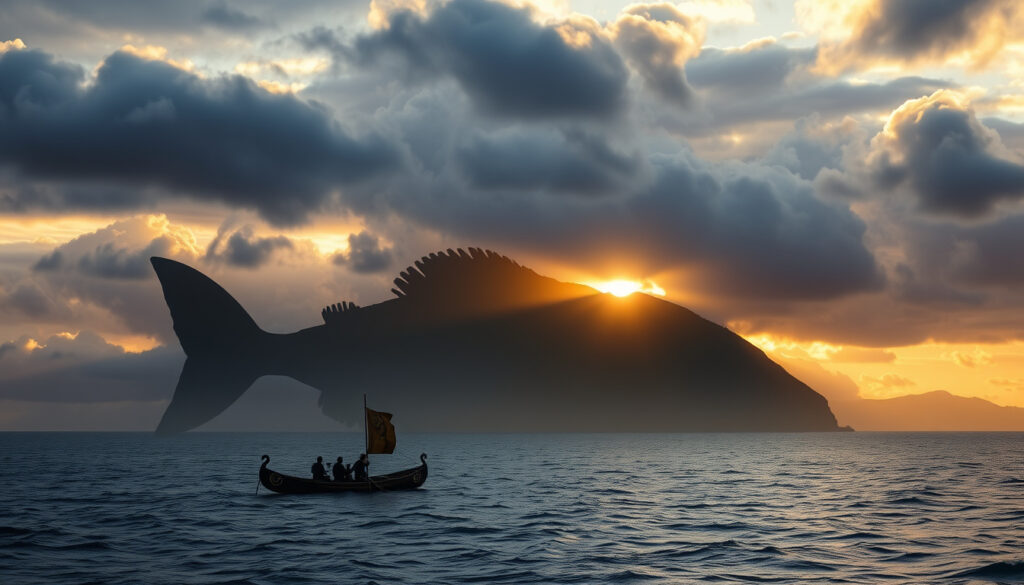
Māui and the Giant Fish: Māori Legend Behind NZ’s North Island
Few stories shape a nation’s identity quite like the myth of Māui and the giant fish. This Māori legend doesn’t just explain how New Zealand’s North Island got its name—it reveals a worldview where land, sea, and ancestors are deeply connected. If you’ve ever wondered why the North Island is called Te Ika-a-Māui, you’re about to find out.
Māori name for North Island: Te Ika-a-Māui ·
Fishhook material: Jawbone of Māui’s grandmother ·
Number of brothers: Four ·
Location: New Zealand
Quick snapshot
- The North Island is known as Te Ika-a-Māui (Mātauranga Māori (TKI))
- Māui used a fishhook from his grandmother’s jawbone (100% Pure New Zealand)
- The story is a central Māori origin myth (Te Ara Encyclopedia of New Zealand)
- The exact meaning of the name Māui remains uncertain
- Whether the fish was originally described as a stingray or a whale
- The precise historical origin of the myth
- Māui stowed away in his brothers’ canoe (Mātauranga Māori (TKI))
- He used the jawbone fishhook to catch a giant fish (100% Pure New Zealand)
- His brothers cut up the fish, creating the uneven landscape of the North Island (Te Ara Encyclopedia of New Zealand)
- The legend is taught in New Zealand schools as part of the Māori myths curriculum
- It remains a key part of Māori cultural identity and tourism today
Here are the key facts about Māui and the giant fish as confirmed by multiple sources.
| Fact | Detail |
|---|---|
| North Island Māori name | Te Ika-a-Māui (The Fish of Māui) (Te Ara Encyclopedia of New Zealand) |
| Fishhook material | Jawbone of Māui’s grandmother (Mātauranga Māori (TKI)) |
| Number of brothers | Four (according to some versions) (Goldsborough Primary PDF) |
| Māui’s other feats | Slowed the sun, brought fire to humans, lifted the sky |
| Region | New Zealand (Aotearoa) |
What is the legend of Māui and the giant fish?
The story of Māui’s fishing expedition
Māui, the demigod known for his cleverness, stowed away in the canoe of his four older brothers. According to the version told by Mātauranga Māori (the official Māori education resource), his brothers had refused to take him fishing, but Māui hid himself and only revealed his presence once they were far from shore. When he produced his famous fishhook — carved from the jawbone of his grandmother Murirangawhenua — the brothers were furious but had no choice but to let him try his luck.
Māui’s act of hiding and then producing a sacred object sets the tone for a myth where the underdog uses intelligence and ancestral power to reshape the world. For Māori today, this serves as a reminder that the land itself comes from a deliberate act of creation — not accident.
How the North Island was formed
Māui cast his line, baiting it with blood from his own nose in some retellings (Boston Children’s Museum blog), and pulled up a massive fish. The hook caught the land itself, and that land became the North Island. The brothers, ignoring Māui’s instructions, began to cut up the fish before the appropriate rituals were completed. This, according to the Te Ara Encyclopedia of New Zealand, is why the North Island has its uneven shape — the cuts became the mountains, valleys, and harbours.
The significance of the legend extends beyond geography. It connects the physical land to the actions of a human-like demigod, giving every peninsula and bay a story. The canoe Māui and his brothers travelled in is said to have become the South Island, known in Māori as Te Waka a Māui (the canoe of Māui). If you’re planning a trip, check out our Things to Do in Queenstown guide.
The legend thus intertwines geography with ancestry, giving every ridge a backstory.
Who is Māui in Māori mythology?
Māui as a demigod and trickster
- Māui is a demigod in Māori mythology, known for his cleverness and magical powers
- He fished up the North Island, slowed the sun to lengthen daylight, and brought fire to humans
- His grandmother Murirangawhenua gave him the jawbone that served as his fishhook (Mātauranga Māori (TKI))
Māui’s character is not just a hero — he is a trickster, using deception to achieve his ends. The Te Ara Encyclopedia of New Zealand notes that his actions often have consequences that reshape the natural world, giving him a role similar to Prometheus in Greek mythology. He is simultaneously admired for his resourcefulness and cautioned against for his impatience.
Māui’s boldness brings benefits (fire, sunlight, land) but also creates disorder when rules are broken. The lesson for readers: innovation often involves risk, but ignoring protocol can have permanent — even geographical — consequences.
Māui’s character remains central to Māori identity, embodying both heroism and flaw.
His exploits and importance
Among Māui’s most celebrated feats are slowing the sun so that people had more daylight to work and hunt, and pulling land from the ocean with his hook. These stories are collected in oral traditions and written records across Polynesia. The Boston Children’s Museum blog frames the fishhook as a symbol of sacred ancestral lands and waters, reinforcing Māui’s role as a culture hero who claims territory for his people.
What is the moral of the Māui story?
Lessons from the myth
The story of Māui and the giant fish carries several moral threads. First, it emphasises resourcefulness and bravery — Māui achieves what his brothers cannot because he is willing to use both cunning and sacred tools. Second, it teaches the value of perseverance: the fishing expedition fails several times before the giant fish is caught.
However, the myth also contains a caution: the brothers’ disrespect for ritual leads to a land that is fractured and difficult to live on. The implication is clear — cooperation and respect for spiritual process matter as much as individual cleverness.
Cultural significance
For Māori, the story is a foundation narrative that links the identity of the North Island directly to the actions of an ancestor. According to the Te Ara Encyclopedia of New Zealand, the fishhook itself is said to have become the cape that forms the southernmost tip of Hawke’s Bay — a physical marker of the event. This merges landscape with legend in a way that gives every New Zealander a stake in the story. Learn more about the Cape Kidnappers Gannet Colony.
These lessons continue to resonate, reminding modern audiences that innovation must be paired with reverence.
What fish is Māui known for?
Te Ika-a-Māui: the fish of Māui
The “fish” that Māui caught is not an animal but the North Island of New Zealand. The Māori name for the North Island is Te Ika-a-Māui (the fish of Māui), while the South Island is Te Waka a Māui (the canoe of Māui). This naming system, confirmed by both Mātauranga Māori (TKI) and Te Ara Encyclopedia of New Zealand, reflects a worldview where geography is understood through the actions of mythic ancestors.
Connection to the North Island
- The giant fish is identified as the North Island of New Zealand
- It is sometimes described as a stingray or a whale, but no specific species is fixed in tradition
- Māui’s fish is not a biological entity but a landmass that later became inhabited
The 100% Pure New Zealand tourism site reports that the Kaikōura Peninsula is believed to mark the seat of Māui’s canoe in the South Island, showing how detailed the geographical references become. The fishhook, meanwhile, is sometimes associated with the shape of the Hawke’s Bay region — a physical trace of the hook’s curve.
What does Maui mean in Māori?
Etymology of the name Māui
The name Māui is widespread across Polynesian mythology, appearing in Hawaiian, Tahitian, and Māori traditions. The exact meaning in Māori is uncertain; some researchers suggest it may derive from a root word meaning “to be left” or “to be alone,” perhaps referring to Māui’s status as an abandoned child or a trickster who often operates alone.
Cultural context
In Māori culture, names carry stories. Māui is a name associated with bravery, trickery, and the power of transformation. It is also a common given name in modern New Zealand, carrying the legacy of the demigod’s exploits. The lack of a single fixed etymology only adds to the mystery — much like the legend itself, the name resists simple explanation.
Confirmed facts
- The North Island is known as Te Ika-a-Māui (Te Ara Encyclopedia of New Zealand)
- Māui used a fishhook from his grandmother’s jawbone (Mātauranga Māori (TKI))
- The story is a central Māori origin myth (100% Pure New Zealand)
What’s unclear
- The exact meaning of the name Māui
- Whether the fish was originally described as a stingray or whale
- The precise historical origin of the myth
- Whether the fishhook became Cape Kidnappers — reported in some sources but not all (Te Ara notes this is a medium-confidence claim)
“Māui stowed away in his brothers’ canoe and produced a fishhook made from the jawbone of his grandmother.”
Māori oral tradition, recorded by Mātauranga Māori (TKI)
“The North Island is called Te Ika-a-Māui — the fish of Māui — because of this legend.”
Te Ara Encyclopedia of New Zealand
For New Zealanders and visitors alike, the story of Māui and the giant fish is not just a myth — it is the official naming story of the North Island. The legend ties every hill and harbour to a moment of deliberate creation, giving the land a depth that a purely geological map cannot. For anyone exploring Aotearoa, the choice is clear: learn the story, or walk the landscape without understanding what it actually is.
Frequently asked questions
How did Māui get his fishhook?
Māui’s fishhook was carved from the jawbone of his grandmother, Murirangawhenua, after she died. The jawbone was given to him as a sacred tool with ancestral power (Mātauranga Māori (TKI)).
What is the significance of the fishhook in Māori culture?
The fishhook (matau) symbolises connection to the ancestors and the ability to pull sustenance from the sea. In the story of Māui, it also represents the power to claim land and reshape the world.
Are there other versions of the Māui and the giant fish story?
Yes. Variations exist across the Pacific — in Hawaiian and Tahitian traditions, Māui is also known for fishing up islands. The details differ (some versions use a hook, others a line), but the core theme of a trickster pulling land from the ocean is consistent.
What other islands are associated with Māui?
In New Zealand, the North Island is the fish and the South Island is the canoe. In Hawaii, Māui is said to have fished up the Hawaiian Islands, and the demigod lends his name to the island of Maui.
How is the story of Māui taught in New Zealand schools?
The legend is part of the Māori myths and legends curriculum for primary and secondary students. Official resources come from the Ministry of Education through Mātauranga Māori (TKI).
Is Māui considered a hero or a trickster?
Both. Māui is a culture hero who brings fire, increases daylight, and creates land. But he is also a trickster who uses deception and sometimes acts selfishly. Māori tradition embraces this duality — he is admired for his achievements but also serves as a warning about pride.
What is the connection between Māui and the sun?
In a separate legend, Māui slows the sun by using a rope to capture it, then beats it until it agrees to travel more slowly across the sky. This gives humans longer daylight for work and hunting — another example of his resourcefulness.
More related posts
 Mike and Claire Sardina: True Story of Lightning and Thunder
 Count of Monte Cristo: Summary, Quote & Movie Guide
 Apple Cider Vinegar Gummies: Benefits, Evidence & Best Brands (Ireland)
 How to Make Caramel: Easy 4-Ingredient Recipe & Pro Tips
 Fatal Crash Taranaki Today: Breaking News & Road Stats
 Wellington to Queenstown Flights: Jetstar Reliability & Fares
 Hot Wheels Monster Trucks: Toys & Live Shows Guide
 Song Joong-ki Biography: Age, Wife, Net Worth, and Facts