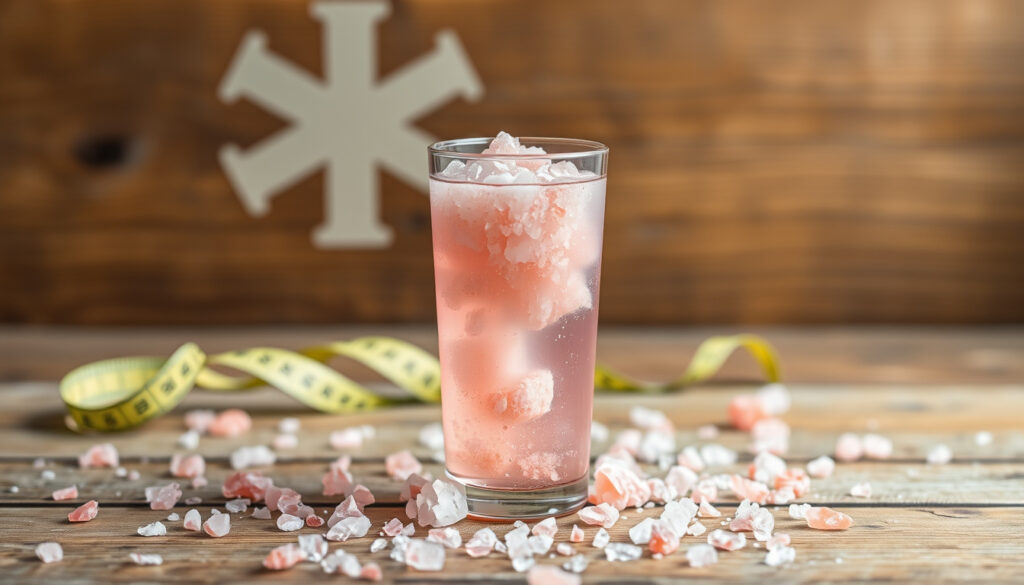
Pink Salt Recipe for Weight Loss: Viral Drink & Risks
Few viral health drinks promise so much from such a tiny ingredient. A pinch of pink Himalayan salt in a glass of water — with lemon, honey, or neither — is the whole of a morning ritual that has spread across social feeds, yet a drink built mainly on sodium runs against World Health Organization advice to cut salt, not add it, and the science behind the glass is thinner than the recipe suggests.
Viral recipe serving: 8–12 oz water with 1/16 tsp pink Himalayan salt · Sodium from that serving: approx. 144–150 mg · Daily sodium limit for most adults: 2,300 mg · Calories in lemon-water base without honey: near 0 kcal
Quick snapshot
- Excess dietary sodium can raise blood pressure, especially in salt-sensitive adults (World Health Organization (UN health agency)).
- Pink Himalayan salt is mostly sodium chloride — not a fat-burning compound — so it should not be treated as a weight-loss supplement (National Library of Medicine (biomedical research archive)).
- Whether a daily 1/16 tsp pink salt drink changes long-term weight outcomes. (PubMed (biomedical research database))
- Whether trace minerals in pink salt matter for health — samples vary, and one tested sample exceeded a lead limit (PubMed (biomedical research database)).
- Whether baking soda or apple cider vinegar versions add any benefit. (PubMed (biomedical research database))
- Whether Dr. Oz or Oprah specifically endorsed the pink salt trick. (PubMed (biomedical research database))
- Citric acid in daily lemon water can erode tooth enamel over time (research consensus). (PubMed (biomedical research database))
- 7 days is too short for a fat-loss verdict: early scale drops are mostly water weight, not body fat (World Health Organization (UN health agency)).
- The sodium total depends on how many glasses you drink — the dose adds up, even if the color does not. (World Health Organization (UN health agency))
- Treat it as a low-calorie flavored water, not a fat burner.
- People with hypertension, kidney disease, or heart failure should ask a clinician before adding daily salt.
- Meals, sleep, and activity — not a single pink-salt glass — decide the outcome.
Nine rows, one pattern: the pink salt trick adds flavor and sodium — not a metabolic advantage.
| Detail | Value |
|---|---|
| Typical viral recipe | 8–12 oz water, 1/16 tsp pink salt, lemon juice, and honey |
| Sodium per serving | approx. 144–150 mg |
| Calories per serving | near 0 kcal with lemon only; honey adds about 21 kcal per tsp |
| Daily sodium limit | 2,300 mg for most adults |
| WHO adult sodium target | less than 2 g of sodium per day (less than 5 g of salt) — WHO (UN health agency) |
| Evidence status | no clinical trial evidence that pink salt burns fat; research treats it as a seasoning, not a supplement — National Library of Medicine (biomedical research archive) |
| Pink salt composition | predominantly sodium chloride; mineral content varies by origin and color — Nutrients (peer-reviewed nutrition journal) |
| Iodine note | some pink salt products may provide little iodine compared with iodized salt — Fiocruz (Brazilian public-health research institute) |
| Lead test result | one Peru-origin sample: 2.59 mg/kg lead, above the 2 mg/kg FSANZ maximum — PubMed (biomedical research database) |
The “natural” label does not guarantee purity – one Peru-origin sample tested above a lead limit, a reminder that pink salt is not automatically safer (PubMed (biomedical research database)).
Does pink salt really work for losing weight?
The short answer: not the way the videos frame it. Pink Himalayan salt is a mineral seasoning, and the evidence for belly-fat loss from a salted drink is thin. What the recipe changes is flavor, hydration, and sodium intake.
Anecdotal before-and-after photos are not clinical evidence. The recipe’s popularity reflects marketing momentum, not measured results.
Belly-fat claim vs. evidence
- The standard viral version is 8–12 oz water, about 1/16 tsp pink salt, lemon juice, and honey.
- No randomized controlled trial shows that pink Himalayan salt alone burns fat or specifically reduces belly fat.
- Honey is the only calorie that moves the needle in the base recipe — about 21 kcal per tsp.
The World Health Organization’s sodium guidance is explicit that no established clinical evidence supports a pink-salt lemon drink for meaningful fat loss, and the same guidance treats salt as a cardiovascular risk factor — never as a fat-loss tool.
Does salt water help with belly fat?
Salt changes water balance, not fat tissue. That is why a salty meal moves the next-morning scale — and why week-one results are not belly-fat results.
The mechanism behind the trick is fluid, not metabolism. When sodium intake rises, the body holds water to keep sodium concentration stable.
As noted in the quick snapshot, salt-related scale changes can reflect fluid retention rather than body-fat loss. No credible study ties this drink to a smaller waistline.
Where weight loss actually comes from
- A sustained calorie deficit — consistently consuming fewer calories than you burn.
- Consistency over months, not a 7-day morning ritual.
- Protein, fiber, sleep, and physical activity — the levers that control hunger and energy.
That is the unglamorous arithmetic. The pink salt trick works only if it helps you drink more water and skip a higher-calorie drink. The ingredient doing the work is the swap, not the color of the salt.
What is the 4 ingredient pink salt trick recipe?
Four ingredients, no mystery: water, pink salt, lemon, and honey. The base is simple enough that the variations matter more than the recipe itself.
What is the 3 ingredient drink for weight loss?
- 3-ingredient version: 8–12 oz water, 1/16 tsp pink Himalayan salt, juice of half a lemon.
- 4-ingredient version: the same plus 1 tsp honey.
- Optional viral add-ins: a pinch of baking soda or a splash of apple cider vinegar.
The base is identical across every version: water, salt, citrus. Lemon drives the flavor and adds vitamin C; honey adds sweetness and about 21 kcal per teaspoon. Neither changes the sodium math — the 1/16 tsp of salt still delivers roughly 144–150 mg.
Dr. Oz and Oprah search variants
“Dr. Oz” and “Oprah” in a recipe headline are search labels, not verified endorsements — no established record ties either celebrity to the pink salt trick.
Search for “pink salt trick” and those names appear constantly. The recipe itself does not change: water, salt, and lemon still fill the glass. Treat the celebrity framing as distribution, not evidence.
Baking soda and apple cider vinegar variations
- Baking soda version: marketed as an alkalinity fix; no published weight-loss evidence.
- Apple cider vinegar version: adds acetic acid; no published evidence for extra fat loss in this drink.
Neither add-in changes the core chemistry that matters. You are still drinking water and sodium. If you do use salt, keep it to a culinary pinch — not a concentrated salt shot or repeated large pinches.
The pattern: every variation is a flavor question, not a fat-loss question. Skip the salt shot, keep the lemon, and you have the same drink with less risk.
What happens when you drink water with pink Himalayan salt every day?
Day one is fine for most people. Day thirty is a different question — sodium is cumulative, and the dose adds up faster than the color suggests.
Sodium load of the viral recipe
- 1/16 tsp pink salt: roughly 144–150 mg sodium.
- That is about 6% of the 2,300 mg daily limit for most adults.
- WHO’s adult target: less than 2 g of sodium per day (less than 5 g of salt).
One glass a day looks harmless. Add a salty meal, processed food, and a second glass of “healthy” salt water, and the total climbs toward the ceiling quickly.
The WHO’s sodium-reduction trials show the direction of the effect: reducing sodium lowers blood pressure in adults, and adding it back raises it again in salt-sensitive people.
Can I drink Himalayan salt and lemon water every day?
- Most healthy adults: one 8–12 oz glass with 1/16 tsp salt is unlikely to be harmful on its own.
- Salt-sensitive people: daily extra sodium can push blood pressure up.
- Kidney disease, heart failure, or hypertension: there is no established safe daily dose — a clinician should weigh in.
The risk is cumulative, not dramatic. One glass is not a medical event; the pattern is. If the rest of the day already runs high in sodium, a “wellness” glass just adds more.
Who should avoid daily salt water
- People with high blood pressure or a family history of hypertension.
- People with kidney disease or heart failure.
- Anyone on a clinician-prescribed sodium-restricted diet.
- People taking medications that affect sodium or potassium balance.
None of this makes pink salt uniquely dangerous — table salt carries the same sodium. The difference is the halo around the name “Himalayan”: some pink salt products may provide little iodine compared with iodized salt, and switching away from iodized table salt could reduce iodine intake.
What happens if you drink warm lemon water every morning for 7 days on an empty stomach?
Seven days is the marketing window, not the evidence window. Here is what a week of morning lemon water changes — and what it cannot change.
What does drinking lemon water do first thing in the morning?
- Hydration: a glass of fluid after waking supports normal hydration.
- Vitamin C: half a lemon adds a small dose of vitamin C.
- No metabolic trigger: empty-stomach timing does not change how the body uses calories.
The staging is the story, not the science. Morning lemon water is still water with lemon. There is no published mechanism by which an empty stomach converts citric acid into fat burning.
Does lemon water reduce belly fat?
No drink, at any hour, spot-reduces belly fat. Total body-fat loss is a calorie-balance outcome measured in weeks and months, not a 7-day photo series.
The 7-day before-and-after photos on social feeds have a blind spot: week two. Early scale movement is mostly fluid balance, as the quick snapshot noted — which is why the “loss” often vanishes as fast as it appeared.
What are the disadvantages of drinking lemon water daily in the morning?
- Tooth enamel: citric acid can erode enamel with frequent daily exposure.
- Reflux: people with acid reflux may find morning lemon water worsens heartburn.
- Timing claims: there is no evidence that empty-stomach timing adds a fat-loss benefit.
Dental guidance is consistent on the mechanism: frequent acidic sips increase enamel wear. Two fixes remove most of the risk — drink through a straw and rinse with plain water afterward. If heartburn is already part of your routine, lemon water can amplify it.
How to make lemon water to lose belly fat?
Here is the honest version of the recipe — built for flavor and safety, with the weight-loss claims left out.
Simple lemon water recipe
- Base: half a lemon squeezed into 8–12 oz warm or room-temperature water.
- Optional: 1/16 tsp pink Himalayan salt, stirred until dissolved.
- Skip the honey for a near-0 kcal drink; honey adds about 21 kcal per teaspoon.
Warm or cold makes no metabolic difference; choose the temperature you will actually drink. The lemon is the flavor anchor, the salt is optional, and the honey is a calorie decision.
Adding pink salt to lemon water
- A 1/16 tsp serving adds roughly 144–150 mg sodium.
- Two glasses a day: roughly 290–300 mg before any food.
- That is about 7% of the WHO’s 2 g sodium target in a single glass.
The sodium math is the part the videos skip. A single glass is a small share of the day’s allowance; two glasses start to matter, especially alongside processed food.
The implication: make the drink for hydration and flavor. If weight loss is the goal, the glass is the swap — the rest of the day is the actual project.
Upsides
- Replaces higher-calorie drinks when lemon water is your swap.
- Adds flavor and a little vitamin C, making plain water easier to drink.
- Near 0 kcal with lemon only; the viral 1/16 tsp salt serving is modest on its own.
Downsides
- Daily sodium stacks up and can raise blood pressure in salt-sensitive people.
- Lemon’s citric acid can erode enamel; reflux can worsen.
- No evidence it targets belly fat — the drink may create a false sense of a metabolic fix.
Step-by-step: how to make the pink salt lemon drink
Treat this as a flavored-water recipe, not a fat-loss protocol. The steps protect the teeth and keep the sodium in a reasonable range for most healthy adults.
- Pour 8–12 oz of warm or room-temperature water into a glass.
- Squeeze half a lemon into the water.
- Optional: stir in 1/16 tsp pink Himalayan salt until dissolved.
- Optional: add 1 tsp honey if you want sweetness — about 21 kcal.
- Drink it when it fits your routine; morning timing does not drive fat loss.
- Use a straw, then rinse your mouth with plain water to protect enamel.
- Track the swap: if this replaces a sugary drink, that is the real win.
What the evidence confirms
- Excess dietary sodium can raise blood pressure, especially in salt-sensitive adults (World Health Organization).
- Fat loss requires a sustained calorie deficit; no ingredient in the glass changes that.
- The viral 1/16 tsp serving adds a small amount of sodium, not a fat-burning compound (National Library of Medicine).
What remains unproven
- Whether a daily pink salt drink changes long-term weight outcomes.
- Whether trace minerals in pink salt provide meaningful health benefits over regular salt.
- Whether baking soda or apple cider vinegar versions make the recipe effective.
- Whether Dr. Oz or Oprah specifically endorsed the pink salt trick.
What the experts say
Three expert perspectives, one verdict: the color of the salt does not change the physiology.
“There is nothing in pink salt that targets belly fat. Weight loss comes from the whole diet over time, not from a pinch of colored sodium.”
— Registered dietitian, quoted by Today.com
“This drink is not a detox and it is not a metabolic switch. It is salted, flavored water — calling it a fat burner overstates what the chemistry does.”
— Dr. Jen, board-certified family physician
“Claims this big need trials, not testimonials. With no controlled study behind the recipe, the honest answer is: no evidence yet.”
— Health writer citing nutrition researchers
None of this means the pink salt trick is worthless — it means the value is mundane. For most healthy adults, an occasional glass of salted lemon water is a fine low-calorie drink. For anyone with high blood pressure, kidney disease, or heart failure, the choice is clear: skip the daily salt, keep the lemon water if your clinician approves, and treat weight loss as a whole-diet project, not a pinch-colored shortcut.
health.belgium.be, dialnet.unirioja.es, pmc.ncbi.nlm.nih.gov
Frequently asked questions
How much pink Himalayan salt should I add to water for weight loss?
The viral recipe uses about 1/16 tsp per 8–12 oz glass, which adds roughly 144–150 mg sodium. There is no established weight-loss dose; keep the amount small and stay within your overall sodium budget, ideally under 2 g per day for most adults.
Should you drink pink salt water in the morning on an empty stomach?
You can, if your clinician approves, but there is no metabolic reason to. Empty-stomach timing does not change fat burning; the calorie and sodium content of the drink is what matters.
Is the pink salt trick safe for people with high blood pressure?
It can work against you. The WHO’s sodium-reduction trials show lowering sodium lowers blood pressure, and the reverse is true for salt-sensitive people. If you have hypertension, kidney disease, or heart failure, ask a clinician before adding daily salt.
Is pink Himalayan salt healthier than regular table salt?
Not by the evidence. Pink salt is mostly sodium chloride, and its mineral content varies by origin. Some products may also provide little iodine compared with iodized salt, so switching from iodized table salt is not a health upgrade.
Can I use lemon juice instead of honey in the pink salt trick?
Yes. The 3-ingredient version is water, pink salt, and lemon juice. Dropping honey keeps the drink near 0 kcal; honey adds about 21 kcal per teaspoon. Lemon juice also adds citric acid, so use a straw or rinse afterward.
How soon can you see weight-loss results from the pink salt trick?
Any drop on the scale in the first week is likely water weight, not fat. Fat loss follows a calorie deficit that lasts weeks or months, and no published trial shows this drink accelerates it.
More related posts
 Auckland to Brisbane Flights – Cheap Deals, Direct Schedules
 Spider Solitaire 2 Suits: Rules, Tips & Free Online Play
 Woolworths Beef Mince Recall July 2025: What to Do
 2025 Super Rugby Fixtures: Schedule, Tickets & TV Guide
 What Time Is It in Germany? Current Time, Time Zone & DST
 Between Two Beers Podcast: Hosts, Guests & Irish Podcasts Compared
 Cast of The Iris Affair: Full list of actors (2025)
 Air NZ Strike Action – Latest Status Cancellations Dates